
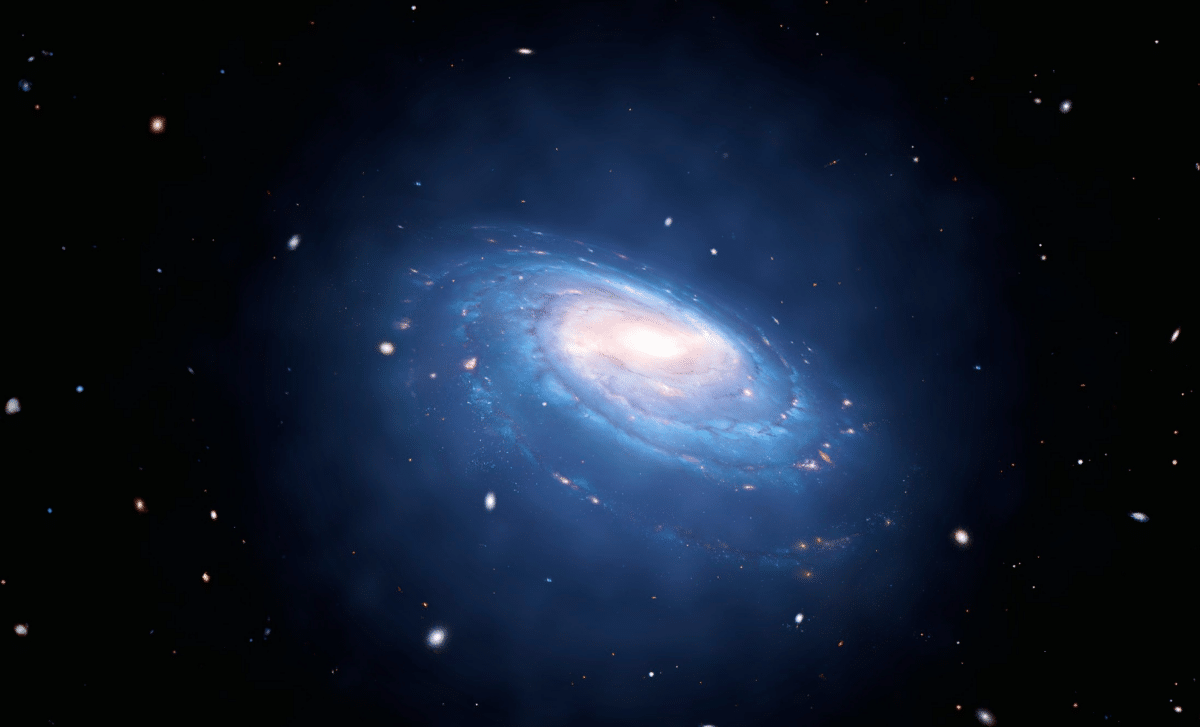
A recent publication in the Monthly Notices of the Royal Astronomical Society challenges the widely accepted presence of dark energy, the enigmatic force believed to accelerate the universe’s expansion. This research proposes that some previous interpretations of observational evidence might be flawed, suggesting a need to reconsider our understanding of the universe’s makeup.
Reevaluating the Foundations of Cosmic Acceleration
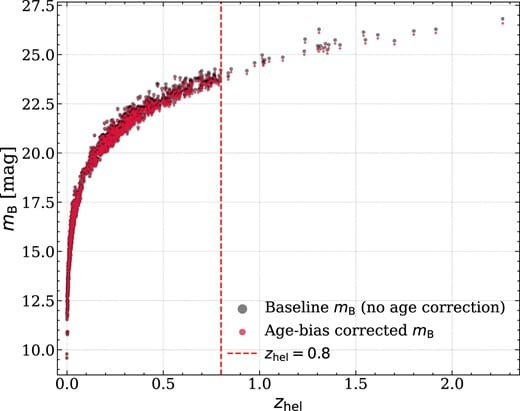
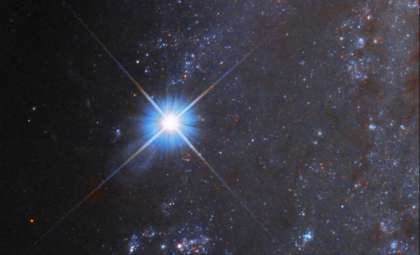
For years, dark energy has served as a key component in cosmological theories, introduced to explain why the universe appears to be expanding faster than expected. The study, published in the Monthly Notices of the Royal Astronomical Society, closely examines supernova data, especially from older and dimmer stars, and contends that earlier evaluations may have overstated their significance.
“This created a big shock,” says Sarkar, lead author of the study. “This is a very interesting and potentially quite impactful observation,” adds Dominik Schwarz at the University of Bielefeld in Germany. He notes that “dark energy came about as a fix for a discrepancy between our model of the universe and observations about it, and we may now be seeing a new discrepancy that comes from older, dimmer stars. That could again indicate the breakdown of the model.”
Add Cosmo Herald as a Preferred Source

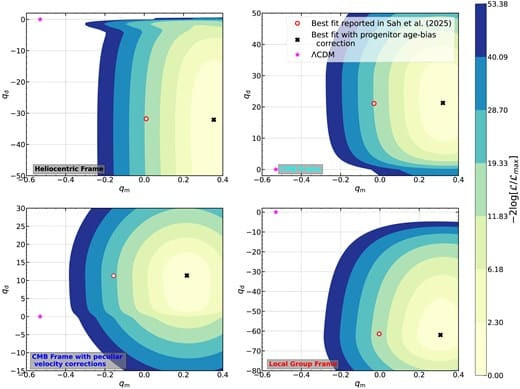
By applying advanced statistical techniques to the supernova datasets, Sarkar and collaborators argue that some signals attributed to cosmic acceleration might instead result from biases in data selection and modeling choices. If validated, this would mean that our grasp of the universe's expanding nature might be more uncertain than previously believed.
Scientific Contention and Community Perspectives
The findings have sparked debate among experts, as not everyone is ready to revise conventional cosmological models. Joshua Frieman of SLAC National Accelerator Laboratory points out that evidence for cosmic acceleration remains strong from various lines of research, such as other supernova surveys, galaxy clustering, and the cosmic microwave background. He stresses that the new analysis challenges only a limited aspect of the dark energy framework and is insufficient to overturn the dominant theory.
This scenario exemplifies how scientific understanding evolves at the cutting edge. According to Geraint Lewis from the University of Sydney, "Science at the frontier is often like Twelve Angry Men. Sometimes the case is obvious and the jury is unanimous, but other times different people see each piece of evidence differently, and it takes persuasion and more evidence before a verdict is arrived at."
Consequences for Cosmology and Upcoming Investigations
If these conclusions gain traction, they could significantly alter our understanding of fundamental cosmological parameters, stellar evolution, and the interpretation of astronomical observations. Such a shift might inspire new observational campaigns and refined measurements aimed at confirming whether dark energy is essential to explain cosmic acceleration or if alternative theories should be considered.
This debate highlights cosmology’s dynamic landscape, where emerging analyses continuously challenge established views, encourage refinement of methodologies, and deepen our comprehension of the universe.
The Path Forward for Dark Energy Research
The scientific community is expected to conduct further studies and independent validations in response to these findings. Upcoming large-scale projects like the Vera C. Rubin Observatory and the Euclid space mission could prove pivotal in either reinforcing the current dark energy paradigm or suggesting the need for major revisions.
Whether or not the prevailing model ultimately endures, this study serves as a reminder of the importance of revisiting assumptions, critically assessing data, and maintaining openness to transformative ideas. In astrophysics, certainty is elusive, and questioning foundational concepts often leads to profound advances.
- Categories:
- News






0 comments
Sign in to Comment