
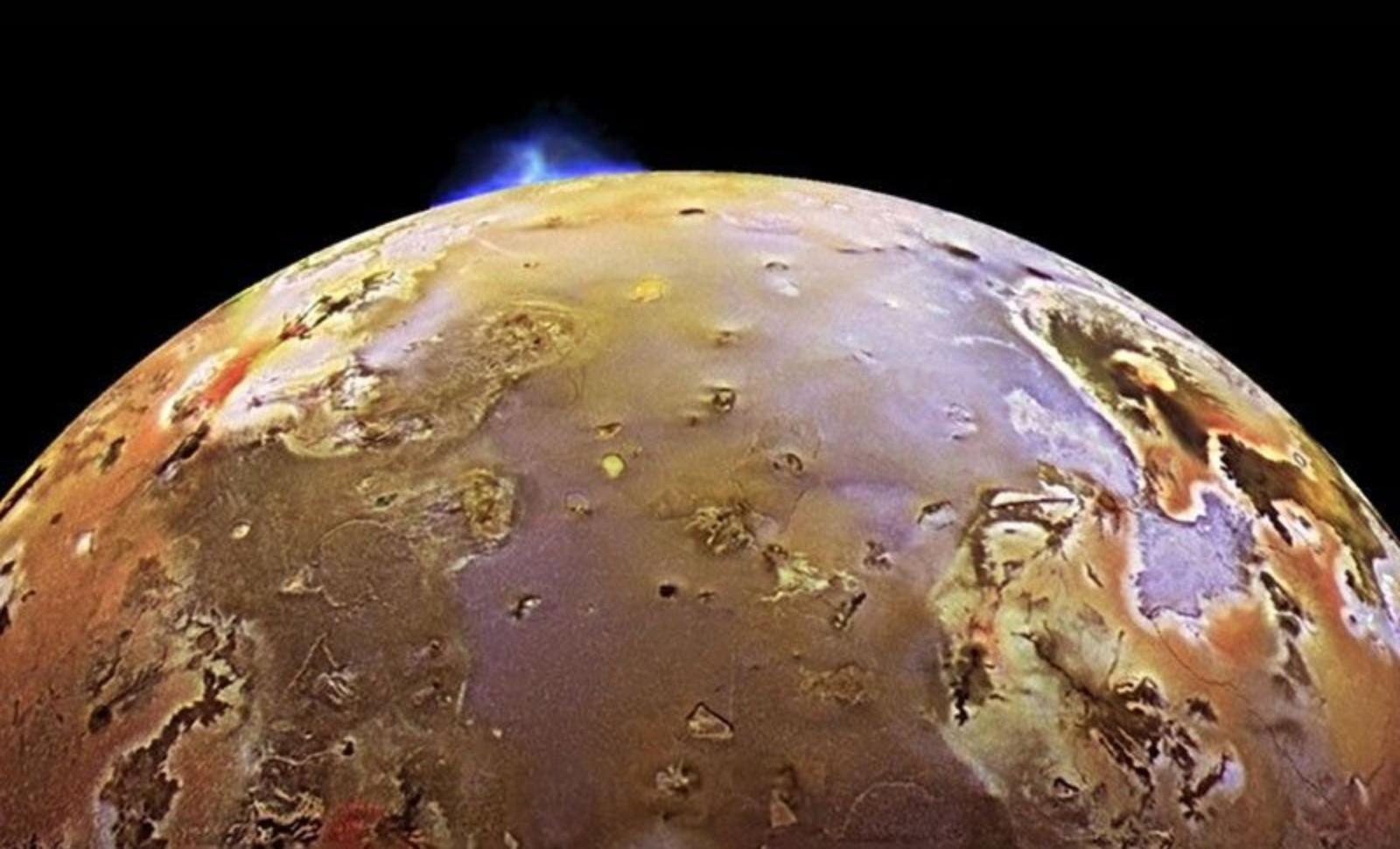
NASA’s Juno spacecraft has provided unprecedented insights into the subterranean temperatures of Io, unveiling substantial heat just below the surface of Jupiter’s most volcanic moon. These results shed new light on how Jupiter’s gravitational pull powers Io’s extraordinary geological phenomena.
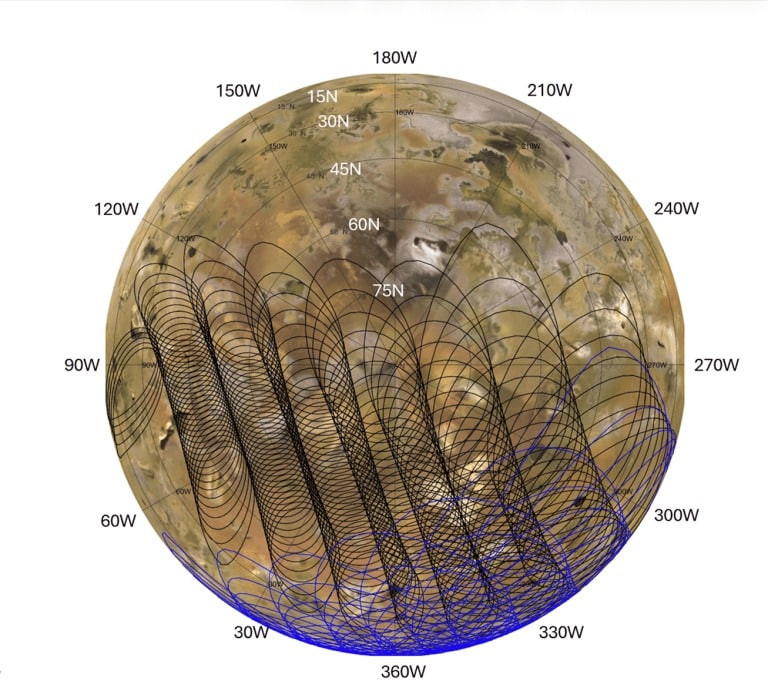
During close approaches in late 2023 and early 2024, Juno flew as near as 1,500 kilometers (930 miles) from Io, utilizing its Microwave Radiometer (MWR) to capture thermal radiation emitted from beneath the crust. This instrument offered temperature data at depths previously unreachable by other missions.
While Io’s surface generally remains frigid, hovering around -143°C (-230°F), volcanic zones demonstrate significantly higher temperatures. One notable hotspot reaches approximately 17°C (60°F), demonstrating the stark thermal contrast between Io’s ice-cold exterior and its fiery inner heat. Scientists emphasize that Juno’s observations mark the first direct assessment of subsurface thermal properties on Io.

Juno Identifies Intense Heat Variations Below Io’s Surface
Central to this breakthrough was Juno’s Microwave Radiometer, which analyzes microwaves across a range of wavelengths. As different wavelengths probe various depths, researchers gained a multi-layered understanding of the moon’s interior.
“The technique is novel in that each wavelength explores different depths, providing a new way to characterize the deep atmosphere of giant planets and the subsurface crusts of icy and rocky moons,” said Scott Bolton, Juno’s principal investigator at the Southwest Research Institute.
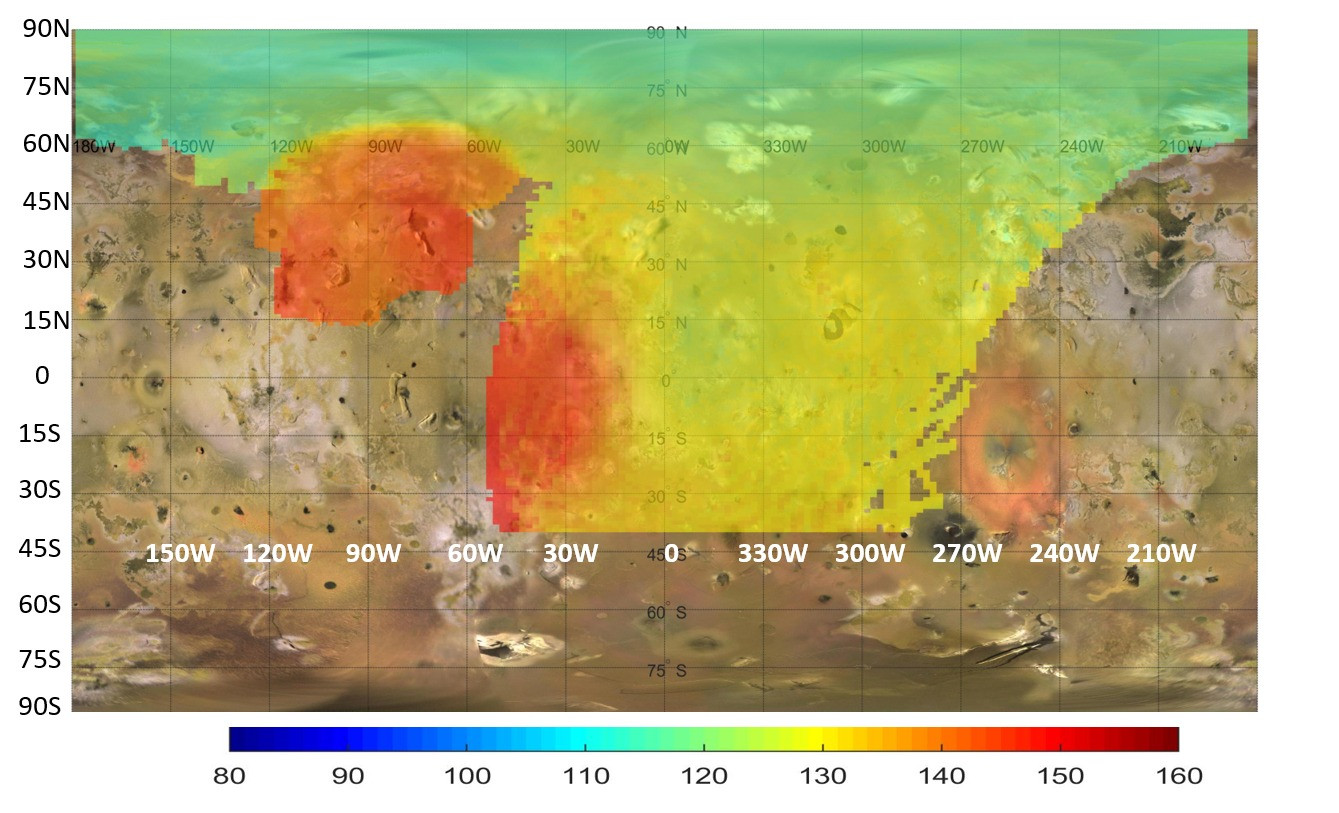
Data revealed that temperatures beneath Io’s crust rise sharply within just a few feet beneath the surface. Shannon Brown, lead author from NASA’s Jet Propulsion Laboratory, explained that the radiometer detected thermal signals originating from anywhere between a few inches and several tens of feet underground.
“Everywhere we looked, we found the temperature rising by more than 40 degrees Fahrenheit just several feet into the surface,” Brown said. He added that this temperature increase was much steeper than what solar heating could explain.
Researchers suggest several mechanisms to explain this heat pattern: upward conduction of geothermal energy through the crust, concealed lava flows coated by solid crust, or thermal vents scattered across Io’s terrain.
Gravitational Forces from Jupiter Power Io’s Volcanoes
Io’s harsh environment stems from its interaction with Jupiter. The moon’s elliptical orbit leads to a varying distance from Jupiter by about 3,500 kilometers each orbit, causing fluctuating gravitational pulls that flex Io’s interior.
The study published in JGR Planets identifies this repeated deformation—known as tidal heating—as the primary energy source driving Io’s exceptional volcanic activity. Jupiter’s force is strong enough to lift and drop Io’s surface by as much as 100 meters (300 feet), continuously generating heat internally that escapes via eruptions and infrared radiation.
“Io provides a unique window into learning how tidal heating works throughout the cosmos, a fundamental process that provides energy and heat to worlds that are far from their parent star,” Bolton explained.
This tidal heating effect is also believed to sustain subsurface oceans on other giant-planet moons, such as Europa and Ganymede.
Io’s Surface Surprises Researchers with Unexpected Smoothness
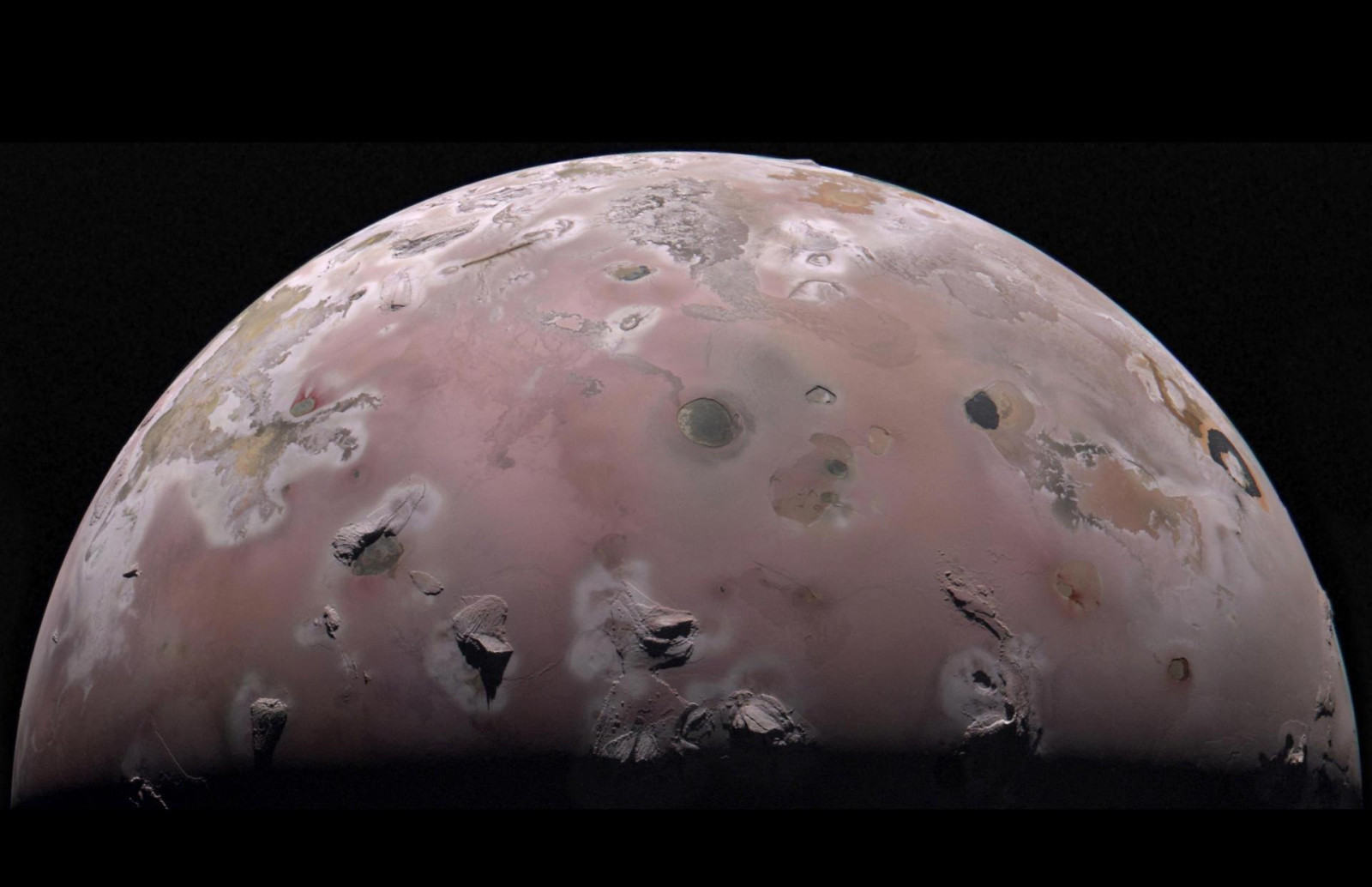
Close observations from Juno uncovered that many parts of Io’s terrain are remarkably even, with expansive flat regions stretching over 100 kilometers (60 miles).
Scientists liken these smooth zones to the Great Plains of North America, a notable contrast to the turbulent volcanic activity expected to dominate Io’s landscape.
These findings imply that portions of Io’s crust may consist of lightweight substances similar to pumice or volcanic ash rather than dense, solid rock.
Furthermore, the success of instruments like Juno’s Microwave Radiometer in detecting underground heat may have valuable applications back on Earth. Bolton noted the potential for these methods to enhance understanding of volcanic activity at home.
“The surprising discovery that we could see below a rocky moon’s surface has important implications for studying Earth’s volcanoes,” Bolton said.
- Categories:
- Astronomy





0 comments
Sign in to Comment