
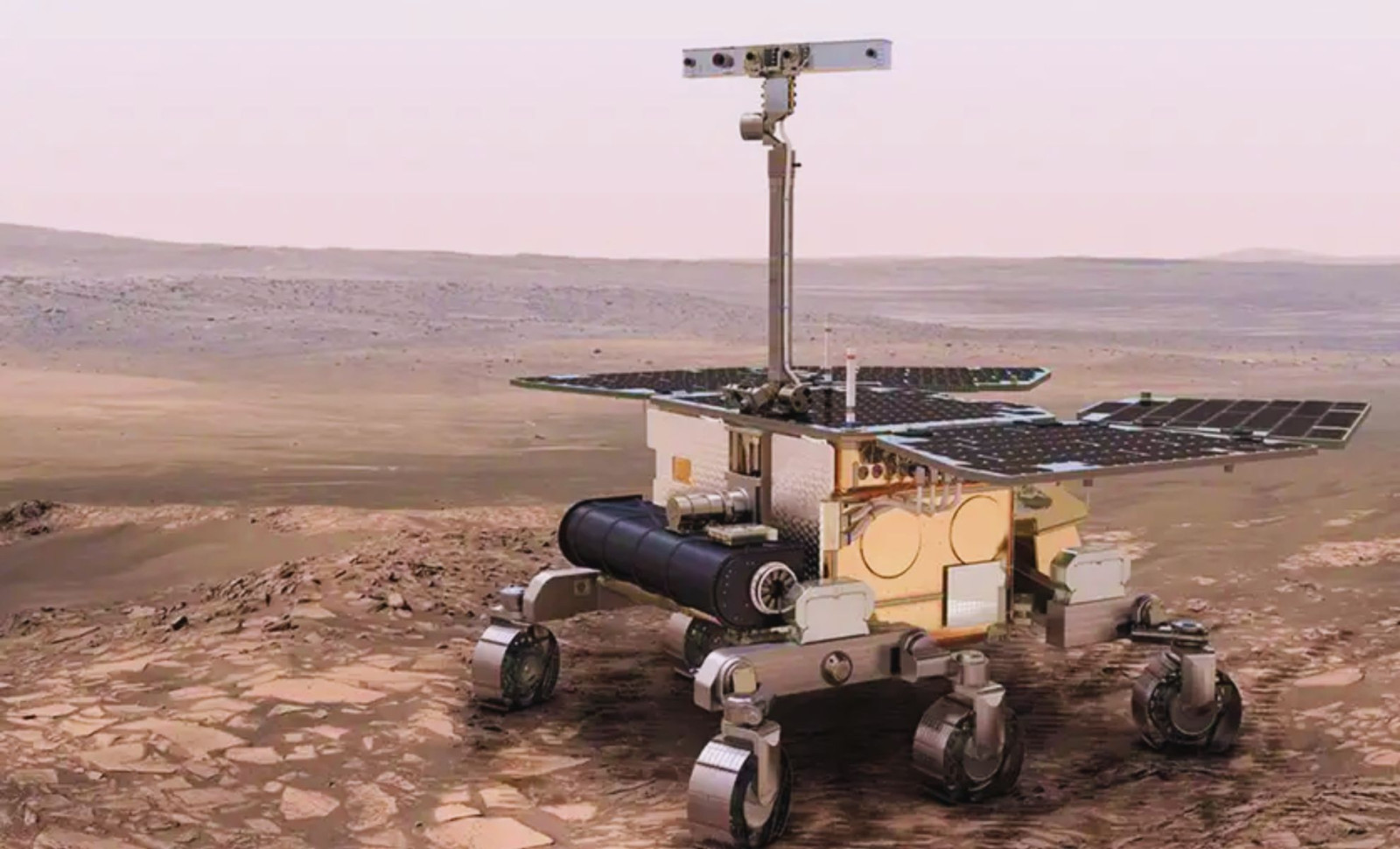
During routine evaluations of instruments destined for Mars exploration, scientists uncovered an unanticipated insight. While calibrating the European Space Agency’s Rosalind Franklin rover, they discovered that a well-known meteorite may have acquired petroleum-based contaminants after arriving on Earth. This revelation could reshape how researchers investigate organic compounds in extraterrestrial rocks.
Mars has consistently been a prime candidate in the quest to find evidence of ancient life. The planet is thought to have once had a warmer and wetter climate, with a significantly denser atmosphere, conditions conducive to supporting microbial life. However, distinguishing true signs of past life remains complex, as organic molecules detected by rovers like NASA’s might also arise from abiotic chemical processes.
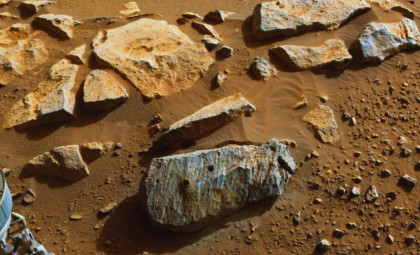
The ESA’s Rosalind Franklin rover, a key component of the ExoMars mission, aims to address this challenge. Set to land on Mars by 2030, it will explore the clay-abundant region of Oxia Planum, believed to have hosted water billions of years ago, utilizing instruments crafted to detect preserved organics.

Advanced Instrumentation to Differentiate Biological Origins
Central to the mission is the Mars Organic Molecule Analyzer (MOMA). This device was developed mainly by the Max Planck Institute for Solar System Research, including collaboration with the University of Göttingen and the University of Côte d’Azur.
Published in a recent study in Earth and Planetary Science Letters, the research focused on two hydrocarbons: pristane and phytane. On Earth, these compounds typically derive from living organisms and are abundantly found in petroleum, making them prime candidates as potential biosignatures.
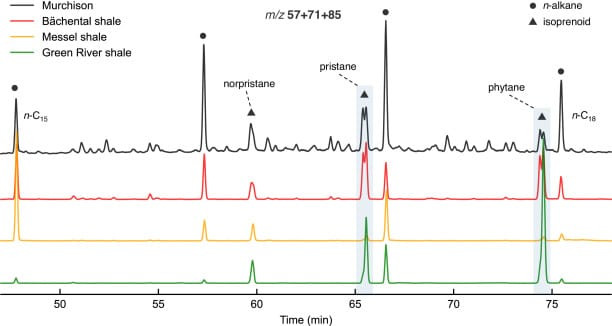
MOMA works by heating rock samples to release gases, then utilizes a combination of small furnaces, a gas chromatograph, a mass spectrometer, and an excitation laser. As gas molecules move through specially coated capillary columns, their mirror-image forms separate at different rates, allowing precise identification.
“If life once existed on Mars, then molecules like pristane and phytane represent important molecular biosignatures that could have survived to this day,” lead author Guillaume Leseigneur said.
The Significance of Chirality
A key aspect of the investigation involved chirality, a feature shared by many organic molecules. Chirality refers to molecules existing in two non-superimposable mirror-image forms, called enantiomers, akin to a person’s left and right hands.
Researchers highlight that biological entities tend to produce predominantly one enantiomer, whereas abiotic processes generate both forms in roughly equal proportions. This property provides a critical tool to differentiate whether an organic molecule’s origin is biological or chemical.

To validate MOMA’s capabilities, the team replicated its capillary columns to successfully separate chiral forms of pristane and phytane for the first time. Given the chemical stability of these hydrocarbons, achieving this was notably difficult.
“Chiral separation of pristane and phytane requires high instrument sensitivity and measurement accuracy, both of which we show MOMA can achieve,” said co-author Fatma Yesil Sahan, a member of the MOMA team.
Co-author Uwe Meierhenrich emphasized the importance of chirality as “a valuable tool in the search for past extraterrestrial life.”
An Unforeseen Secret from a Well-Known Meteorite
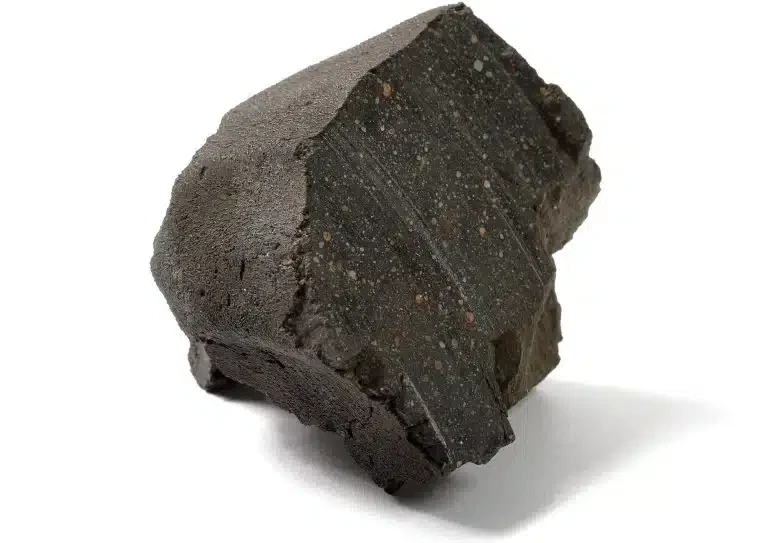
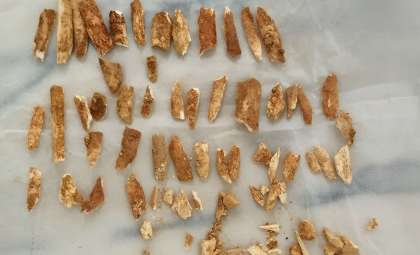
The team applied their method to the Murchison meteorite, which fell to Earth in Australia in 1969 and is rich in organic compounds. While some molecules originated from the meteorite itself, others were introduced through contamination after its arrival.
It was anticipated that pristane and phytane influenced by biological contamination would reveal a chiral imbalance matching living organisms. Contrary to expectations, the tests demonstrated both enantiomers occurred in equal concentrations.
Researchers suggest that this contamination likely originated from aerosols produced by fossil fuel combustion as the meteorite descended through Earth’s atmosphere or post-landing. Additional comparison with oil shale samples substantiated this interpretation, providing important implications for interpreting similar organic signatures on Mars.
- Categories:
- Science










0 comments
Sign in to Comment