

Venus may be more geologically vibrant than previously assumed. Advanced 3D simulations reveal that the vast rift valleys scattered across its surface might indicate ongoing or very recent tectonic activity, with prominent ridges outlining continuous surface transformations.
Researchers at ETH Zurich developed the first detailed 3D reconstructions of Venus’s rift zones. Their findings propose that these extensive structures are not merely ancient relics but could signify active processes occurring within the planet today.
Spanning thousands of kilometers, the rift valleys on Venus are some of the Solar System’s most extensive tectonic features, with lengths reaching up to 10,000 km. They share similarities with significant terrestrial rift systems, such as the African Rift Valley.

The formation age of these valleys has long been debated, with a consensus that many arose over 100 million years ago, leaving inactive scars on Venus’s terrain.
Elevated Edges Hint at Younger Rift Formations
These new simulations emphasize the elevated ridges bordering Venusian rifts, known as rift flanks. When a rift is actively growing or has done so recently, these flanks are broad and steep.
ETH Zurich’s Professor Taras Gerya and his team found that the expansion rates of these rifts could be between 3 and 10 centimeters per year, faster than earlier estimates.
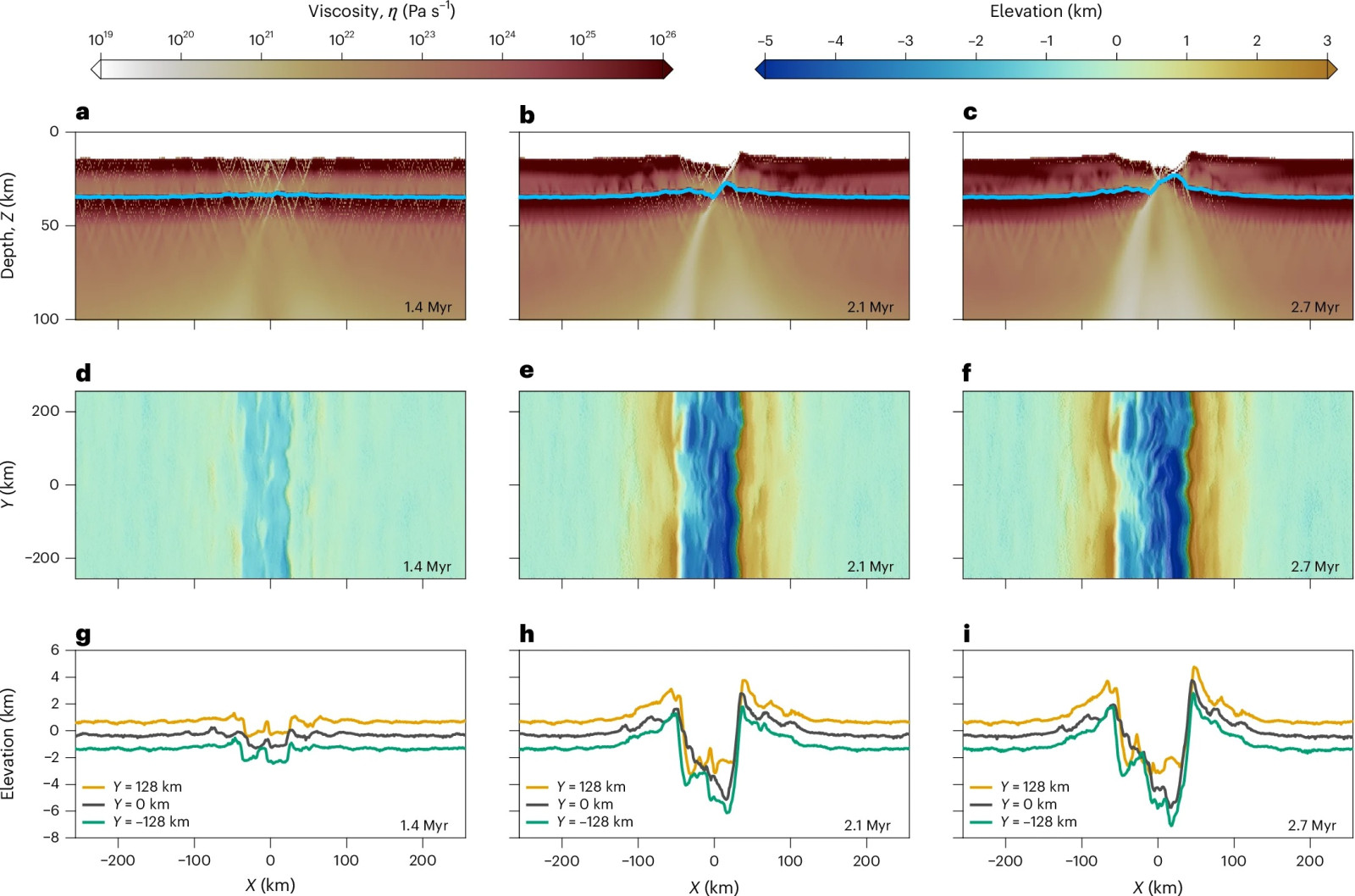
By reconstructing the rifts in three dimensions, the team observed that younger rifts maintain sharp, elevated flanks, while more ancient ones progressively flatten over time.
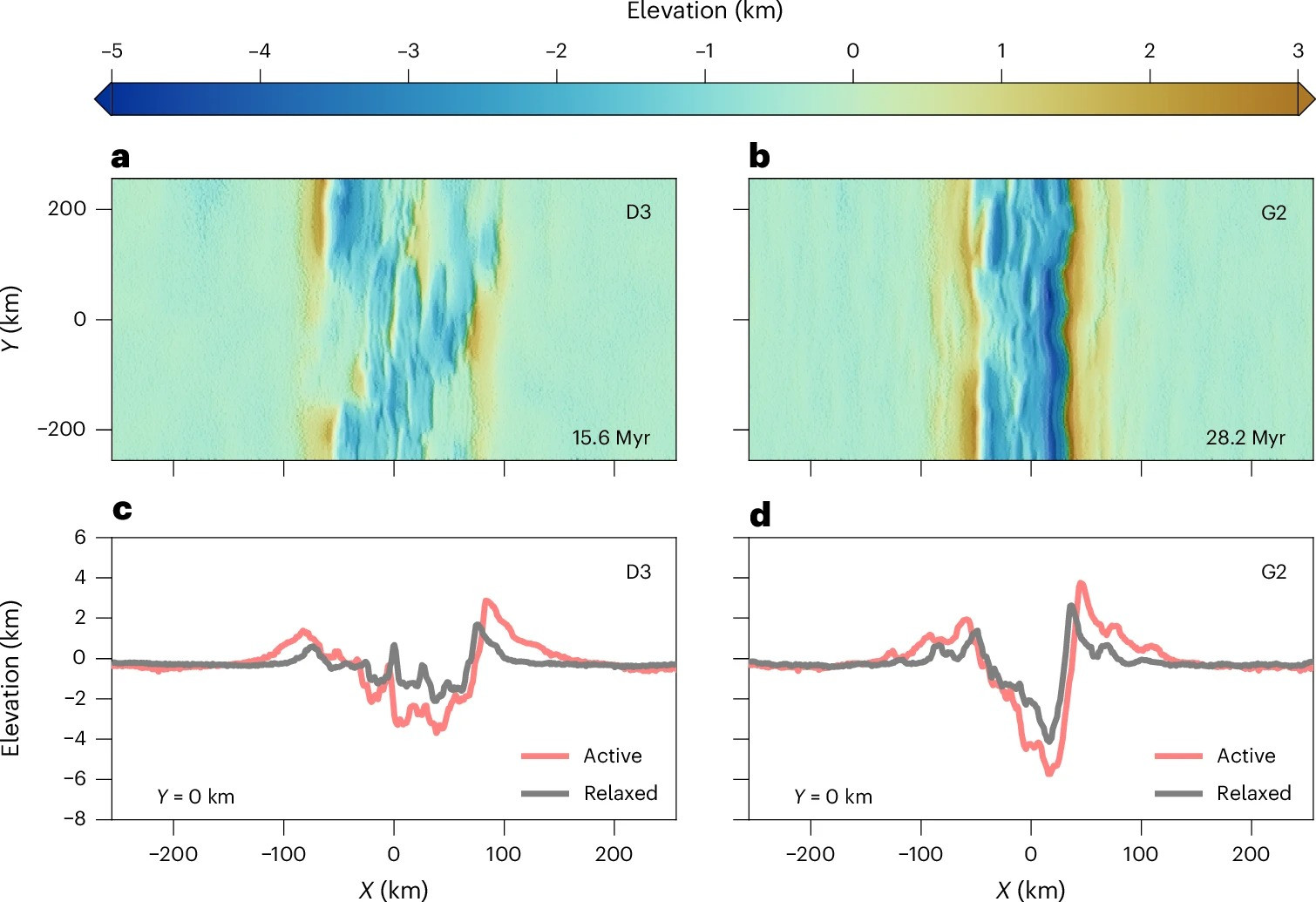
This contrast helps determine the relative age of each rift: a narrow, tall flank signals a younger structure, whereas a wider, lower flank indicates an older formation.
Venus’s Surface Evolves Differently Than Earth’s
Venus experiences surface changes by mechanisms unlike Earth’s, where erosion from water, wind, and other external forces shape the landscape.
The study reveals that rift flank alterations primarily result from crustal relaxation. After tectonic activity ceases, the planet’s crust gradually adjusts, lowering and softening the previously steep rift edges.
The simulation outputs align with observations by NASA’s Magellan mission, which mapped over 98% of Venus’s surface in the 1990s. As detailed in the study, Magellan’s radar imagery reveals the broad, raised rift flanks predicted by these models.

Until now, Magellan’s data has been the primary resource for detailed knowledge of Venus’s terrain, since the planet’s dense atmosphere obscures direct visual observation. Operating from 1990 to 1994, Magellan produced comprehensive radar maps of the surface.
A More Active Venus Could Influence Future Exploration
This research points to a more dynamic Venusian interior than previously thought, highlighting tectonic activity as a potentially ongoing process. Investigating these rift valleys further could pinpoint regions where geological activity may currently be transforming the planet’s surface.
“The results help us to better assess the tectonic activity on Venus,” Professor Gerya said.“They also could help pinpoint active regions worthy of detailed investigation for the future missions to Venus.”
- Categories:
- Astronomy













0 comments
Sign in to Comment