

Our world is on the brink of a profound demographic change that often goes unnoticed. What if, starting tomorrow, people ceased to have children entirely? With global birth rates dropping and societal complexities growing, this question becomes increasingly critical. Can human civilization endure such a shift? Renowned Michael A. Little, an expert anthropologist at Binghamton University, offers insights that reveal a nuanced and unsettling answer.
The Gradual Decline of Human Society
It might appear straightforward to think that humans would simply vanish within a couple of generations without new births. However, Little explains that extinction wouldn’t be immediate. Since most individuals rarely live beyond 100 years, “there would probably be no humans left on Earth” after that span. Yet this disappearance would be a slow erosion, with aging populations dwindling and no younger generations to sustain crucial modern infrastructure.
Such a demographic collapse would unravel society piece by piece. Essential sectors, including agriculture and medical care, would face severe shortages of labor. Little warns that even as the population shrinks, “food scarcity would arise despite fewer people to feed.” This breakdown would affect more than just population numbers and would dismantle the foundations upon which contemporary civilization depends.

The Inevitable Fall of Civilized Life
As the working-age population disappears, vital services would cease functioning. “Eventually, civilization would collapse,” Little acknowledges, emphasizing the grim reality in the absence of young adults. Shortages in nutrition, clean water, and medications would become a daily challenge. Though fewer people remain, “necessities readily accessible today would become scarce,” jeopardizing survival for many.
Little anticipates this societal unraveling occurring within 70 to 80 years, countering the more hopeful belief that society might endure up to a hundred years. This slow breakdown of supporting systems will test humanity like never before.
Could a Global Disaster Trigger Such a Crisis?
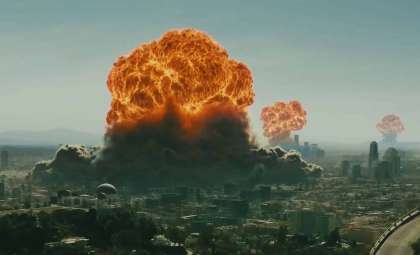
While permanently stopping reproduction sounds unlikely, Little points to the possibility of a worldwide catastrophe causing it. He references Kurt Vonnegut’s dystopian novel Galápagos, where a widespread infection causes infertility among those in their reproductive years. A nuclear incident could similarly erase the capacity to recover. Though these doomsday scenarios are improbable, they starkly illustrate humanity’s vulnerability in extreme crises.
Dystopian fiction often explores these harrowing themes, from the bleak societies in The Handmaid’s Tale to the troubling world of Children of Men. These narratives reveal the despair and collapse that follow when procreation is impaired or forbidden.

Rising Concerns Over Falling Birth Rates
While catastrophic fiction highlights societal concerns, the factual decline in birth numbers globally presents a real challenge. Nations including South Korea and India have witnessed considerable drops in fertility, driven by financial pressures, lifestyle changes, and cultural evolution. In the U.S., annual births decreased from 4.1 million in 2004 to 3.6 million in 2024, raising alarms about the future demographic balance.
The drop in births coincides with rising male infertility rates. Little warns that this trend could accelerate population decline, creating growing challenges. “Such a trend might intensify demographic shrinkage,” he notes. A reduced number of births paired with increasing mortality risks speeding the societal unravelling Little describes.
Insights from History: Lessons from the Neanderthals’ Extinction
Past human relatives provide critical lessons about survival fragility. The disappearance of Neanderthals, our close cousins, highlights that dominant species can vanish. Coexisting with early humans for millennia, Neanderthals faded roughly 40,000 years ago. Many scientists attribute this to Homo sapiens having superior reproductive tactics and resource control.
“If humans faced extinction,” Little proposes, “other life forms might thrive in our absence.” While such shifts may be natural, losing humanity means erasing its rich heritage of culture, science, and art. This possibility stresses the importance of sustaining our species and planet.
Securing Tomorrow: Urgent Calls for Preservation
Little stresses that safeguarding both the environment and human society is essential to prevent this bleak future. Tackling climate change, forestalling conflicts, and safeguarding biodiversity are vital steps toward a world where humanity continues to flourish. As he highlights, “A rich variety of flora and fauna keeps Earth livable for all species, including us.”
Our collective survival will depend on intentional choices to protect Earth's resources. Only through global cooperation can we avoid the slow societal decline portrayed by Little, ensuring future generations receive a planet capable of nurturing both people and ecosystems.
- Categories:
- News









0 comments
Sign in to Comment