
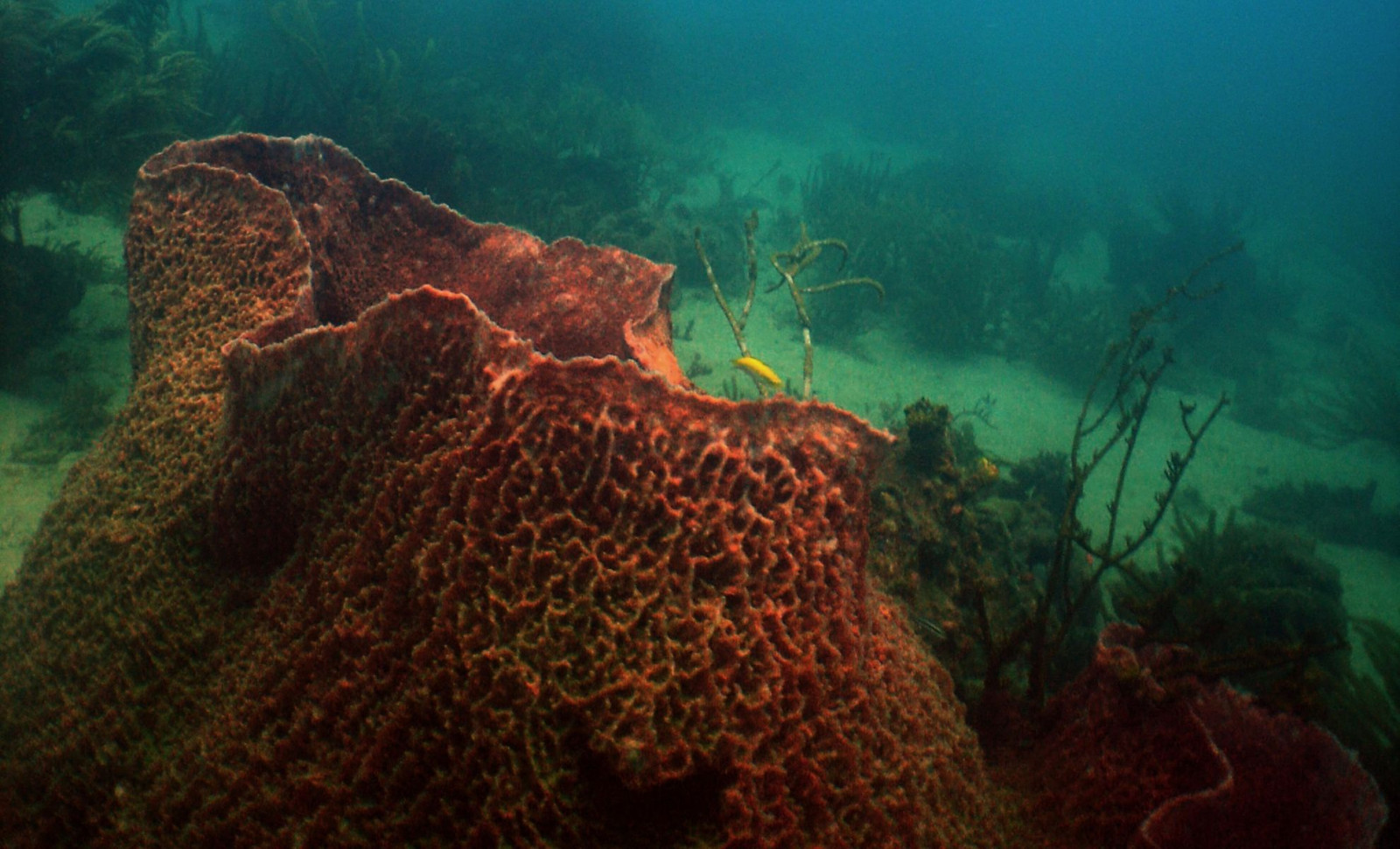
A massive marine creature off Curaçao’s coast lived attached to the same coral reef for an estimated 2,300 years before succumbing to illness in 2012. By the time researchers documented it, this organism had survived well beyond many historical civilizations and became one of the oldest animals ever recorded.
When this sponge initially settled as a microscopic larva, Hannibal had not yet embarked on his legendary Alpine campaign, and the Roman Empire had yet to be established. For centuries, this sponge quietly remained anchored, filtering ocean water as human history unfolded above.
A Species That Thrived for Over Two Millennia
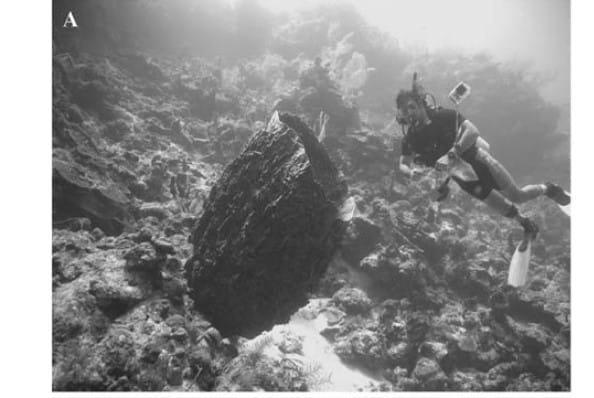
The giant barrel sponge, scientifically named Xestospongia muta, was captured in photographs near Curaçao and measured approximately 2.5 meters across. Marine biologist Ivan Nagelkerken and his team estimated the sponge’s age to be around 2,300 years.

This means the sponge’s growth began in the third century BCE. It was alive during the final stages of the Roman and Carthaginian wars and continued through the ascent of the Roman Empire, the medieval period, the Age of Exploration, and into modern times.
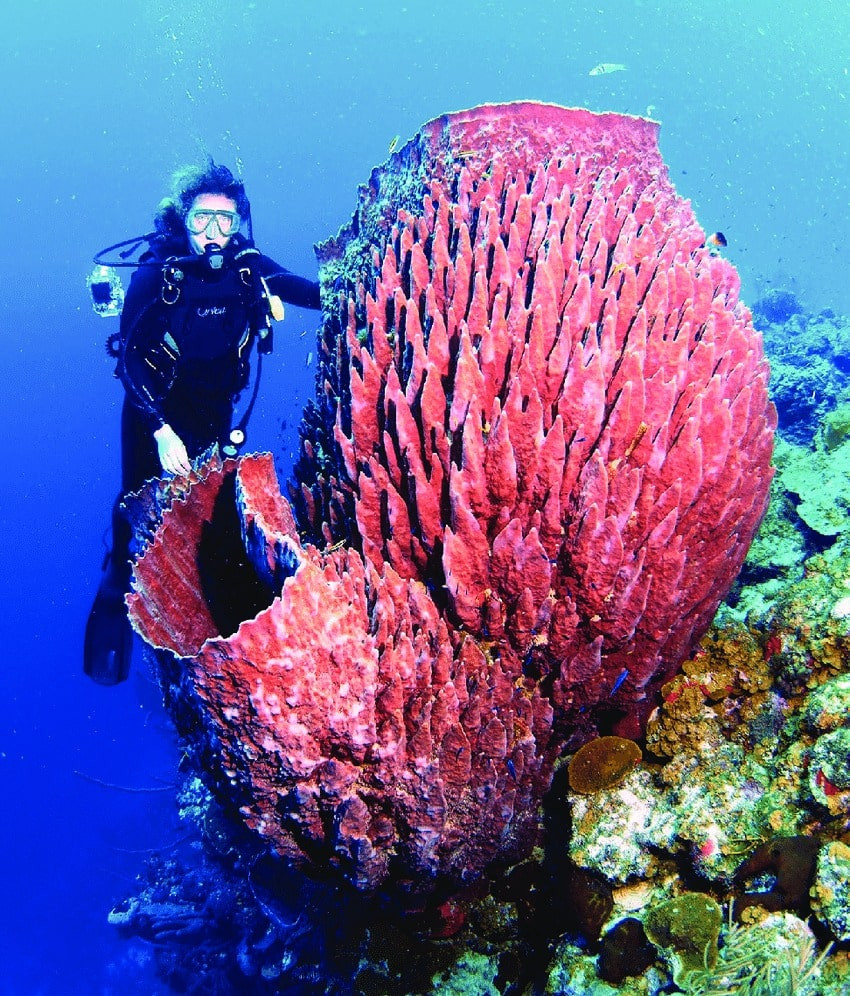
The sponge remained fixed to the reef for nearly its entire life, much like all adult sponges that remain in one location after settling. Marine scientists refer to giant barrel sponges as the “redwoods of the reef” due to their immense size and remarkable longevity.
Endlessly Purifying Ocean Water
Despite its incredible age, the sponge led a straightforward existence. As a filter feeder, Xestospongia muta draws water through thousands of tiny pores, trapping microscopic plankton and organic matter, then expels the cleansed water through a large central opening.
According to the original source, a fully grown giant barrel sponge can filter up to 1,000 gallons of seawater daily. Over its 2,300-year life, this Curaçao sponge likely processed about 850 million gallons of water.
Sponges rank among Earth’s most basic animals. They lack a brain, heart, nervous system, and conventional organs. Their bodies consist primarily of channels and specialized cells that maintain a constant flow of seawater.
This simple body design has persisted for about 600 million years, surviving countless mass extinction events, ice ages, and shifts in Earth’s geography, according to the source.
Estimating Age and the Sponge’s Demise
Unlike trees, sponges do not form annual growth rings. Scientists estimate their age by measuring their size and comparing it with known growth rates.
A 2008 study in Marine Biology showed that giant barrel sponges grow at varying rates depending on age and environmental factors, with some growing slowly and others more rapidly.
Using the measurements and growth models for giant barrel sponges, researchers deduced the Curaçao sponge took between 2,000 and 2,500 years to reach its size, supporting the commonly accepted age of about 2,300 years.

Its death was not due to aging. A disease known as Sponge Orange Band rapidly affects giant barrel sponges, causing orange lesions of dying tissue that eventually prove fatal.
This disease has been documented throughout the Caribbean, including Curaçao. The ancient sponge’s life ended amid one of these regional outbreaks, concluding a lifespan that stretched from over two millennia ago into the early 21st century.
- Categories:
- News










0 comments
Sign in to Comment