
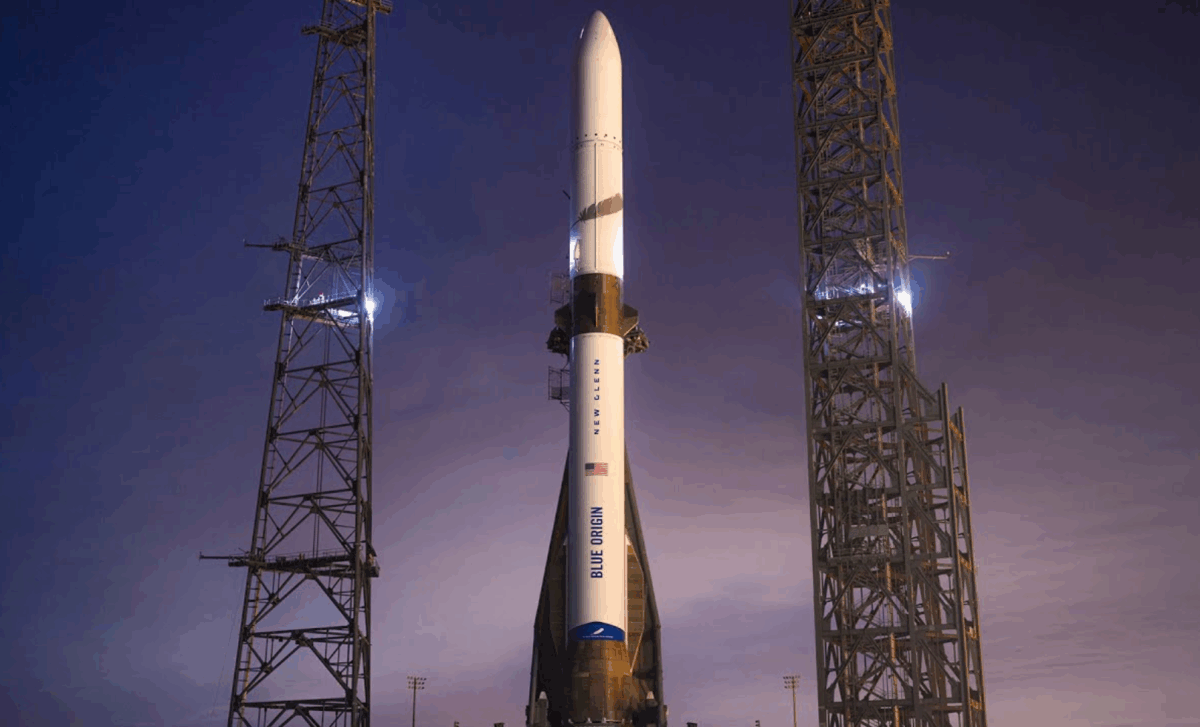
Blue Origin is gearing up to launch its advanced New Glenn rocket carrying NASA’s ESCAPADE mission to Mars on November 9, 2025. This trailblazing expedition aims to examine the Martian atmosphere, offering valuable insights into the planet’s climatic history and future potential. With this launch, Mars exploration enters a new era, resuming after a five-year hiatus since the previous mission. Let’s explore what this journey entails and why it’s a pivotal moment for planetary science.
Understanding ESCAPADE: Objectives and Mission Overview
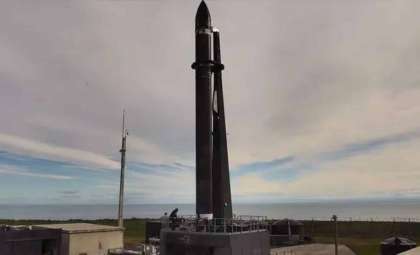
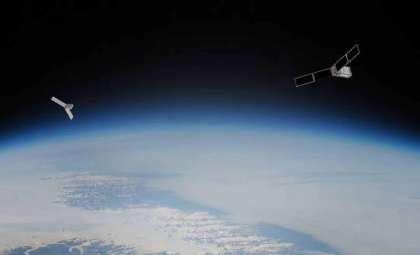
The ESCAPADE (Escape and Plasma Acceleration and Dynamics Explorers) mission focuses on investigating the characteristics of Mars’ atmosphere and the impact of space weather. After liftoff aboard the New Glenn, two spacecraft known as Blue and Gold will travel to the Earth-Sun Lagrange Point 2 (L2), a gravitationally balanced spot beyond our planet. Positioned there, the probes will study space weather for a full year before continuing their voyage toward Mars. The vehicles, developed by Rocket Lab and operated by scientists from UC Berkeley, are expected to reach Mars by 2027.
Once in Martian orbit for roughly seven months, the ESCAPADE spacecraft will synchronize their movements to form a 3D map of the Red Planet’s magnetic fields, ionosphere, and upper atmosphere. This unprecedented stereo observation will unlock new perspectives on Mars’ near-space environment.

The information gained will help researchers trace the history of atmospheric erosion that Mars has experienced over billions of years. Insights from ESCAPADE are crucial for upcoming Mars endeavors, especially those aiming for human landings and future settlement. Researchers at UC Berkeley emphasized that the mission will "help scientists understand how and when Mars lost its atmosphere and provide key information about conditions on the planet that could affect people who land or settle on Mars."
New Glenn: Revolutionizing Heavy-Lift Capabilities for Space Missions
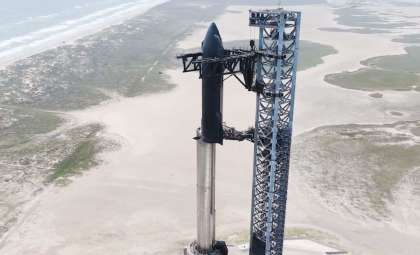
Blue Origin’s New Glenn rocket plays a critical role in making this mission possible. Paying homage to astronaut John Glenn, New Glenn is designed to transport heavy payloads into orbit efficiently. According to Space.com, this November 9 launch will be New Glenn’s second flight following a successful inaugural mission in January 2025. It boasts a reusable first stage that Blue Origin plans to recover via an ocean touchdown method, similar to SpaceX’s Falcon booster landings.
The timing of the ESCAPADE launch is carefully aligned with a rare Earth-Mars orbital configuration that emerges every 26 months, enabling efficient interplanetary travel. Upon arrival, the probes will spend approximately seven months in varied Martian orbits collecting crucial atmospheric data. Overall, the mission duration is expected to be around 11 months, offering an extensive dataset for scientific analysis.
Harnessing New Glenn’s cutting-edge reuse technology marks an important advancement for deep-space missions. Its robust payload capacity and state-of-the-art recovery system set the stage for future lunar, Martian, and beyond-Earth exploration missions.
Unlocking the Mysteries of Mars’ Atmosphere with ESCAPADE
ESCAPADE’s main objective is to decipher the dynamics and composition of Mars’ thinning atmosphere. The planet once had a denser atmospheric layer, which has progressively dissipated, leaving Mars cold and arid today. By conducting a three-dimensional analysis, ESCAPADE seeks to illuminate the mechanisms behind this large-scale atmospheric loss.
Scientists hypothesize that Mars’ diminished atmosphere contributed to its inability to sustain liquid water, a key factor in its transformation. Unraveling how Mars’ atmosphere evolved is essential for understanding its potential to have supported life in the past, as well as its capacity for future habitability.
The mission’s results will also have important bearings on human exploration. An in-depth grasp of Martian atmospheric conditions, such as radiation exposure and potential environmental hazards, will be vital for safeguarding astronauts embarking on missions to the Red Planet.
- Categories:
- Aircraft






0 comments
Sign in to Comment