
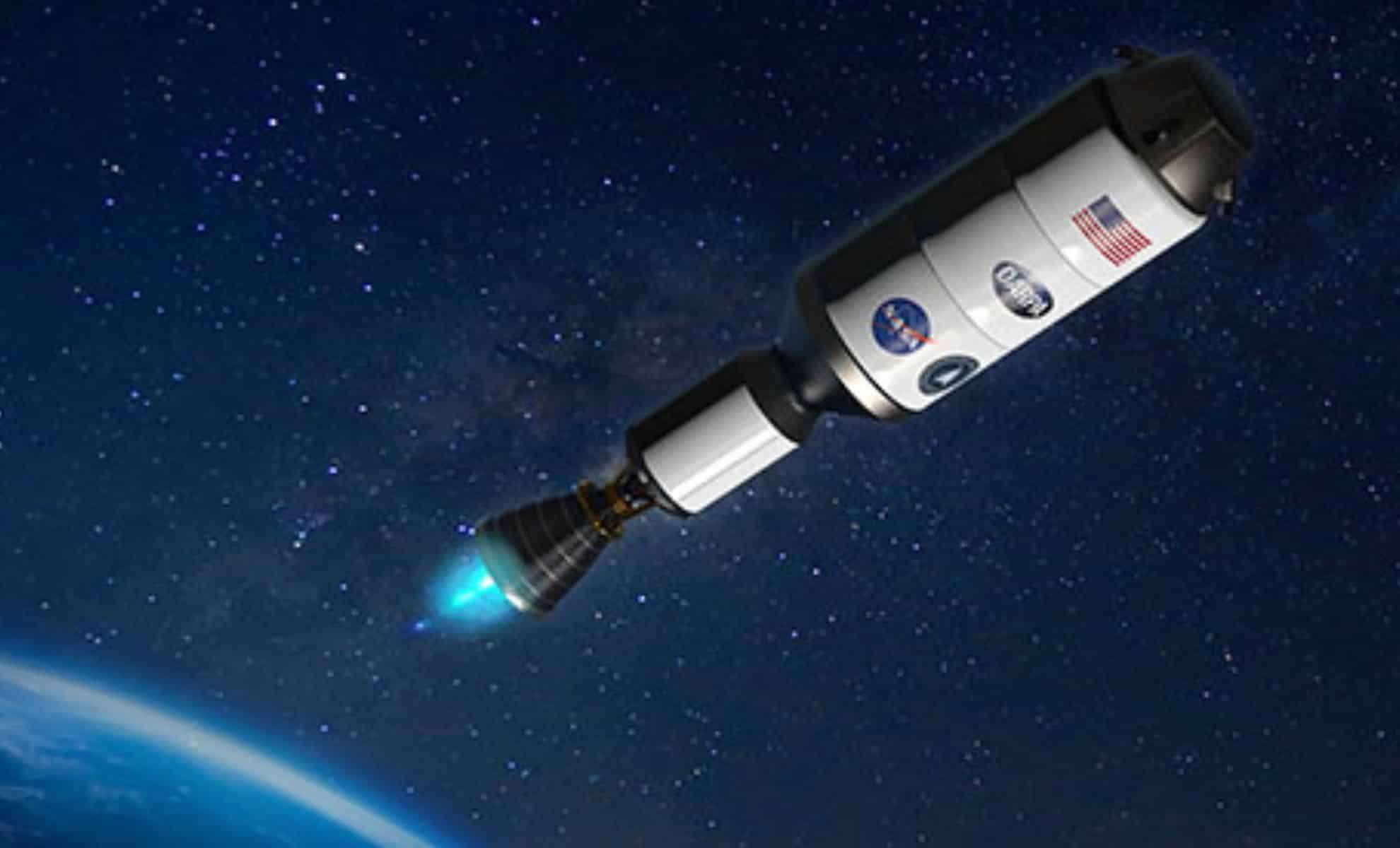
NASA, in partnership with the U.S. military, is reigniting efforts to develop nuclear-powered spacecraft, a breakthrough that could dramatically alter the future of space exploration.
The spotlight is currently on the Demonstration Rocket for Agile Cislunar Operations (DRACO) initiative, a joint venture between NASA and DARPA, focused on harnessing nuclear thermal propulsion for missions extending to Mars and farther into the solar system.
Past Endeavors and the Legacy of the Phoebus 2A Reactor
The idea of nuclear propulsion in spacecraft dates back decades. On June 26, 1968, the Phoebus 2A, the most powerful nuclear rocket engine ever assembled, underwent a rigorous 750-second test at the Nevada Test Site, demonstrating potential capabilities for human travel to Mars.

Despite its promise, the project was eventually abandoned due to challenges related to its massive scale, cost, and shifting priorities under President Nixon. Nevertheless, the concept of nuclear-powered rocketry has remained an area of scientific intrigue, sparking renewed enthusiasm facilitated by advances in technology and increased interest in deep-space missions. Now, NASA and military entities are revisiting nuclear propulsion's potential to revolutionize space travel.
The DRACO Initiative
DRACO symbolizes the cutting-edge drive to deploy nuclear thermal rockets. Utilizing a novel fuel called high-assay low-enriched uranium (HALEU), the design aims for a spacecraft exceeding 600 tons capable of drastically cutting Mars journey durations to an estimated 297 days.
Although the exact testing schedule remains undisclosed, DRACO's ambitions highlight the transformative promise of nuclear propulsion technology. By utilizing HALEU, the project addresses the limitations encountered in previous nuclear rocket efforts, aiming to provide more efficient and potent thrust for space travel.
The Military’s Pioneering Influence on Nuclear Rocket Development
Contrary to popular assumptions, the initial push for nuclear rocket engines came from the military rather than NASA. Beginning in the 1950s, the U.S. Air Force spearheaded the Rover program to develop nuclear thermal rockets (NTRs). The military envisioned these engines as potential assets for intercontinental ballistic missiles, sparking a resurgence of interest. The primary appeal of NTRs lies in their superior fuel efficiency.
Chemical rockets depend on combining hydrogen with an oxidizer, which adds weight but is essential for combustion. In contrast, NTRs operate by using pure hydrogen, doubling the efficiency compared to chemical rockets. This increased efficiency is critical for extended missions, such as those destined for Mars, where conserving fuel is vital.
How Nuclear Thermal Rockets Work
Nuclear thermal rockets function by circulating liquid hydrogen through turbopumps into a nuclear reactor core, where it is heated to extremely high temperatures before being expelled to generate thrust. Unlike chemical rockets that rely on combustion, NTRs heat propellant gas by direct contact with the reactor, resulting in enhanced fuel efficiency.
This approach enables a higher specific impulse, an efficiency metric that depends on the exhaust gas temperature and the molecular weight of the propellant. Hydrogen, possessing the lightest molecular weight, makes for an exceptionally efficient propellant, giving NTRs a distinct edge for space missions.
Obstacles in Adapting Nuclear Propulsion for Spaceflight
Shifting from terrestrial reactors to ones capable of spaceflight imposes serious technical hurdles. For example, NTR cores must withstand temperatures near 3,000 K—roughly 1,800 K hotter than traditional Earth-based reactors. Crafting fuel rods resilient to such extreme heat has been enormously challenging.
Moreover, hydrogen's highly corrosive nature at these temperatures poses material stability problems, especially when few substances endure 3,000 K conditions. Control mechanisms also face obstacles: unlike Earth reactors that drop control rods by gravity, in-flight reactors require entirely new moderation methods.
Addressing these engineering complexities is vital for advancing NTR technology and realizing nuclear propulsion as a practical means to propel humanity's exploration of space.
- Categories:
- Astronomy ,
- News ,
- Space ,
- Nasa ,
- Aircraft









0 comments
Sign in to Comment