
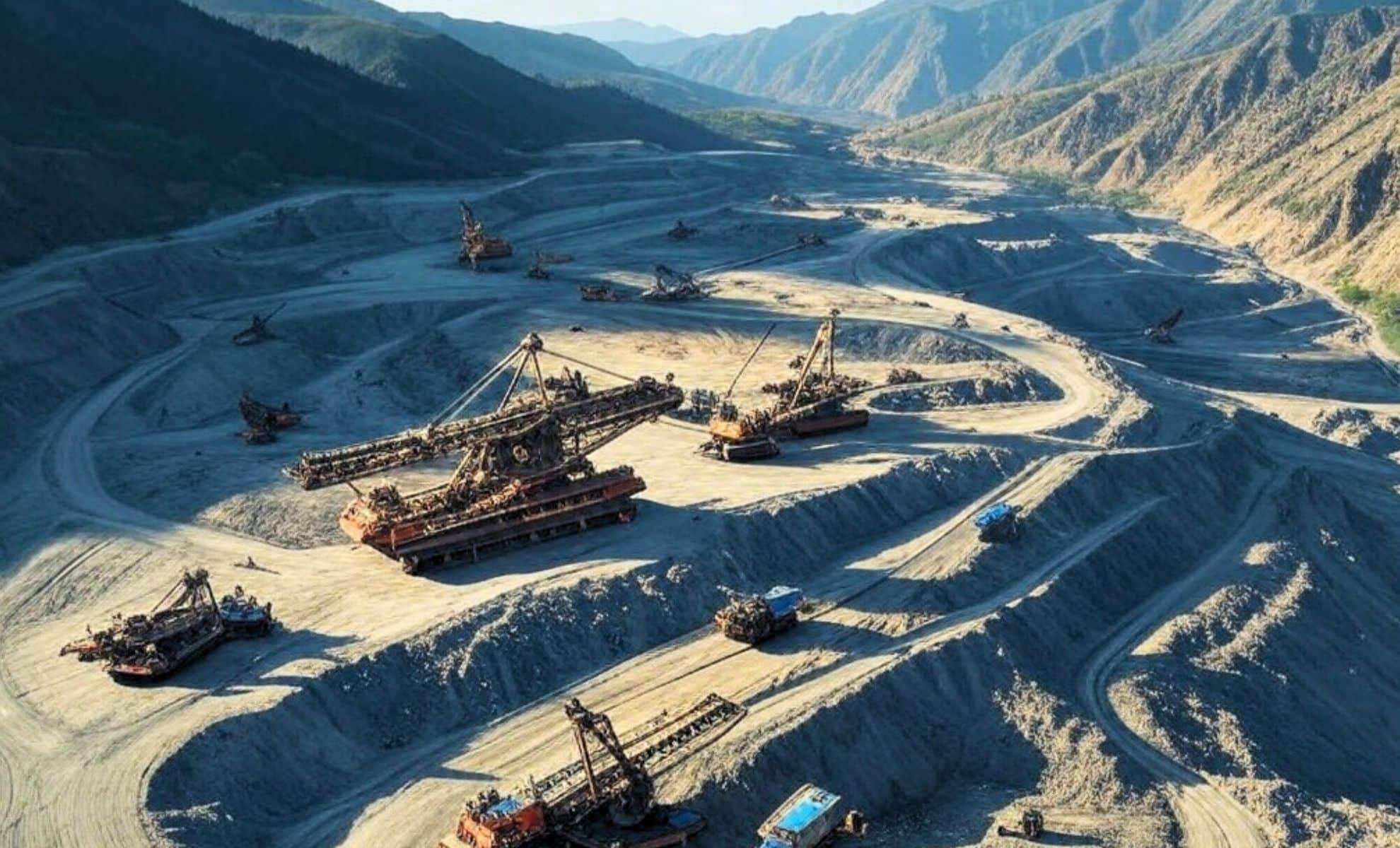
China has revealed the identification of over 35 million metric tons of high-purity quartz (HPQ) located in two key areas: Qinling in Henan province and Altay in Xinjiang.
Characterized by a silicon dioxide concentration of at least 99.995%, this quartz has been designated as the nation’s 174th strategic mineral.
This significant discovery promises to impact multiple industries—including semiconductors and solar power—by granting China control over a crucial and often overlooked raw material in modern electronics.

An Essential Mineral for Future Technologies
The Ministry of Natural Resources has recognized HPQ as a “new mineral species”, reflecting its vital role in emerging technological fields.
This high-grade quartz surpasses ordinary forms of silica, fulfilling strict criteria essential for advanced technology: ultra-low impurities, minimal particle inclusions, and precise crystal sizing.
As reported by World-Energy and Global Times, the material’s exceptional heat tolerance, resistance to corrosion, low thermal expansion, electrical insulation, and optical clarity make it critical for producing silicon wafers used in semiconductors, solar photovoltaic components, and precision optical devices.
“The establishment of this new mineral species will contribute to the high-quality development of related strategic emerging industries,” said Mao Jingwen, an academician of the Chinese Academy of Engineering.
Shifting from Import Reliance to Self-Sufficiency
These newly found quartz reserves are poised to transform China’s position in the HPQ market. Historically dependent on imports valued at over $1.5 billion annually, with roughly 80% sourced from the United States, China can now potentially secure its supply chain for semiconductor and solar manufacturing domestically, according to Interesting Engineering.
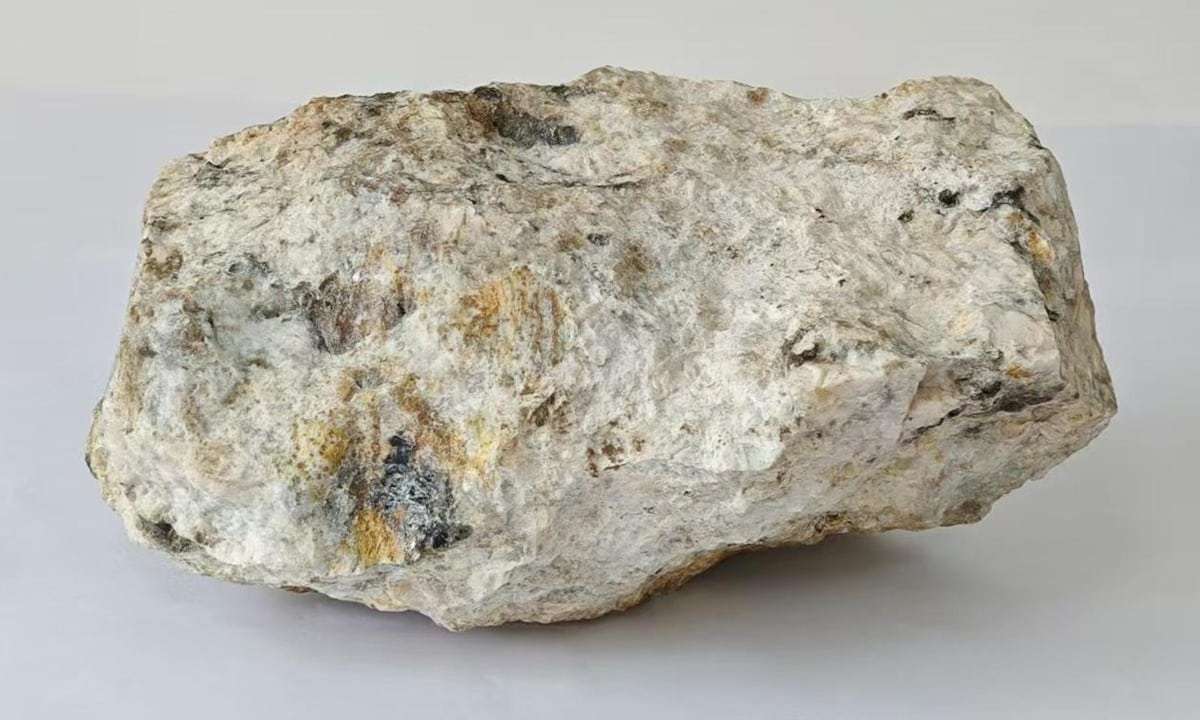
Chinese scientific institutions and industry leaders have begun experimental production yielding quartz purity levels of 4N5 (99.995%) and even reaching 4N8 (99.998%).
These purity grades differentiate industrial quartz from ultra-pure variants used in manufacturing crucibles for growing monocrystalline silicon ingots, which are then sliced into wafers fundamental to microchip and solar panel fabrication.
“Major breakthroughs have been made in areas such as resource assessment, exploration, deep purification, and targeted impurity removal,” noted Global Times, citing progress toward scalable industrial use.
Building a Pathway Toward Technological Autonomy
To facilitate the shift from discovery to mass production, plans are underway to establish a national engineering and innovation center dedicated to HPQ. This center will unite experts in geology, mineral processing, and materials science to refine every step—from mineral formation theories to exploration, advanced evaluation, and separation approaches.
Huang Xuexiong, head of the Ministry’s Department of Mineral Resources Protection and Supervision, confirmed HPQ’s inclusion on the list of national strategic minerals.
Additionally, a comprehensive survey is planned to more accurately assess HPQ reserves, strengthening China’s resource independence.
“It will have a positive impact on fostering new productive forces, as well as enhancing the resilience and security of industrial and supply chains,” said Huang, highlighting the broader implications of this discovery for China’s high-tech ambitions.
- Categories:
- News









0 comments
Sign in to Comment