
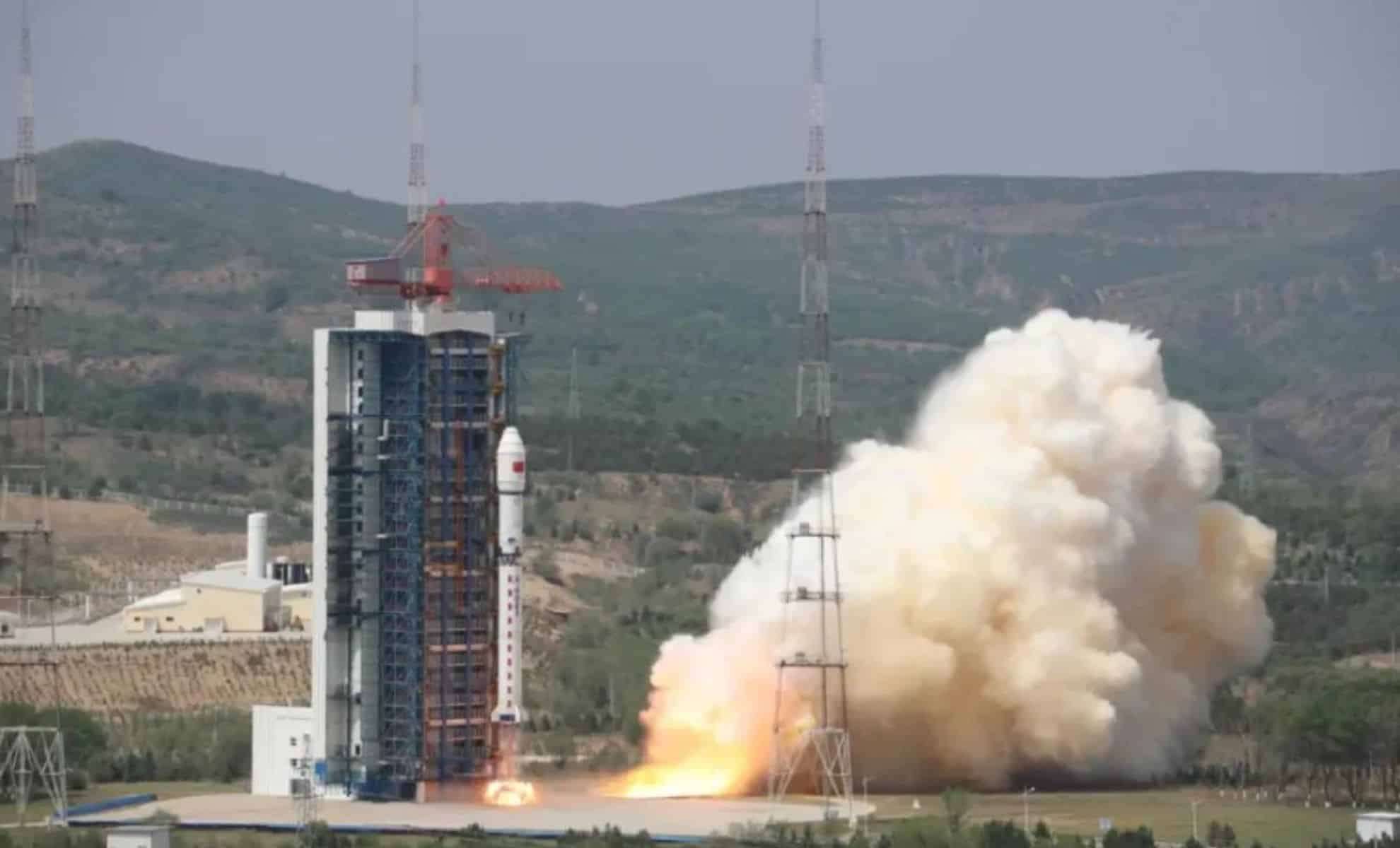
China has recently deployed a quartet of cutting-edge remote sensing satellites, significantly advancing its Earth observation technology and data acquisition capacity.
This event represents a significant step forward in China’s expanding space initiatives, showcasing the nation’s growing expertise in satellite development and space exploration.
Launch Overview
The liftoff occurred at 11:06 p.m. Eastern Time on May 19 (0306 UTC, May 20) from the Taiyuan Satellite Launch Center located in Shanxi Province, northern China. A Long March 2D carrier rocket delivered the satellites into orbit, marking the 523rd mission in the Long March series. The China Aerospace Science and Technology Group (CASC) reported the success within an hour after launch.

The satellites, known collectively as the Beijing-3C constellation, operate optical remote sensing instruments in sun-synchronous orbits approximately 600 kilometers above Earth, ensuring consistent illumination suitable for precise imaging applications.
Capabilities and Mission of Beijing-3C Satellites
Developed by the China Academy of Space Technology (CAST) and managed by Twenty First Century Aerospace Technology Co. Ltd. (21AT) in Beijing, the constellation includes specialized satellites such as Nanning-2 and the Zhengzhou Airport Satellite, which target services for Nanning city in Guangxi Zhuang Autonomous Region and its vicinity.
Each satellite features a panchromatic resolution of 0.5 meters alongside a multispectral resolution of 2 meters. These high-detail imaging features make them valuable assets for environmental surveillance, urban development planning, disaster management, and agricultural oversight.
Strengthening China’s Earth Observation Network
The Beijing-3C satellites will integrate with their predecessors in the Beijing-3 series to create an extensive observatory network, delivering high-resolution remote sensing data to both commercial enterprises and government agencies. This integration enables China to perform more frequent and detailed Earth monitoring.
China’s expanding satellite launch schedule is clear, with this mission marking the 23rd orbital launch of 2024. The nation anticipates approximately 100 launches throughout the year, about 30 of which are expected to be carried out by commercial space firms, demonstrating rapid growth within China’s space market.
Implications and Upcoming Developments
The launch highlights China's progress in space technology and a strategic priority to bolster its space assets. Data from Beijing-3C satellites will support advancements in national governance, enhance natural resource management, track environmental shifts, and improve emergency response capabilities.
Beyond Beijing-3C, China's space sector is bustling with other initiatives. For example, Changguang Satellite Technology (CGST)—originating from the Chinese Academy of Sciences’ Changchun Institute of Optics, Fine Mechanics, and Physics (CIOMP)—has deployed over 100 Jilin-1 satellites, including optical and video satellites with approximately 0.70-meter panchromatic resolution. CGST aims to expand this fleet to 300 satellites by 2025.
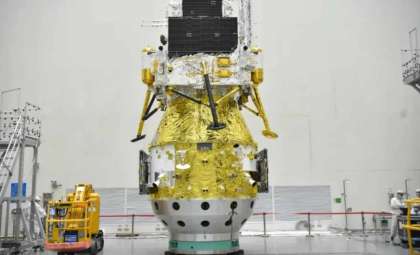
China also pursues ambitious projects beyond Earth’s orbit, notably the Chang’e-6 mission, a lunar far-side sample return spacecraft currently orbiting the Moon and preparing for a landing attempt. Upcoming launches of commercial rockets like the Kuaizhou-11 from Expace and Ceres-1 from Galactic Energy highlight the burgeoning nature of China’s commercial space sector.
As China continues to expand its satellite networks and reaches for new milestones in space exploration, global attention will remain focused on how these advancements shape the future of space science and technology development for humanity’s benefit.
- Categories:
- Astronomy ,
- News ,
- Space ,
- Aircraft








0 comments
Sign in to Comment