

During a casual stroll on their California land, a pair made one of the most astonishing treasure findings in modern U.S. history. In 2013, the couple discovered a stash of 1,411 gold coins, now famously known as the Saddle Ridge Hoard.
The discovery captivated people worldwide due to its magnitude and the enduring mystery surrounding it. Even after more than ten years, the owner and motive behind the buried treasure remain unknown.
Identified only as John and Mary to maintain privacy, the couple has kept details and the exact site confidential. A detailed account was later shared by David McCarthy, Senior Numismatist at Kagin’s, the company responsible for authenticating and auctioning the find, who paints the clearest narrative of how a typical day turned extraordinary.

Discovery Beneath a Well-Known Pathway
What started with spotting what seemed like an old rusted metal can poking out from the earth while walking their dog led to the remarkable find. As noted by Popular Science, the land had previously yielded various 19th-century relics such as old nails and bullets.
Intrigued, the couple dug out the can and took it home. Upon carefully removing its lid, they found something quite unexpected. David McCarthy recounted that a glimpse of a single gold coin was visible through the soil inside the container, revealing the edge of a $20 gold piece.
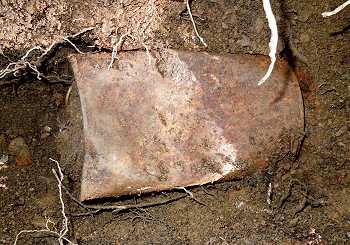
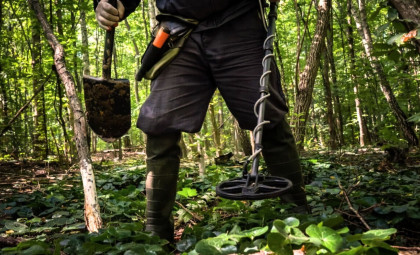
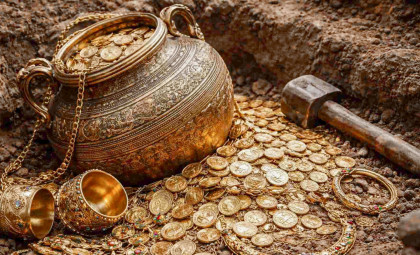
Motivated by this unexpected find, the couple scoured the area intensively over the following two weeks. Using a metal detector, they eventually uncovered a total of eight cans. McCarthy reported that the treasure trove included 1,411 gold coins with a face value close to $28,000, although the market value was significantly higher due to the coins' collector appeal.
A Mystery Surrounding the Gold Coins’ Origins
While the discovery was extraordinary, the provenance of the coins remains a puzzle. The coins were minted between the 1860s and 1890s, with the containers showing various conditions of decay.
Popular Science highlights that these clues imply the coins were likely buried at different times instead of all at once. The site is also within roughly 200 miles of California Gold Rush locations where gold was integral to the local economy in the 19th century.
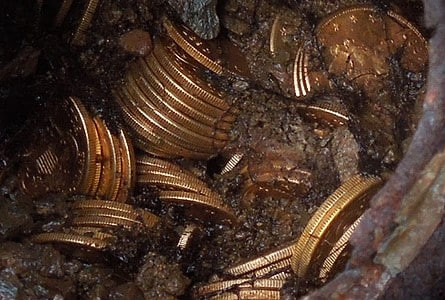
In an interview with Coinweek, McCarthy described how burying gold was common in Northern California when local banks were scarce. Wealthy individuals often resorted to hiding their assets underground for safekeeping.
“If you had 10, 20, 30 thousand dollars in gold that you’d acquired over time, you’re not going to leave it in your house,” he said. He added that, “If you don’t have a bank to put it in, the only logical choice is to bury it in the ground. It’s pretty typical human behavior.”
Still, certain facets of the hoard are perplexing. Several coins were in near-perfect condition, suggesting they never entered circulation. Others were minted as far away as Georgia, complicating the story of this Western treasure.
The Fate of the $10 Million Gold Collection
After grasping the significance of their find, the couple reached out to Kagin’s for expert assistance. Most coins were sold eventually, with many offered through Amazon, marking the first major coin hoard sale on the e-commerce platform.
The proceeds helped the couple settle debts and contribute to charitable causes. They also retained select coins to preserve as family heirlooms. Two coins from the hoard were gifted to the Smithsonian Institution: a $10 gold coin from 1888 and a $20 gold coin dating to 1892.
- Categories:
- News









0 comments
Sign in to Comment