

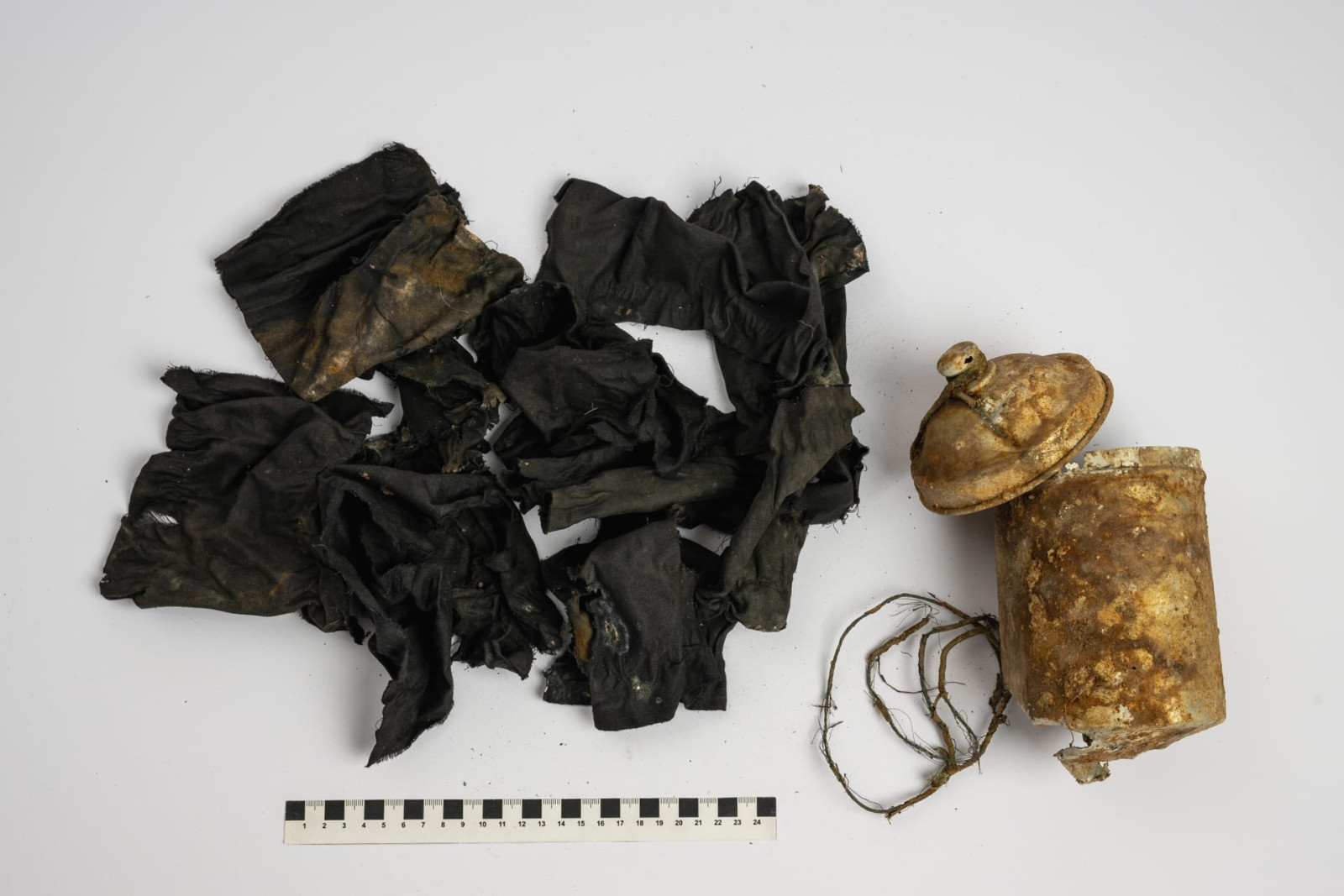
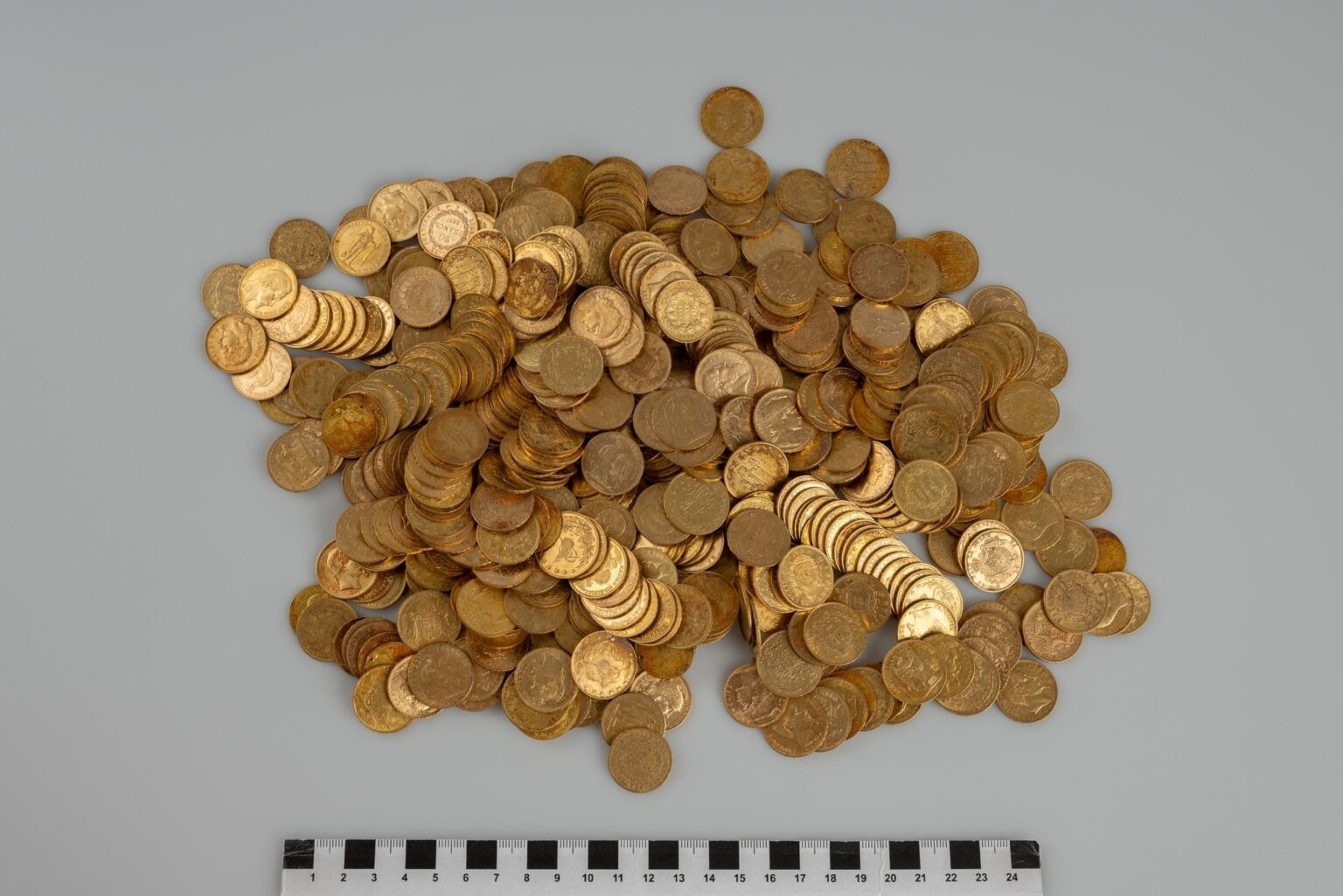
On the southwestern slopes of Zvičina Hill, an aluminum container partially visible within a stone wall caught the eyes of two hikers in early February 2025. Inside, they discovered 598 gold coins meticulously organized in 11 stacks and encased in black cloth. Close by, about one meter away, an iron box was buried revealing additional treasures such as cigarette cases, bracelets, a comb, a chain, a powder compact, and a small wire purse.
This extraordinary find near Trutnov in north-eastern Bohemia is more than just a buried treasure story. Intriguingly, some coins bear countermarks associated with Serbia or Bosnia, including other pieces from various European countries, yet notably missing local currency expected from the region. Weighing roughly 7 kilograms, the hoard was transferred to the Museum of Eastern Bohemia in Hradec Králové, where experts began examining its origins and estimating its value.
Two Separate Containers Hidden Side by Side
The manner of concealment suggests careful planning rather than accidental loss. Gold coins were stacked inside the aluminum box and wrapped in fabric, while an iron container nearby housed personal and ornamental objects. This clear segregation points to an intentional arrangement, with coin wealth stored distinctly from other possessions before concealment.

The collection of gold coins alone weighs close to 3.7 kilograms, according to Arkeonews. Meanwhile, the iron box contained 16 cigarette holders, 10 bracelets, a wire purse, a comb, a chain, and a powder compact. Though described as yellow metal, these items require further analysis to determine their precise material and value.
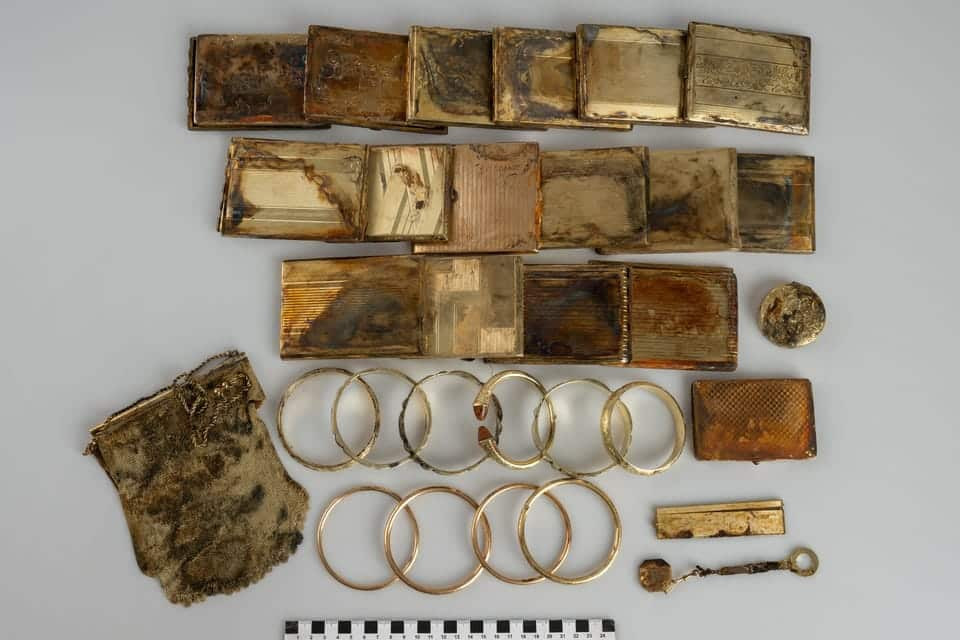
These personal belongings imbue the find with a more intimate character. Cigarette cases and a powder compact hint at day-to-day life items once cherished by their owner, although their identity remains a mystery. While coins represent stored wealth, the accompanying items suggest portable personal treasures, perhaps gathered under pressing circumstances.
Countermarks Offer Critical Dating Clues
The coins in the hoard span mint years from 1808 to 1915; however, the latest coin date does not pinpoint when the treasure was hidden. Several Austro-Hungarian coins have visible countermarks linked to regions of the former Yugoslavia, particularly Serbia and Bosnia, dating from the 1920s and 1930s. These marks serve as more relevant temporal indicators than the latest mint date.
The reasoning is straightforward: a 1915 coin could have remained in circulation for many years, but countermarks from the 1920s or 1930s indicate the coin was actively used or handled after the First World War. This confirms the treasure was concealed no earlier than the interwar period, revealing a Balkan connection alongside its Czech location.
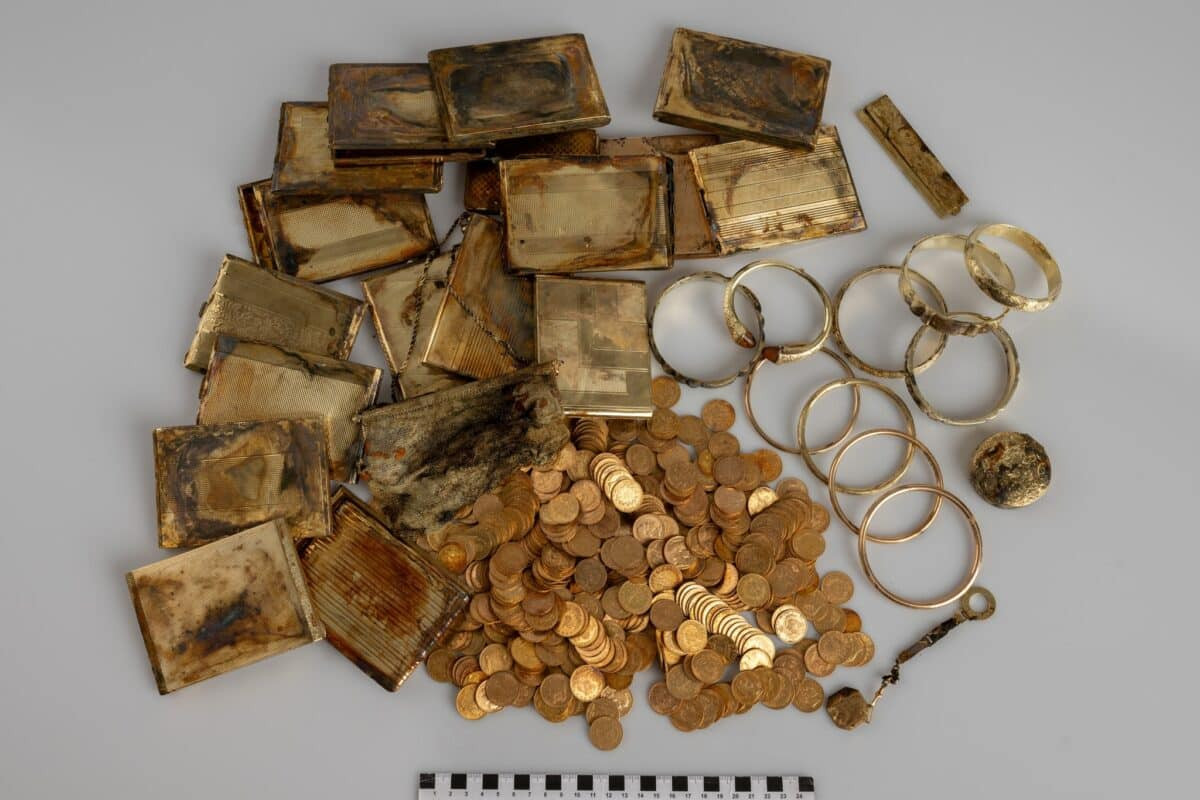
The diverse origin of the coins adds further complexity. Coins hail from France, Austria-Hungary, Russia, Italy, Romania, Belgium, and the Ottoman Empire or Turkey. Curiously absent are German marks and Czechoslovak crowns, even though the treasure was hidden on Czech soil. This omission suggests the stash was collected for its intrinsic gold value rather than for use as local currency.
A Mysterious Treasure in a Czech Forest
Vojtěch Brádle, a numismatics expert focused on Czech lands and coin discoveries in north-eastern Bohemia, is leading the analysis. His initial response revealed his astonishment: “My jaw dropped.”
Brádle elaborated on the distinctiveness of this collection compared to typical domestic finds. “This assemblage stands out due to its unique composition,” he remarked. Supporting this, the lineup is dominated by French coins, with others from Belgium, the Ottoman Empire, Austro-Hungary, Romania, Italy, and Russia also present. The notable exclusion of German and Czechoslovak currencies complicates its association with the find’s location.
His main interpretation is that the treasure's owner prioritized preserving gold’s metal worth rather than its economic spending power. “This was intentionally hidden because of the precious metal,” Brádle noted. “It’s not about what the coins could buy.” This insight helps explain why older, foreign, and mixed coins were kept together — gold’s value in times of crisis often surpasses official currency.
Historical Events That May Explain the Concealment
Without identifying the owner, experts lean on historical events to interpret the hoard. One probable scenario dates after 1938, when Nazi Germany invaded Czechoslovakia's border regions, triggering flights and forced removals of Czech and Jewish populations. Amid such turmoil, burying gold and valuables might have been a strategy to safeguard assets during displacement.
A second potential timeframe is 1945, following the conclusion of the Second World War, when ethnic Germans were expelled from Czechoslovakia. Under duress, someone might have hidden possessions hoping to reclaim them. A third possibility centers on the 1953 monetary reform, when individuals frequently concealed gold, jewelry, and other valuables to shield wealth amidst political and financial instability.
Archaeologist Miroslav Novák succinctly summarized these options: “The list of potential reasons is fairly clear,” he said. “The deportations of Czech and Jewish communities, then the removal of Germans after the war, and the monetary reform.” Meanwhile, museum director Petr Grulich remains cautious on provenance: “It’s difficult to determine if this was Czech, German, or Jewish gold.”
- Categories:
- News









0 comments
Sign in to Comment