
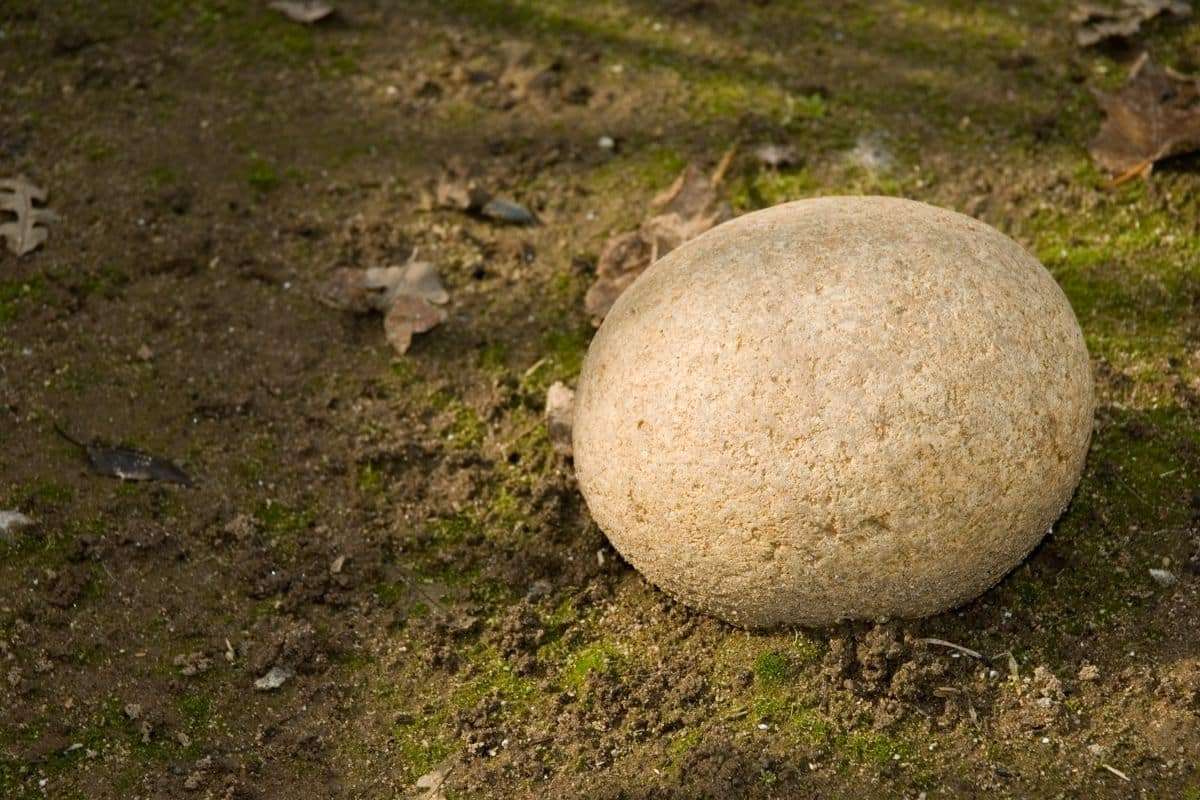
Nearly ten years ago, an extraordinary fossilized egg was uncovered in Antarctica, and only recently has its true nature been revealed. Researchers at the University of Texas at Austin have identified it as a massive, soft-shelled egg, most likely deposited by a mosasaur — a giant marine reptile that dominated the ocean during the late Cretaceous period.
An Overlooked Antarctic Find
Discovered back in 2011, the fossil sat largely unstudied in Chile’s National Museum of Natural History. With dimensions exceeding 11 inches (27.9 cm) in length and 7 inches (17.8 cm) in width, its shape closely resembles a deflated football. The egg’s unusual pliable shell initially confounded researchers since it lacked the hard exterior typical of many dinosaur eggs.
Upon detailed examination, the University of Texas team detected several membrane layers inside, characteristic of soft-shelled eggs.

Published in the journal Nature, the findings date the egg to roughly 66 million years ago, just preceding the catastrophic mass extinction that eliminated the dinosaurs and numerous other prehistoric animals.
A Remarkably Large Ancient Specimen
This egg marks the second-largest egg known from any species, extinct or living, and claims the record as the largest soft-shelled egg ever discovered.
“Although it comes from a creature comparable in size to a large dinosaur, this egg is unlike typical dinosaur eggs. Its closest analogues are eggs from lizards and snakes, yet this belonged to a giant relative of those reptiles,” explained Lucas Legendre, the study’s lead author.
The massive size of the fossil egg points to an enormous marine reptile, far exceeding the size of modern egg-laying creatures.
By examining the correlation between body size and egg size across 259 living reptile species, researchers estimated the egg layer’s length to be at least 23 feet (7 meters), not including its tail.
New Insights Into Mosasaur Reproduction
Prior assumptions among paleontologists suggested that mosasaurs gave birth to live young, similar to certain modern sea snakes and sharks. As fully aquatic reptiles, mosasaurs were unlikely to return to land to nest, unlike birds or turtles. This led to the hypothesis that mosasaurs evolved viviparity, the reproductive strategy involving live birth.
However, the presence of this soft-shelled egg casts doubt on that view. Scientists now propose that mosasaurs could have laid eggs underwater, akin to sea snakes, where hatchlings would emerge straight away, or laid eggs in shallow, sheltered coastal areas. Nearby fossilized mosasaur juveniles bolster the idea of ancient marine nurseries.
Implications for Understanding Prehistoric Life
Should further evidence confirm mosasaur egg-laying behavior, it would prompt a reassessment of reproductive evolution among marine reptiles. This discovery indicates that soft-shelled eggs were possibly more widespread within prehistoric marine fauna than previously acknowledged.
It also suggests that the shift from egg-laying to live birth might have involved multiple evolutionary steps across different reptilian lineages.
- Categories:
- Science







0 comments
Sign in to Comment