
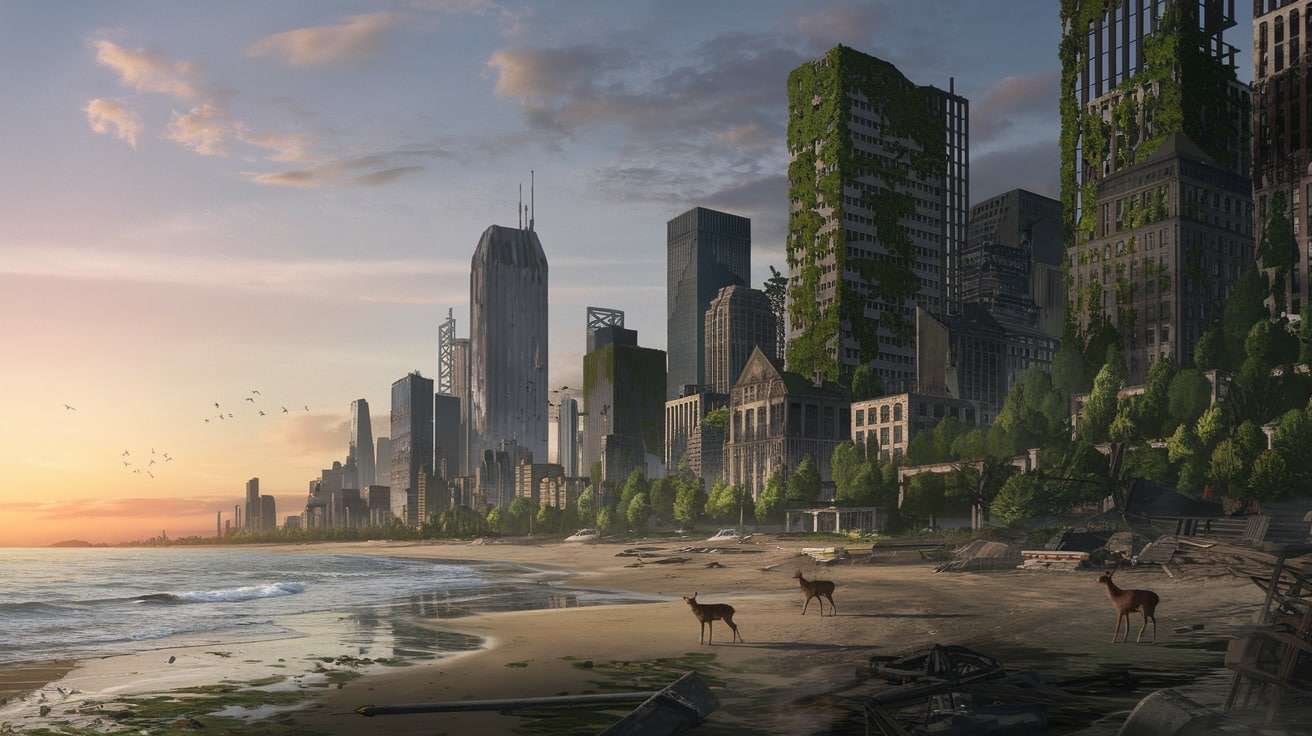
Picture a world where humans no longer exist. The once-bustling metropolises fall silent, and nature begins to reclaim what was once lost. In this transformed environment, the octopus—a creature often overlooked—emerges as a potential dominant force across the Earth. But what makes this cephalopod a contender for such a future? The explanation might surprise you.
Could the Octopus Become Earth's Next Dominant Species?
Step aside from the usual suspects like primates or dolphins frequently hailed for their intelligence. Octopuses possess remarkable intellectual capacities combined with exceptional adaptability, putting them in an excellent position to thrive in a world without humans.
Despite their unusual form, their cognitive abilities rival those of advanced mammals. Their brains, though modest in size, host nearly 500 million neurons, many distributed throughout their arms—enabling each limb to function with a degree of autonomous processing.

As Professor Tim Coulson of the University of Oxford explains, “Their intelligence ranks among the highest in the animal kingdom.” Octopuses demonstrate the capacity to solve intricate problems, such as unlocking jars, escaping containment, and wielding tools, skills seldom observed outside humans and certain primates. This unique, decentralized mental architecture—aided by their arms’ individual control—allows them to multitask and excel in survival, particularly in a post-human environment.

What Makes Octopuses Prime Candidates to Outlive Humans?
So why are octopuses such strong contenders for planetary dominance after humanity? Unlike humans or even primates, octopuses don’t depend on intricate social systems. They are solitary, resilient, and display exceptional flexibility. Their survival strategy is independent of social cooperation, a crucial advantage when navigating a world devoid of humans and their societal structures.
Octopuses thrive in a wide range of extreme habitats, from the dark depths of the oceans to vibrant coastal reefs. Remarkably, certain species can endure up to 30 minutes outside water, hinting at the potential for future land adaptation.
According to Professor Coulson, these creatures might one day evolve to function on dry land, even employing tools to facilitate this transition. Such an evolutionary leap would grant them significant advantages over many terrestrial animals.
“Envision a world where these brilliant, multi-armed beings craft tools, build shelters, and explore terrestrial environments,” Coulson muses. Could such a reality come to pass? Their sharp intellect and adaptability suggest they could be unrivaled survivors on an unpredictable Earth after humans.
Are Octopuses the Overlooked Contenders for the Future?
You might wonder: what about dolphins or crows? These animals are often championed for their intelligence, yet they face obstacles. Both dolphins and crows depend heavily on social groups for survival, and such reliance on complex social connections could hinder their adaptability in a human-free world.
In sharp contrast, octopuses can thrive independently, confronting challenges in isolation that might overwhelm other species. Their striking flexibility in approaching problems and adapting to diverse environments positions them as ideal candidates for dominance without human influence. Their self-reliance may enable them to occupy ecological roles that others cannot.
Professor Coulson emphasizes that although dolphins and crows exhibit high intelligence, their dependence on group dynamics constrains their potential in a post-human era. Conversely, octopuses are unbound by such social restrictions, equipping them to better survive and evolve amidst shifting conditions.
Source: The European



0 comments
Sign in to Comment