
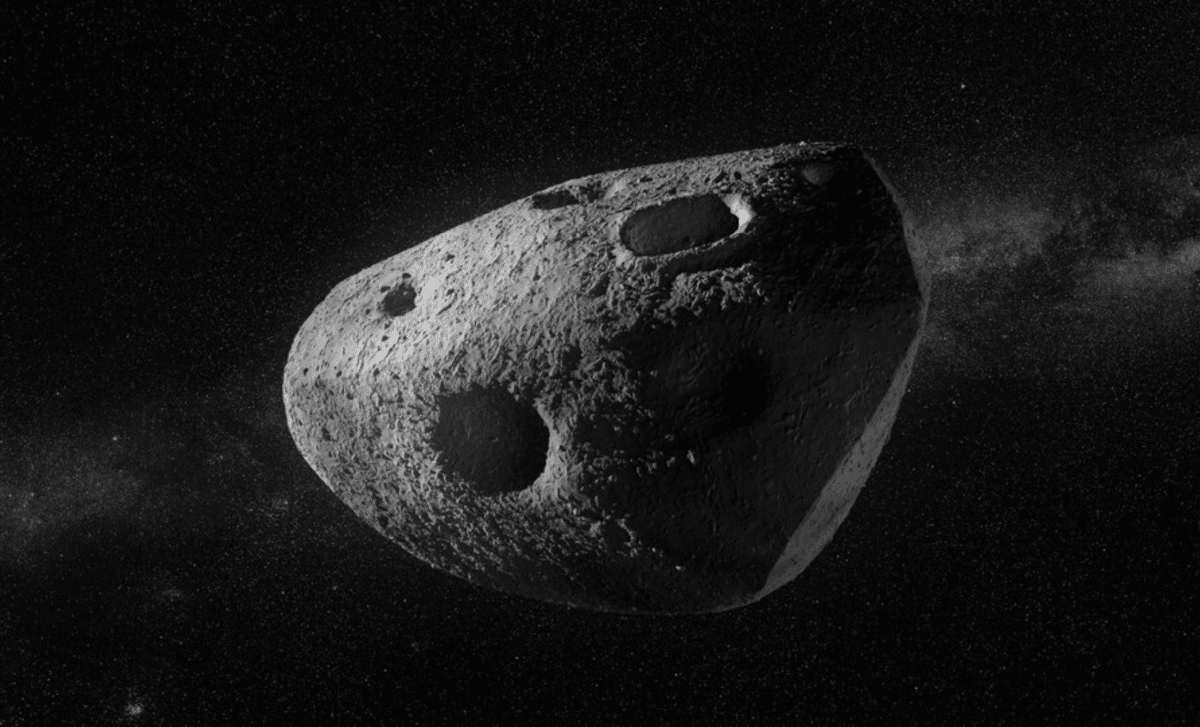
The European Space Agency (ESA) has advanced a groundbreaking planetary defense initiative by awarding the contract for Don Quijote, the first CubeSat built explicitly to touch down on an asteroid’s surface. This tiny spacecraft will accompany the Ramses mission to asteroid 99942 Apophis, which will make a strikingly close approach to Earth on April 13, 2029. ESA highlights that this mission enables scientists to monitor firsthand how Earth’s gravitational forces affect a large near-Earth object during this rare encounter.
Unparalleled Chance to Examine Apophis Face-to-Face
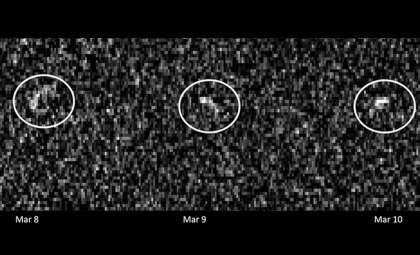
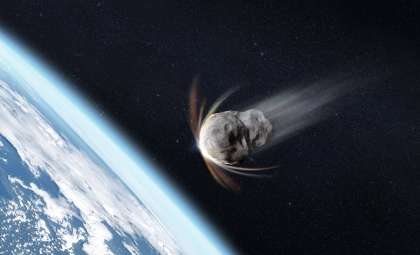
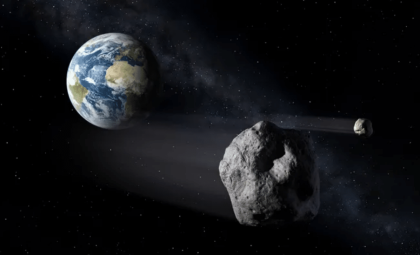
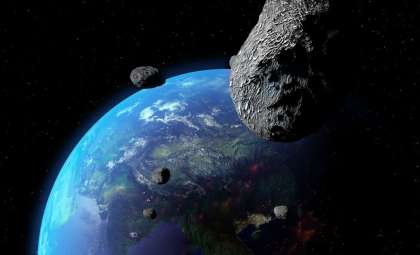
Measuring 375 meters across, Apophis is one of the most scrutinized asteroids due to its notable 2029 near-Earth passage. It will skim Earth at a mere 32,000 kilometers, closer than numerous geostationary satellites. Instead of treating this event as just an astronomical occurrence, ESA plans to convert it into a unique scientific opportunity by deploying instruments directly on the asteroid ahead of its close flyby.
“The arrival of Apophis represents a unique opportunity,” said ESA’s programme manager for Mars and Beyond, Orson Sutherland. “It is exceedingly rare for such a large asteroid – at 375 m across, about the size of a cruise liner – to pass so near to Earth. Flying past at an altitude of 32 000 km, its trajectory will take it within the orbit of our geostationary satellites.”
Add Cosmo Herald as a Preferred SourceHe continued: “It’s really a free experiment because the tug of Earth’s gravity is forecast to trigger deformation and potentially set off asteroid quakes, that Don Quijote will now be able to monitor right on the spot.”

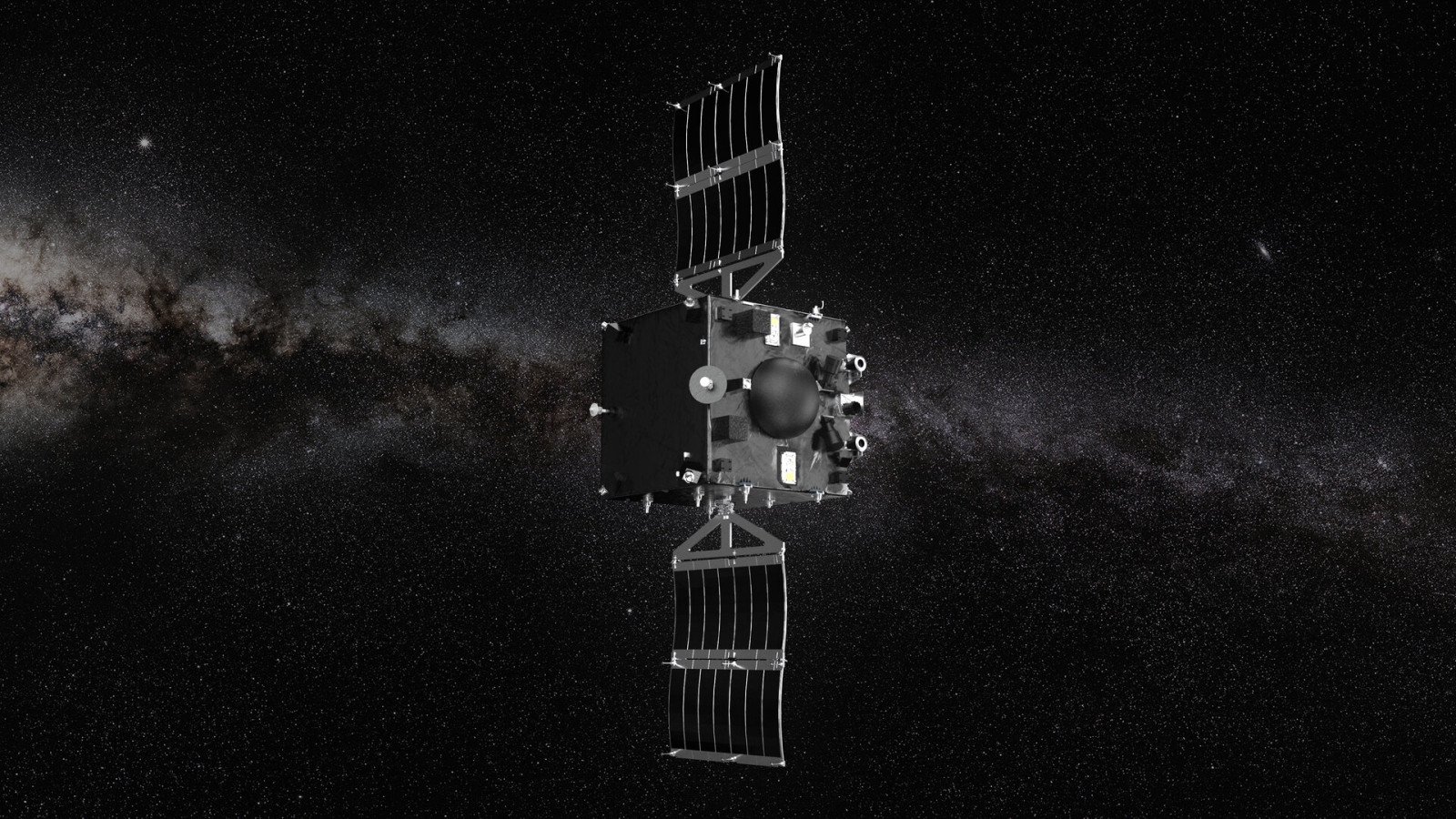
This unique gravitational interaction cannot be replicated in laboratories or flawlessly modeled by simulations. Researchers anticipate that Earth’s pull will induce measurable changes in Apophis’ internal structure, shedding light on the composition of rocky bodies that have largely resisted alteration since the Solar System’s formation. These findings could enhance future planetary defense measures and deepen knowledge about asteroid development.
As detailed by ESA, this close approach is one of the most valuable scientific events expected in coming decades.
A Compact Spacecraft Engineered for a Remarkable Touchdown
Though Don Quijote is roughly shoebox-sized, it stands among the most complex CubeSats conceived. Unlike typical Earth-orbiting CubeSats, it must endure deep space travel, navigate a rotating asteroid’s environment, autonomously select a secure landing spot, survive touchdown impacts, and commence scientific operations under unprecedented conditions.
The lander hosts three primary instruments: the GRASS gravimeter from the Royal Observatory of Belgium and EMXYS to map Apophis’ faint gravitational field; the MARIE magnetometer, developed via the German Space Science Programme, which will assess the asteroid’s magnetic field and any magnetic effects during Earth’s approach; and the Seismic Instrument for Asteroids (SIA) by ISAE-SUPAERO in France, aimed at conducting potentially the first seismic experiment directly on an asteroid.
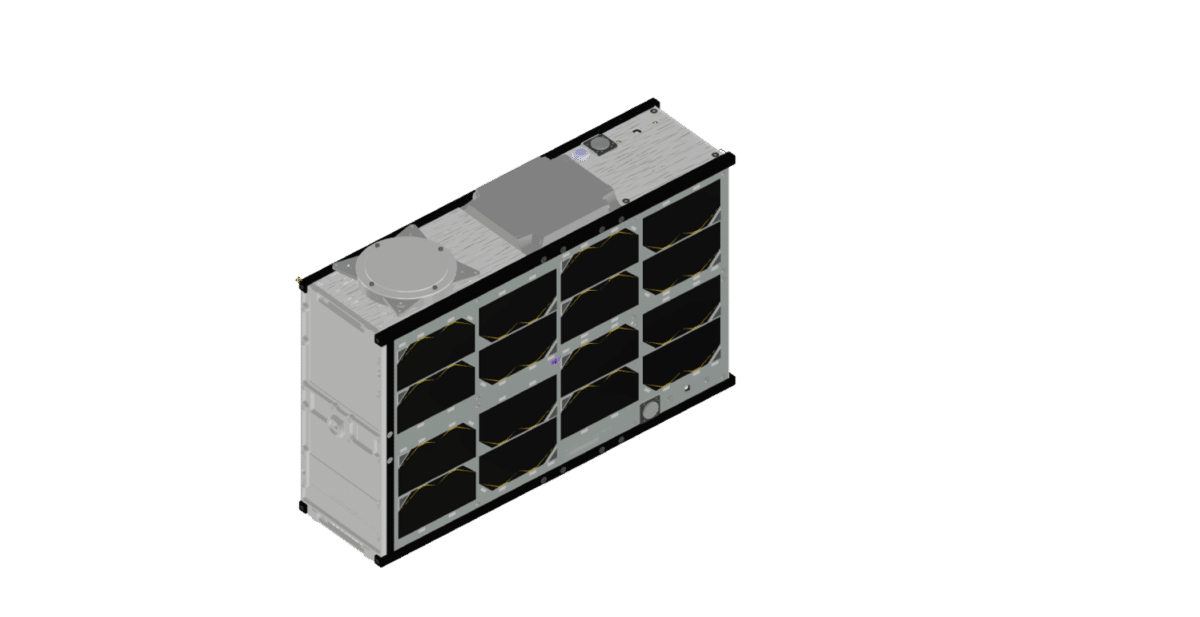
Engineering all these capabilities into such a small package demanded extensive innovation.
Francisco García de Quirós, Chief Technology Officer at EMXYS, noted: "We need to accommodate our instruments, alongside spacecraft electronics, batteries, and communication links, plus eight thrusters for maneuvering. The center of mass must be precisely controlled to ensure thruster efficiency as the CubeSat autonomously descends to a safe touchdown."
The compact design is strategic rather than aesthetic. Every ounce conserved allows for more scientific equipment while enabling Don Quijote to safely travel with the larger Ramses probe toward Apophis.
Meeting a Tight Deadline Before the Encounter
With Ramses slated for launch on Japan’s H3 rocket in spring 2028, the team has less than two years to finalize Don Quijote’s build, assembly, and testing.
ESA is leveraging technology developed for the ongoing Hera mission, currently traveling to asteroid Dimorphos after NASA’s DART impact success. Using established hardware and mission designs helps reduce risks and lets engineers concentrate on challenges unique to Apophis.
ESA’s confidence grew as the last main contract was secured.
Paolo Martino, Ramses mission manager, stated: "With all contracts finalized, the team is fully focused on delivering this mission under an unforgiving schedule—because Apophis won’t wait for us!"
Adhering strictly to all milestones is critical, as the asteroid’s orbital mechanics offer no room for delay. Failing the launch window would mean losing the chance to witness this historic event.
Autonomous Landing on a Tumbling Asteroid
The mission’s climax unfolds when Don Quijote separates from Ramses and descends onto Apophis. Because communication lag prevents real-time control, the CubeSat must autonomously navigate and use feature-recognition technology to select and reach a safe landing area.
Francesca Ingiosi, responsible for Ramses’ CubeSats, explained: "Don Quijote will operate without direct human oversight, employing feature tracking for a secure touchdown. Though its gravimeter and magnetometer will be active during descent, the mission’s greatest scientific returns are expected from surface measurements."
She also highlighted the unpredictable conditions the lander might face post-landing.
"The descent will be gentle, but low gravity means the spacecraft could bounce on the surface. Don Quijote is designed to function regardless of orientation, though the terrain is uncertain—it might even sink slightly into the surface, which is not ideal."
The asteroid’s behavior adds further challenges.
"Apophis is likely tumbling irregularly, causing drastic temperature swings as it rotates between day and night. To maximize operational life, we aim to land where both cycles occur, allowing battery recharge without overheating. If stuck in prolonged shadow, non-rechargeable batteries serve as a backup."
If successful, Don Quijote will be the first CubeSat to operate directly from an asteroid’s surface while documenting how Earth’s close passage physically alters one of the best-studied near-Earth asteroids. This mission could redefine small spacecraft capabilities and yield unparalleled scientific data.
- Categories:
- News




0 comments
Sign in to Comment