
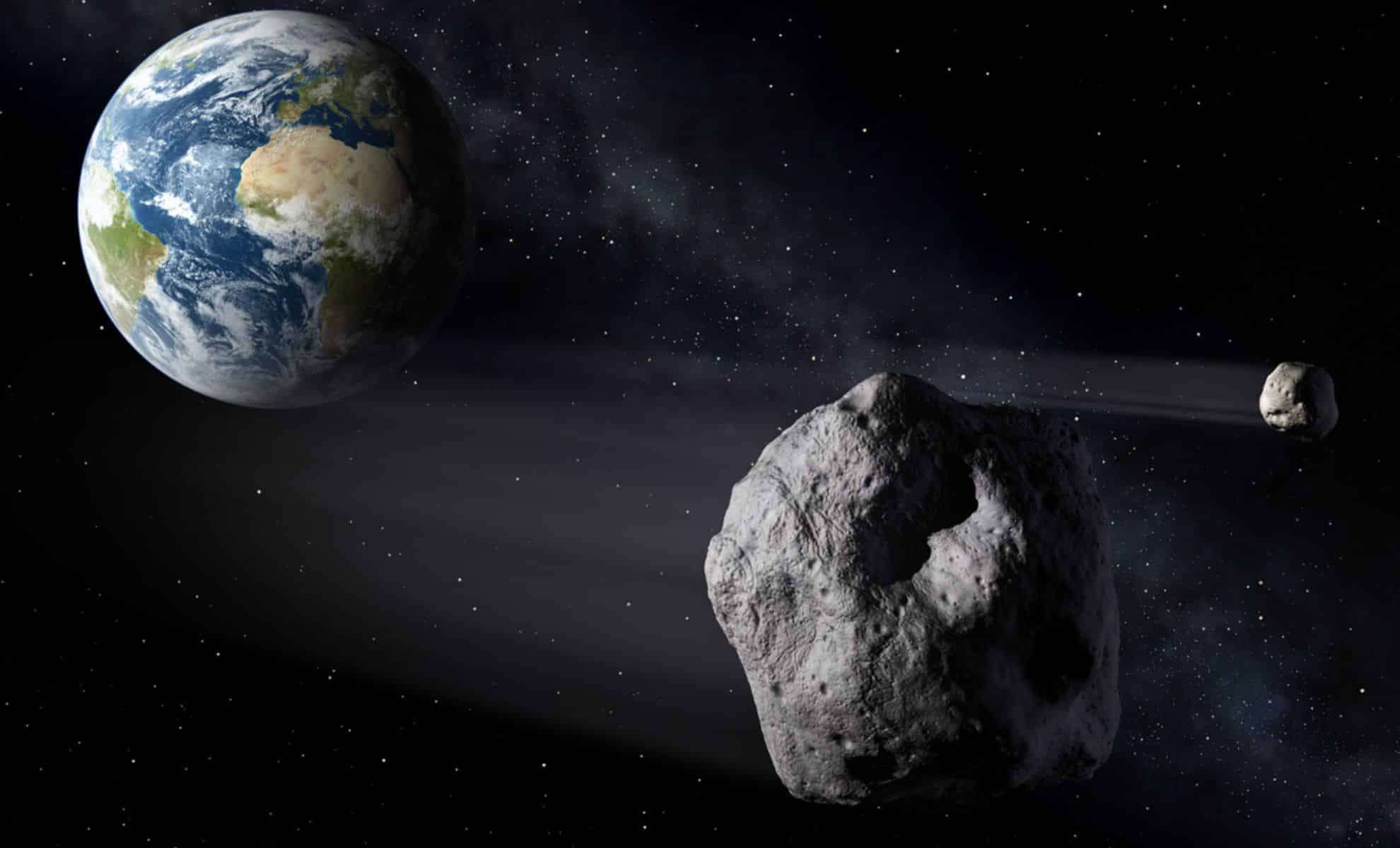
In 2029, the asteroid 99942 Apophis, larger than the Eiffel Tower, will make a remarkably close pass by Earth, presenting a rare chance for in-depth scientific investigation.
The European Space Agency (ESA) recently unveiled the Rapid Apophis Mission for Security and Safety (RAMSES) designed to thoroughly study this near-Earth asteroid and gather crucial data to bolster planetary defense efforts.
Why Apophis’s 2029 Encounter Matters
On April 13, 2029, Apophis will approach Earth at a distance of only 19,794 miles (31,860 kilometers), closer than the orbit of geostationary satellites. Such a close passage of a large asteroid is an event that occurs roughly once every 5,000 to 10,000 years. Researchers plan to capitalize on this intimate encounter to collect valuable information about the asteroid’s dimensions, shape, mass, and spin rate. Dr. Holger Krag, head of ESA’s Space Safety Programme, stated, “This flyby is truly one-of-a-kind.”

Apophis’s close passage will induce gravitational effects that might reshape the asteroid and prompt landslides on its surface. This natural gravitational experiment offers scientists insight into how such interactions impact an asteroid’s surface and interior, enhancing our understanding of similar near-Earth objects (NEOs).
Goals and Planning Behind the RAMSES Mission
Slated for launch in early 2028, the RAMSES spacecraft will reach Apophis prior to its Earth flyby. This mission will conduct comprehensive surveys to characterize the asteroid before, during, and after its close approach. Instruments onboard include the Asteroid Framing Camera and possibly a seismometer to track surface disturbances. Dr. Patrick Michel, Research Director at CNRS, commented on the mission’s potential: “Nature is providing the experiment by tossing Apophis close to Earth. Our role is to observe how it is stretched and compressed by tidal forces.”
By examining Apophis’s gravitational response, scientists can improve asteroid behavior models and better prepare for future asteroid impact threats. RAMSES will perform extensive observations before and after the encounter to detect any surface or internal changes, deepening our knowledge of asteroid dynamics.
Joint Efforts and Broader Impact
RAMSES will collaborate with NASA’s OSIRIS-APEX mission, a continuation of the OSIRIS-REx project, which plans to meet Apophis soon after its flyby. This partnership will enable a full-scale study of how Earth’s gravity influences the asteroid’s surface and orbit. Dr. Terik Daly from Johns Hopkins Applied Physics Laboratory emphasized this synergy: “RAMSES will document Apophis in detail before its near-Earth encounter.”
These joint missions will not only enrich our comprehension of asteroid evolution but also enhance planetary defense techniques by refining impact prediction and mitigation methods. Insights gained will additionally improve our understanding of the early solar system, since asteroids like Apophis are ancient planetary remnants. Observations will also track the asteroid’s orbital transition from an Aten-class to an Apollo-class asteroid after Earth’s influence.
The 2029 Apophis encounter stands as an unprecedented scientific opportunity poised to advance planetary defense science. With ESA’s RAMSES and NASA’s OSIRIS-APEX missions working in tandem, we are set to gain critical knowledge about near-Earth asteroids and improve our readiness for future asteroid threats.
- Categories:
- Astronomy ,
- News ,
- Space ,
- Nasa









0 comments
Sign in to Comment