

For many years, exploring the biology of menstruation faced a major obstacle: the majority of laboratory animals don’t naturally menstruate. Despite menstruation impacting nearly half the world's population throughout their lives, scientific insight into its biology and related disorders remains limited. This is now beginning to shift.
A group of researchers from Harvard University has engineered mice that display menstrual cycles closely resembling those of humans. These mice undergo genuine shedding of the uterine lining, a defining characteristic found in very few species—such as humans, certain primates, and a handful of bats—that naturally menstruate.
The breakthrough holds significant promise for advancing reproductive health, particularly in understanding conditions like endometriosis, adenomyosis, and heavy menstrual bleeding, which remain poorly understood despite being widespread.

“We’ve never had a reliable, genetically tractable mammalian model for menstruation until now,” said Dr. Kara McKinley, a reproductive biologist and lead author of the study. “That’s been a fundamental barrier in understanding what normal menstruation looks like—and what happens when it goes wrong.”
Previously, rodent models relied on hormone-driven pseudopregnancy to imitate certain menstrual phases but lacked key aspects such as comprehensive endometrial shedding and rebuilding. The 2016 revelation that the African spiny mouse naturally menstruates excited scientists, though the species’ delicate nature and limited genetic research tools hindered its practical use.
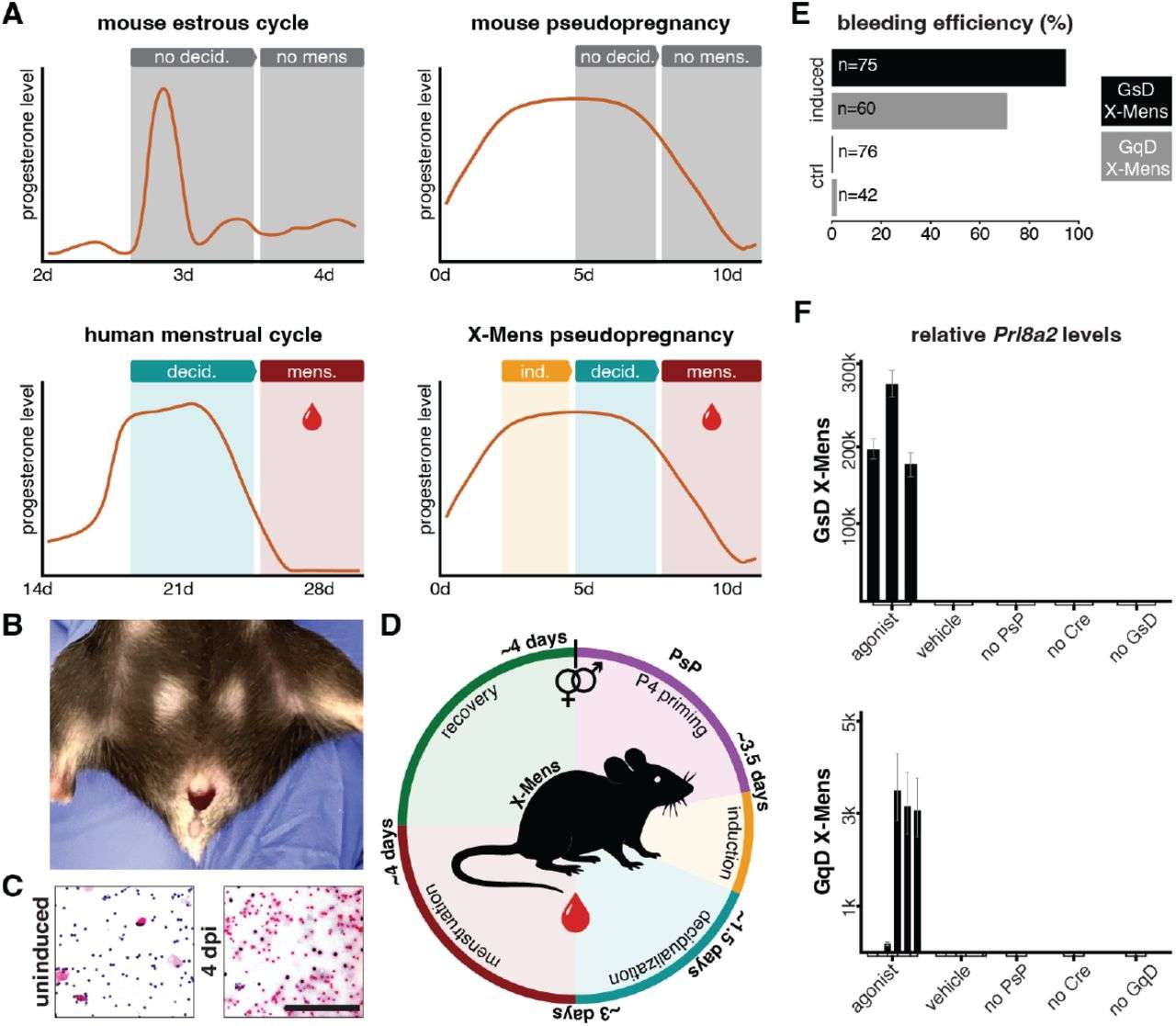
The Harvard team’s new model overcomes these challenges. Using a chemogenetic technique, they inserted a drug-switchable receptor that makes the mouse’s endometrial cells react to calcium, an essential signal during human menstruation.
Combined with raised progesterone levels, this mechanism triggered what the researchers call a “controlled, reversible menstrual-like event” lasting several days. Microscopic examination showed bleeding, dilation of blood vessels, and gene activity patterns closely resembling those in human menstrual fluid.
A Superior Model for Menstrual Studies
Described in a recent bioRxiv preprint, the model provides a new perspective on the spatial and cellular coordination underlying menstruation. Employing single-cell spatial transcriptomics, researchers observed an organized pattern in endometrial cells before shedding: young, regenerating cells surrounded clusters of older, degenerating ones—indicating menstruation is a finely tuned biological process rather than a random explosion of cell death.
“This ring structure may actually protect the uterus during shedding,” said Çağrı Çevrim, co-author of the study. “It’s like the tissue is preparing itself from the inside out.”
Though some components of human menstruation, such as spiral arteries essential for endometrial blood flow, are not present in these mice, the model demonstrates a 31% overlap in gene expression with human menstrual tissue—substantially higher than random chance and making it one of the most promising platforms for studying the molecular underpinnings of menstrual health and disease.
Heavy menstrual bleeding affects up to 20% of women, but current treatments, often involving hormonal therapies or surgery, have significant limitations. The Harvard researchers aim to leverage this mouse model to develop mRNA-based therapeutics capable of targeting specific pathways involved in abnormal bleeding with fewer side effects.
Addressing Historic Disparities in Biomedical Research
The development of a menstruating mouse marks a major step forward in biomedical research focused on female reproductive health, a longstanding area of neglect. Until recent decades, most preclinical studies excluded females to avoid variability from hormone cycles, leading to gaps in knowledge affecting half the population.
“This goes beyond menstruation,” explained Dr. Alison Kohlmeier, a reproductive scientist at Emory University not involved in the work. “It equips researchers with rigorous tools to study female reproductive biology at a level equal to other systems.”
While the results are promising, they await formal peer review. If confirmed, this model will be invaluable for understanding why some individuals face severe menstrual symptoms while others do not, potentially enabling more personalized and effective treatments in the future.
- Categories:
- Science









0 comments
Sign in to Comment