
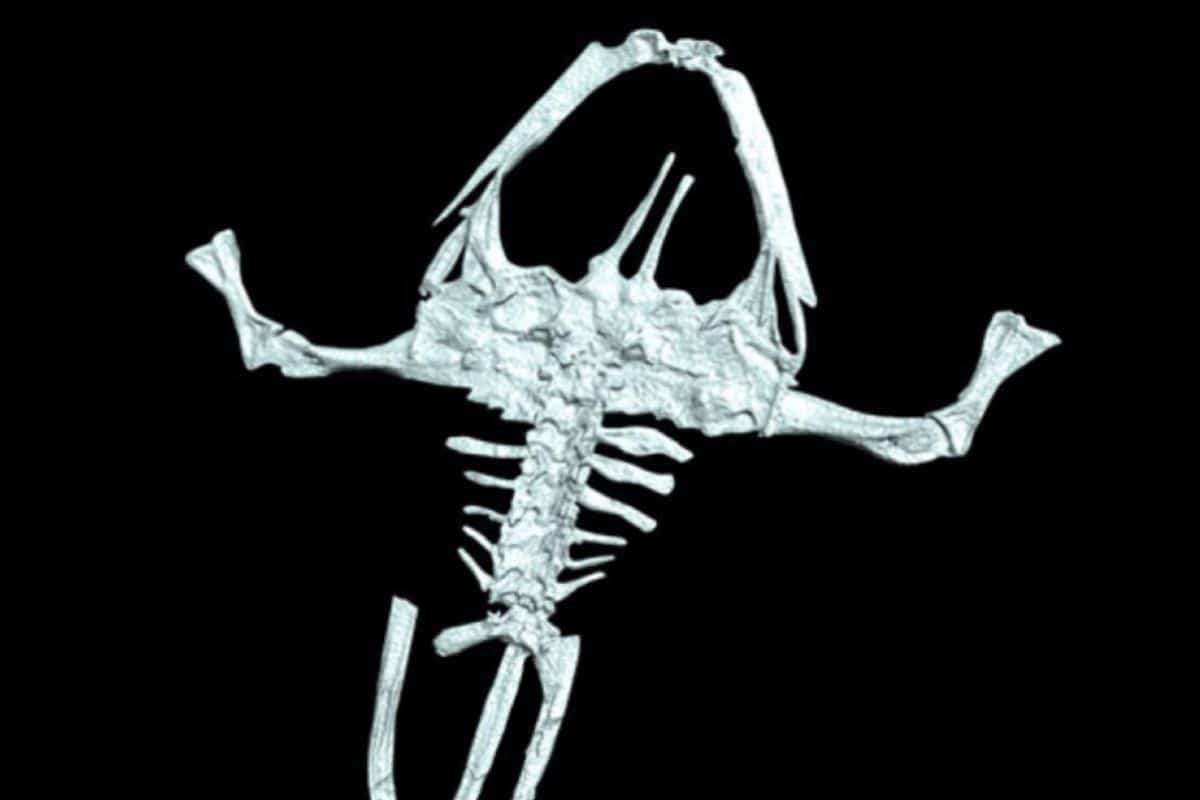
A stunning fossil of a frog dating back 100 million years has been uncovered in northwestern China, shedding new light on how ancient amphibians reproduced.
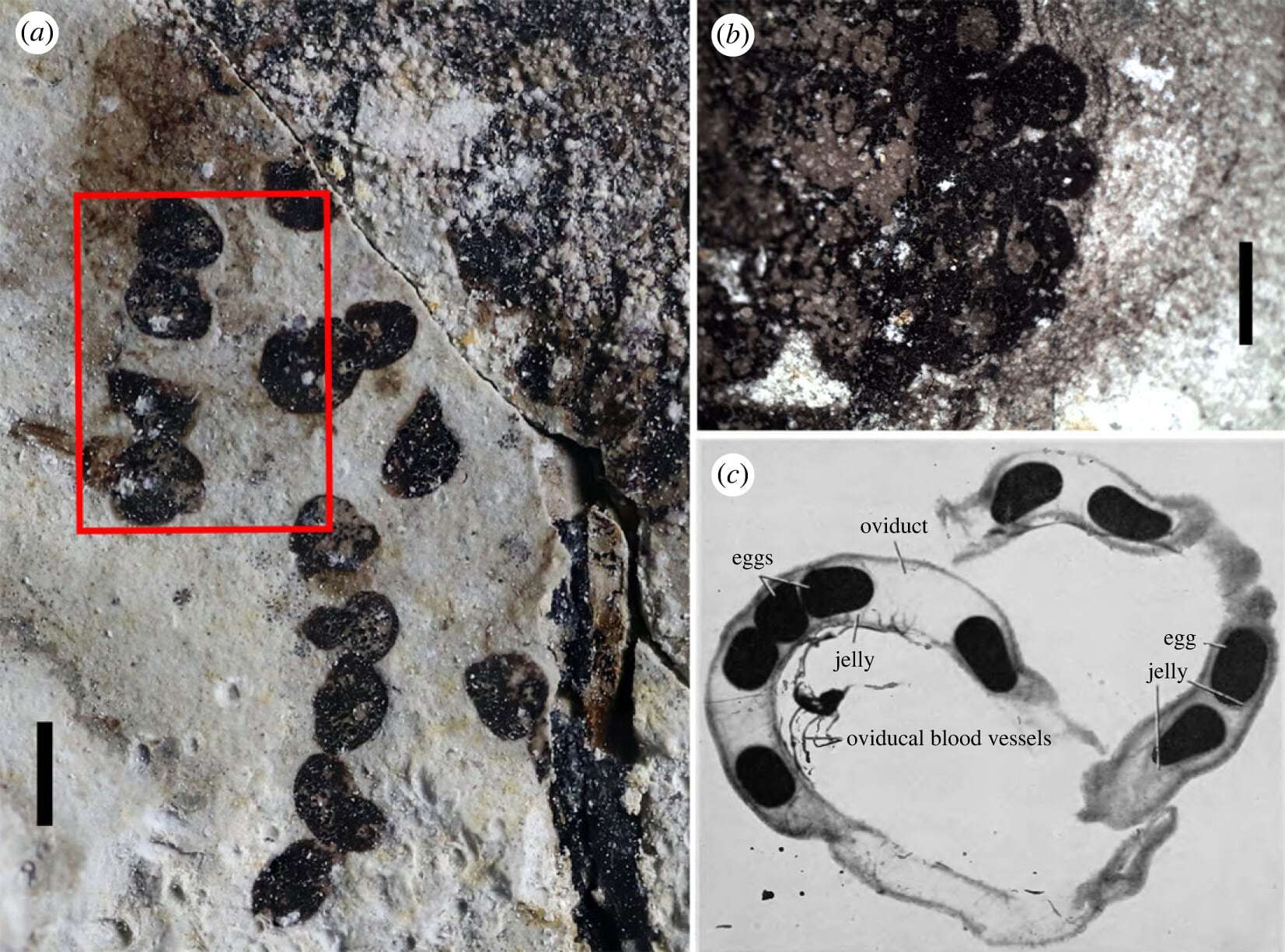
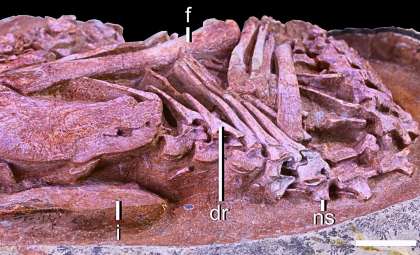
Identified as the species Gansubatrachus qilianensis, this frog was fossilized with eggs still inside her abdomen, making it the oldest known instance of a pregnant frog fossil.
Intriguingly, scientists propose that she may have died during mating, possibly suffocating or drowning while clasped by a male.

Unveiling Ancient Frog Mating Practices
The circumstances surrounding the frog’s death are particularly captivating. Baoxia Du, a leading paleontologist from Lanzhou University, believes the frog perished while engaged in amplexus, a mating behavior still exhibited by modern frogs.
Amplexus involves the male frog holding onto the female tightly for extended periods—from hours up to days—until she lays eggs to be fertilized. Though this method enhances reproductive success, it can sometimes lead to accidental deaths, where females suffer from oxygen deprivation or drowning due to the prolonged physical stress.
Investigations showed no environmental disruptions, such as sudden water fluctuations or toxic algae blooms, which could have contributed to death.
The lack of additional frog remains nearby indicates that this was not a mass mortality event. Rather, the research published in the Journal of the Royal Society states: “the probable cause of death was fatigue or suffocation related to ‘amplexus behavior,’ common among living frog species,” as explained by Baoxia Du.
Why This Fossil Holds Exceptional Importance
This finding provides rare and valuable information about the reproductive strategies and survivability of early frogs. It is the oldest gravid frog fossil discovered so far, as no earlier specimen has been found retaining eggs within the body.
Incredibly, the preservation of soft tissues sets this fossil apart, since most ancient frogs are found only with skeletal remains. Moreover, evidence suggests that this species could reproduce before achieving complete skeletal development, implying a significant evolutionary benefit potentially linked to frog persistence over time.
Frogs coexisted with dinosaurs and survived numerous mass extinction events, showcasing extraordinary resilience. This fossil points to reproductive behaviors that have changed little over millions of years, helping frogs adapt to diverse environments and survive major ecological upheavals.
Ongoing Search for Additional Fossil Evidence
Although this extraordinary fossil reveals important details, researchers stress the necessity of further discoveries to verify whether early frogs generally bred prior to reaching full maturity.
The team aims to study more fossils from this area to ascertain if early reproduction was widespread or an unusual phenomenon.
“Given that early frogs flourished alongside dinosaurs and survived multiple extinction events, investigating their survival methods is crucial,” the lead scientist remarked.
For now, the fossilized frog’s premature death opens a fascinating window into ancient times, illustrating the challenges amphibians faced in dinosaur-era marshlands.
- Categories:
- Science



0 comments
Sign in to Comment