
For over 12 years, NASA's Curiosity rover has been traversing Mars’ challenging landscapes, far surpassing the mission's original timeframe. Nevertheless, after years of relentless exploration, the rover's wheels are showing considerable deterioration.
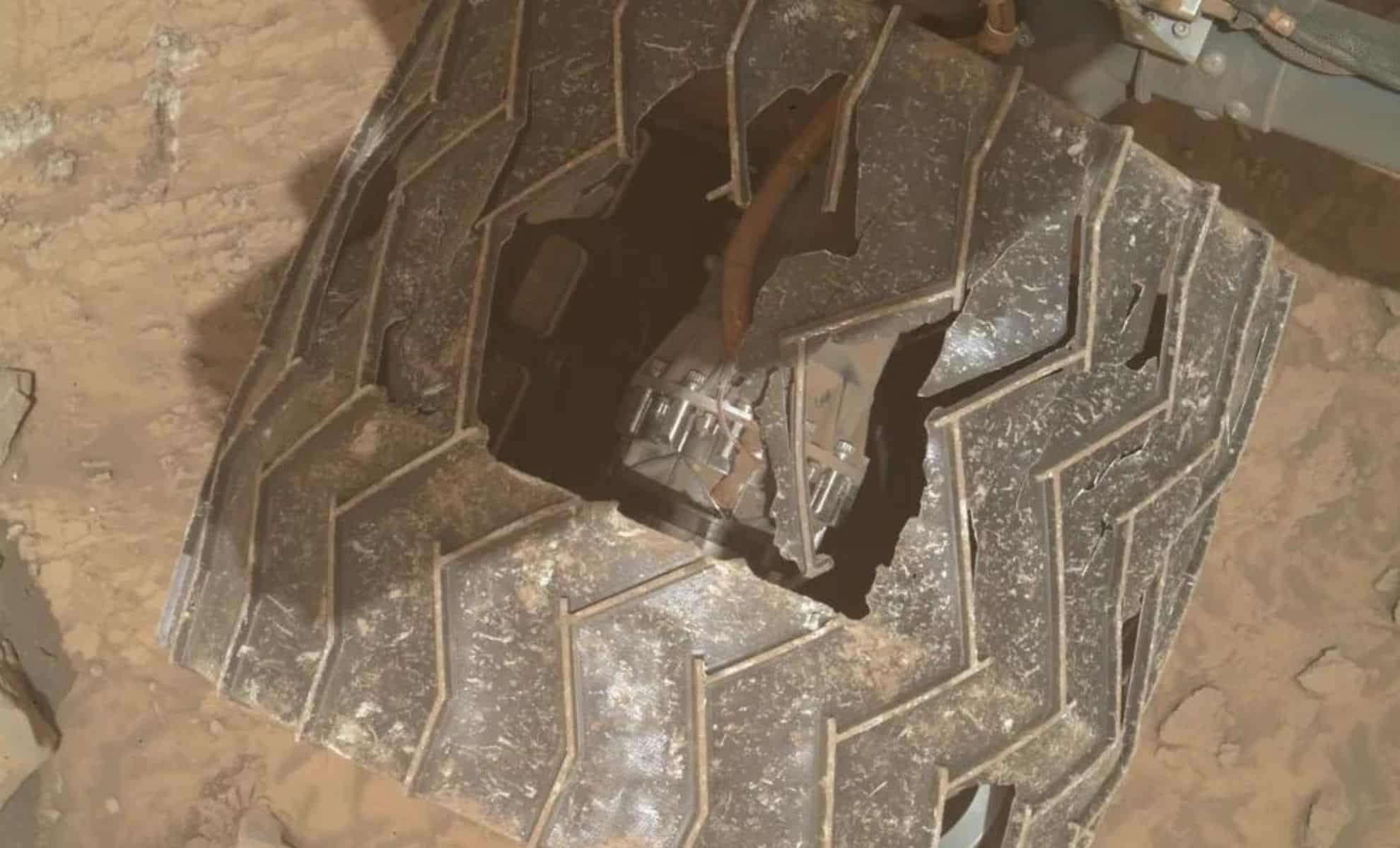
New photographs released by NASA expose a notable breach in Curiosity’s middle right wheel, highlighting the intense environment it endures. Despite this, NASA’s engineering team remains confident that the rover continues to operate effectively and can carry on with its mission on the Red Planet.
Over a Decade of Martian Exploration Takes its Toll
Curiosity touched down on Mars in August 2012, with a planned mission lasting only two years. It has since defied expectations, functioning across more than 4,300 Martian days (Sols) and covering over 20 miles (32 kilometers). During this extended time, Curiosity has been instrumental in searching for past life traces on Mars and collecting vital data on the planet’s geological and atmospheric conditions.

Martian terrain is extraordinarily unforgiving, especially for Curiosity’s wheels, which are constructed from single blocks of aluminum featuring 7.5-millimeter treads designed to grip rough surfaces. Despite their robust build, the wheels have experienced gradual damage from jagged rocks and rough ground, developing rips and holes. Signs of wear were first noticed in 2013, one year after landing, and the damage has worsened, with the most recent images showing a significant puncture exposing internal components.
Engineering Solutions and Ongoing Monitoring
Upon detecting early damage, NASA engineers adapted Curiosity’s driving protocols to preserve wheel integrity. In 2017, a new algorithm was introduced that varied wheel speeds independently to lessen strain over rocky surfaces. This adjustment slowed degradation but did not eliminate it, as the wheels now display extensive scratches and several deep tears.
Curiosity’s wheels are closely inspected using the Mars Hand Lens Imager (MAHLI), a camera designed to capture detailed images of the rover’s components and surroundings. The latest photos from September 24, 2024 reveal multiple large holes, including one sizable gap that exposes the internal structure of the wheel. Despite this, NASA engineers affirm that Curiosity remains in operational condition. Ashley Stroupe, an engineer at NASA’s Jet Propulsion Laboratory, stated: “Curiosity is still holding up well despite taking some of the worst abuse from Mars.”
Stroupe also explained that Curiosity’s design includes multiple safeguards allowing it to continue working with damaged wheels. “The wheels are robust enough to keep rolling even with serious damage,” she noted, emphasizing that the rover is engineered to persist with its mission, even if parts of the wheels degrade. NASA plans to maintain close observation of the wheels but has no immediate intention to pause Curiosity’s activities.
These big wheels keep on turning. 🛞
Recent photos of my wheels got some of you worried, but I’m here to reassure you, we’re just fine! The images help my team keep tabs on wear and tear. If it came down to it, I could shed part of them off and keep on rolling. pic.twitter.com/h1oKLB3oW7
— Curiosity Rover (@MarsCuriosity) October 4, 2024
How Wheel Wear Influences the Mission
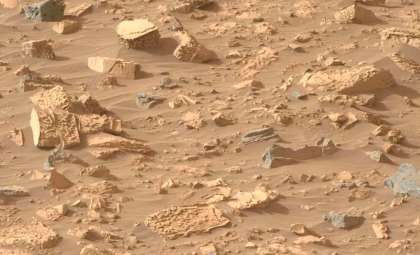
Curiosity’s wheel damage underscores the severe conditions rovers face on Mars. The Gale Crater, where Curiosity operates, is characterized by sharp, uneven rocks that contribute heavily to the wheel degradation. To minimize additional harm, NASA has rerouted Curiosity over gentler terrain, slowing its travel but preserving its function and scientific outputs.
Besides monitoring wheel condition, NASA continues to optimize rover mobility through on-board autonomous navigation supported by constant Earth-based oversight. This adaptive approach enables Curiosity to remain productive despite the mounting physical challenges.
Although the wheels show significant wear, Curiosity has reached numerous scientific breakthroughs, studying Mars’ ancient environments, detecting organic molecules, and measuring radiation exposure. Its ongoing investigations provide crucial insights for future missions, including possible human exploration of Mars.
The Enduring Impact and Future of Curiosity
Despite visible signs of damage, Curiosity’s mission remains vital. NASA’s continuous wheel monitoring ensures the rover’s longevity, which stands as a remarkable example of engineering durability and mission planning success. Mechanical wear like Curiosity’s is common, as seen by NASA’s Perseverance rover encountering a lodged “pet rock” in its wheel in 2022. Yet, innovations in rover management extend operational lives and scientific productivity.
Curiosity’s ongoing resilience offers a powerful testament to NASA’s expertise. As the rover approaches its 13th year on Mars, it continues to be indispensable for exploration. The rover’s social media confidently stated: “These big wheels keep on turning,” reassuring followers that it can theoretically shed parts of its wheels if necessary and keep moving.
As NASA leverages Curiosity’s extensive findings, the rover’s legacy will persist, symbolizing one of the most enduring and successful Mars missions to date.







0 comments
Sign in to Comment