

Since landing on Mars in 2021, NASA’s Perseverance rover has been studying the Jezero Crater and recently uncovered an extraordinary geological specimen: a rock adorned with distinct black-and-white stripes, now named “Freya Castle.” This rock’s unusual appearance is unlike anything previously seen on Mars, sparking widespread excitement among researchers eager to decode its formation and composition. Such finds could deepen our understanding of Mars’ geological evolution and offer glimpses into its primordial environment.
A Unique Geological Treasure: Freya Castle
On September 13, 2024, the rover’s Mastcam-Z camera captured detailed images of Freya Castle, measuring about 20 cm (8 inches) in diameter. The rock’s striking alternating black and white bands represent a pattern that Mars scientists have never encountered before. Unraveling how these distinctive layers developed remains a captivating scientific challenge.
Initial theories propose that the rock’s striped texture might have resulted from igneous or metamorphic geological processes. NASA explains, “Although we currently have limited data on its chemical makeup, early interpretations suggest that igneous or metamorphic mechanisms might have formed these stripes.” To clarify, igneous processes involve magma cooling and solidifying, while metamorphic processes denote rock transformations caused by intense heat and pressure. While comparable striped rocks called gneiss exist on Earth formed through similar means, discovering such a specimen on Mars may shed light on the planet’s geological dynamics and history.

Interestingly, Freya Castle appears to be a detached rock, distinct from the surface beneath it. This implies it might have traveled downhill from a higher location within the crater. NASA scientists suggest it could have originated from a region not yet explored by Perseverance. As NASA commented, “This possibility excites us. We hope to find more outcrops of this rock type as Perseverance ascends, enabling more thorough studies.”
Exploring the Heights: Perseverance’s Crater Rim Mission
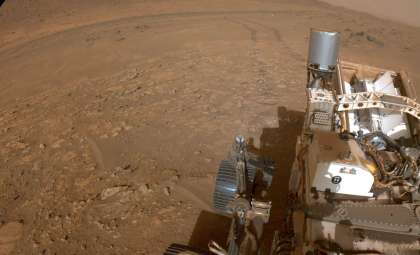
The Freya Castle discovery coincides with Perseverance’s fifth scientific initiative—the Crater Rim Campaign. This phase challenges the rover to climb Jezero Crater’s steep slopes, seeking ancient rocks that might illuminate Mars’ early days. Although the ascent involves navigating rugged terrain and steep angles, recent progress across flatter areas has quickened its journey. From higher ground, the rover now surveys significant landmarks such as Kodiak Butte lying on the dusty horizon.
This campaign is vital for Perseverance’s overarching mission of identifying possible signs of ancient life. Gathering rock and soil samples with the potential to hold microbial fossils or evidence of past habitability remains a key goal. Since arriving on Mars, Perseverance has already identified sediments from a former lakebed indicating Jezero Crater once contained a substantial body of water. These discoveries heighten expectations that the region might conserve ancient biosignatures, making every new find critically important.
The uniquely patterned Freya Castle may provide exceptional insight within this context. Scientists aim to analyze rocks like it to uncover Mars’ igneous and metamorphic history and better comprehend the forces shaping the planet’s surface over billions of years.
Expanding the Rock Collection: Diverse Finds at Jezero Crater
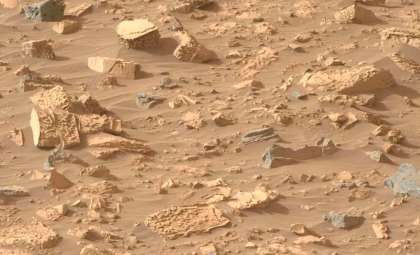
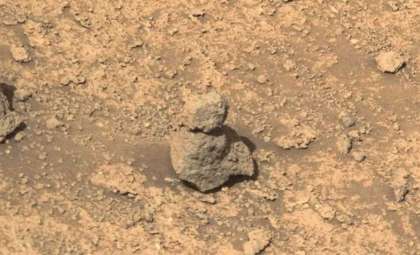
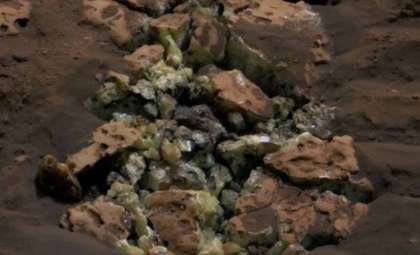
Freya Castle is one of multiple unusual rocks identified by Perseverance during its Jezero Crater exploration. Earlier in 2024, the rover documented a pale-colored boulder near Mount Washburn, which stood out from the surrounding terrain. In July, it captured an image of a spotted rock with a leopard-like pattern, further illustrating Mars’ geological diversity. These discoveries hint that the crater’s upper regions host a broader variety of rock types than initially assumed, each with clues to unlock Mars’ geological past.
Researchers have theorized that some of these unique rocks may have been lifted from deep underground by the massive impact event that created Jezero Crater billions of years ago. If correct, Freya Castle and similar specimens might be ancient fragments exposed by this colossal collision. NASA stated, “Could these represent the first glimpses of ancient rocks uplifted by the Jezero impact, now visible on the crater rim? Only continued exploration will tell.”
Implications of Freya Castle and Upcoming Prospects
The intriguing striped rock triggers fresh questions about Mars’ geological evolution and the origins of its distinctive patterns. As Perseverance continues ascending the crater rim, scientists remain hopeful the rover will uncover more of these rocks, enabling more detailed examinations to understand the planet’s surface history.
More broadly, formations like Freya Castle hold value by helping decode Mars’ ancient environment. Studying these rocks offers vital clues about conditions billions of years ago when the planet may have been warmer and wetter, potentially allowing microbial life to exist.
Art Thompson, project manager for Perseverance at NASA’s Jet Propulsion Laboratory, expressed enthusiasm for the mission’s next phase: “As we begin the Crater Rim Campaign, the rover is performing excellently, and the team is eager to discover what lies atop this intriguing landscape.”
Perseverance’s ongoing journey reaffirms that Mars continues to surprise us with new findings. Each discovery, including Freya Castle, brings humanity closer to unraveling the Red Planet’s mysteries and potentially uncovering its ancient biosignatures.
- Categories:
- Astronomy ,
- News ,
- Nasa








0 comments
Sign in to Comment