
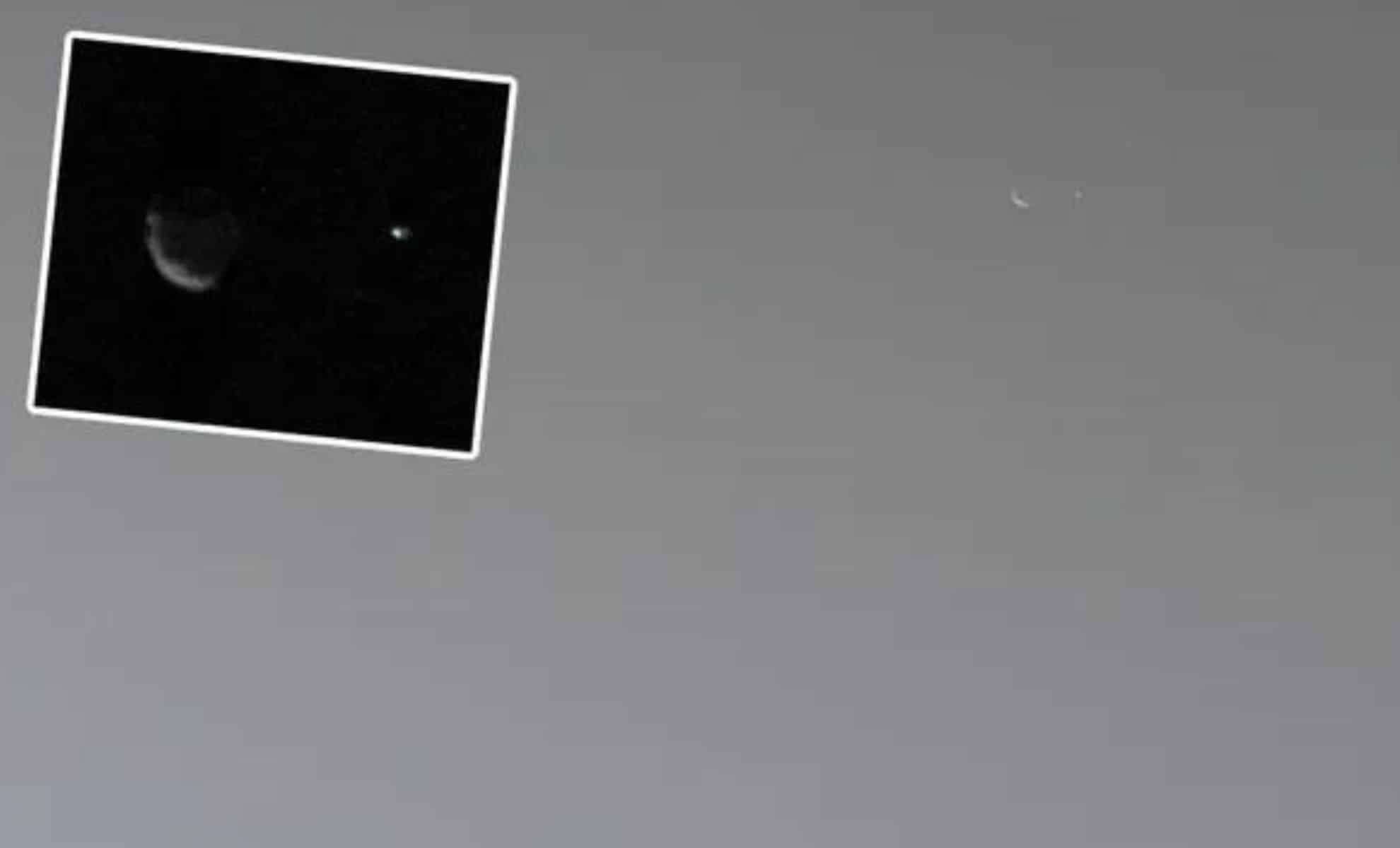
On September 5, 2024, NASA’s Curiosity rover made history by snapping the very first image showcasing Earth alongside Phobos, one of Mars’ moons, from the Martian surface. This extraordinary photograph offers a rare glimpse of Earth from another planet, blending scientific triumph with a profound perspective on humanity’s cosmic position.
A Unique Perspective from the Red Planet
Captured by Curiosity’s Mast Camera (Mastcam), the photo reveals a rare celestial arrangement: Earth as a subtle blue dot near the more prominent Mars moon, Phobos. The image is a composite of five short and 12 long exposures, combined to produce a sharp picture during Martian twilight. Taken just over an hour after sunset, the scene features the rugged Martian terrain, including the towering buttes of Mount Sharp within Gale Crater, where Curiosity has been conducting research for more than ten years.
According to NASA officials, who commented on the photo, this marks the inaugural instance of capturing both Earth and Phobos from Mars’ surface. They noted that from Curiosity’s perspective, Earth and Phobos appear remarkably close, occupying an area roughly “half the width of a thumb held at arm’s length.” This striking image underscores the immense spatial scales involved in space exploration, turning our vast planet into a small speck of light on a foreign world.

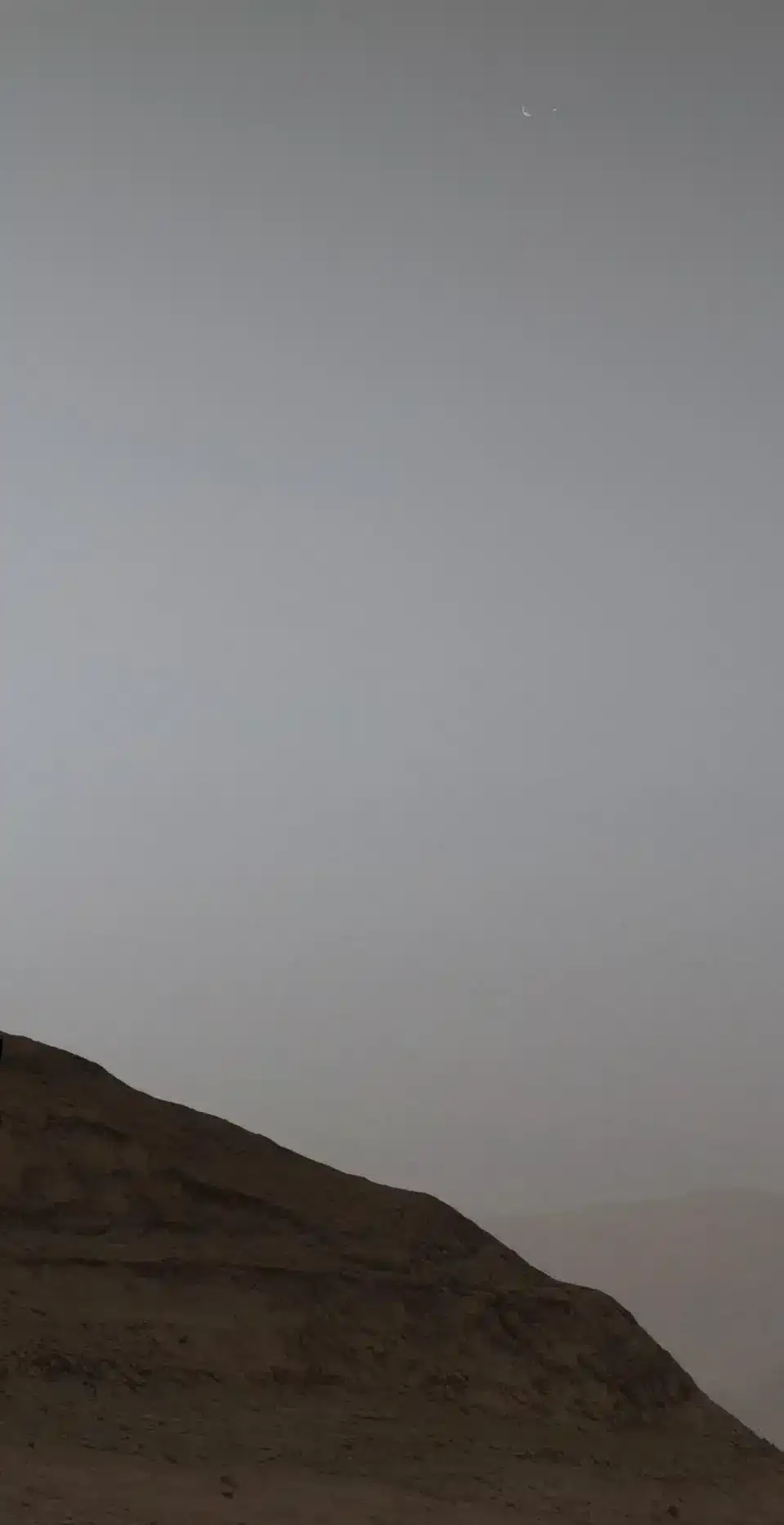
The decision to capture this image was inspired by revisiting the iconic “pale blue dot” theme, originally highlighted by Voyager 1’s distant snapshot of Earth. Mark Lemmon, a scientist on Curiosity’s team, played a crucial role in coordinating the timing to include Phobos. Reflecting on the moment, Lemmon remarked: “Taking this picture from Mars’ surface is just as evocative as Voyager’s view from the far reaches of the solar system.” This perspective holds both deep scientific importance and emotional weight, revealing Earth from millions of miles away.
Phobos: A Key Player in Mars Science
Phobos, Mars’ closer and larger moon, is central to this captivating image. Named after the Greek deity symbolizing fear, Phobos is modest in size at just 14 miles across. However, it orbits extremely near Mars—approximately 3,700 miles away—making it the solar system’s closest natural satellite to its host planet. Its orbit causes it to rise and set three times each day on Mars, offering scientists valuable opportunities to study its motion and behavior.
NASA’s interest in Phobos extends beyond its orbit, intrigued by its gradual inward spiral toward Mars at roughly six feet (1.8 meters) per century. This slow approach suggests that within 50 million years, Phobos may either crash into Mars or disintegrate under tidal forces, dramatically changing the Martian environment. Understanding Phobos’ makeup and orbit is critical for predicting this future event.
Experts emphasized that Phobos’ proximity makes it an essential object of study. Observations from Curiosity’s ground-based vantage provide fresh insight into how the moon and Mars interact. The recently captured image depicting both Earth and Phobos illustrates these dynamic links from a unique Martian view.
Ten Years of Unveiling Mars’ Secrets
This image forms part of Curiosity’s extended exploration of Gale Crater, a site once believed to contain liquid water and potentially harbor life. Since its landing in August 2012, Curiosity has been ascending Mount Sharp, a towering 3-mile-high (5 km) geological formation inside the crater. These investigations offer clues about Mars’ ancient climate and the history of water on the planet.
The snapshot was taken on Curiosity’s 4,295th Martian day, or sol—a Martian day lasting roughly 24 hours and 40 minutes. As NASA’s elder Mars rover alongside the newer Perseverance, Curiosity continues to deliver essential data on Martian geology and environment. The rocky foreground in the image is part of a butte named Texoli, currently under study as the rover progresses upward.
NASA’s Jet Propulsion Laboratory (JPL), which oversees Curiosity’s mission, highlighted the importance of balancing routine science with capturing moments like this extraordinary image. Scientists behind the scenes sacrificed personal projects to enable the creation of this remarkable photo, showcasing their dedication to both discovery and public inspiration.
Earth from Mars: A Moment of Reflection
This one-of-a-kind image transcends scientific achievement, offering a humbling and awe-inspiring perspective of Earth. Seen from the Martian surface, Earth appears as a faint blue speck amid vast darkness—echoing the spirit of Voyager 1’s famous “pale blue dot” photograph from 1990. That image revealed Earth’s fragility and uniqueness, and this Martian view rekindles a similar sense of wonder and contemplation.
Mark Lemmon reflected: “Everyone you’ve ever cared about or disagreed with—all reside in that tiny dot of light.” This viewpoint invites a shared understanding of humanity’s unity, reminding us of our collective place in the cosmos. NASA officials echoed these sentiments, hoping Curiosity’s dual snapshot of Earth and Phobos will foster global reflection and appreciation for space exploration, much like Carl Sagan’s enduring legacy with the “pale blue dot.”
Continuing Curiosity’s Impact on Mars Research
As Curiosity carries on its journey, images like this connect Earth and Mars through both science and inspiration. The rover’s efforts extend beyond Martian exploration—they deepen our comprehension of Earth, the solar system, and the universe at large. While Perseverance pursues its own mission on Mars, Curiosity’s decade of findings remains essential in painting a fuller picture of the Red Planet.
Looking ahead, Curiosity will keep climbing Mount Sharp, investigating Mars’ ancient environments and sharing stunning visuals that highlight our bond with another world. Every image—including this striking portrayal of Earth and Phobos—bridges the distance between planets, enriching our cosmic understanding and connection.
- Categories:
- Astronomy ,
- News ,
- Space ,
- Nasa







0 comments
Sign in to Comment