
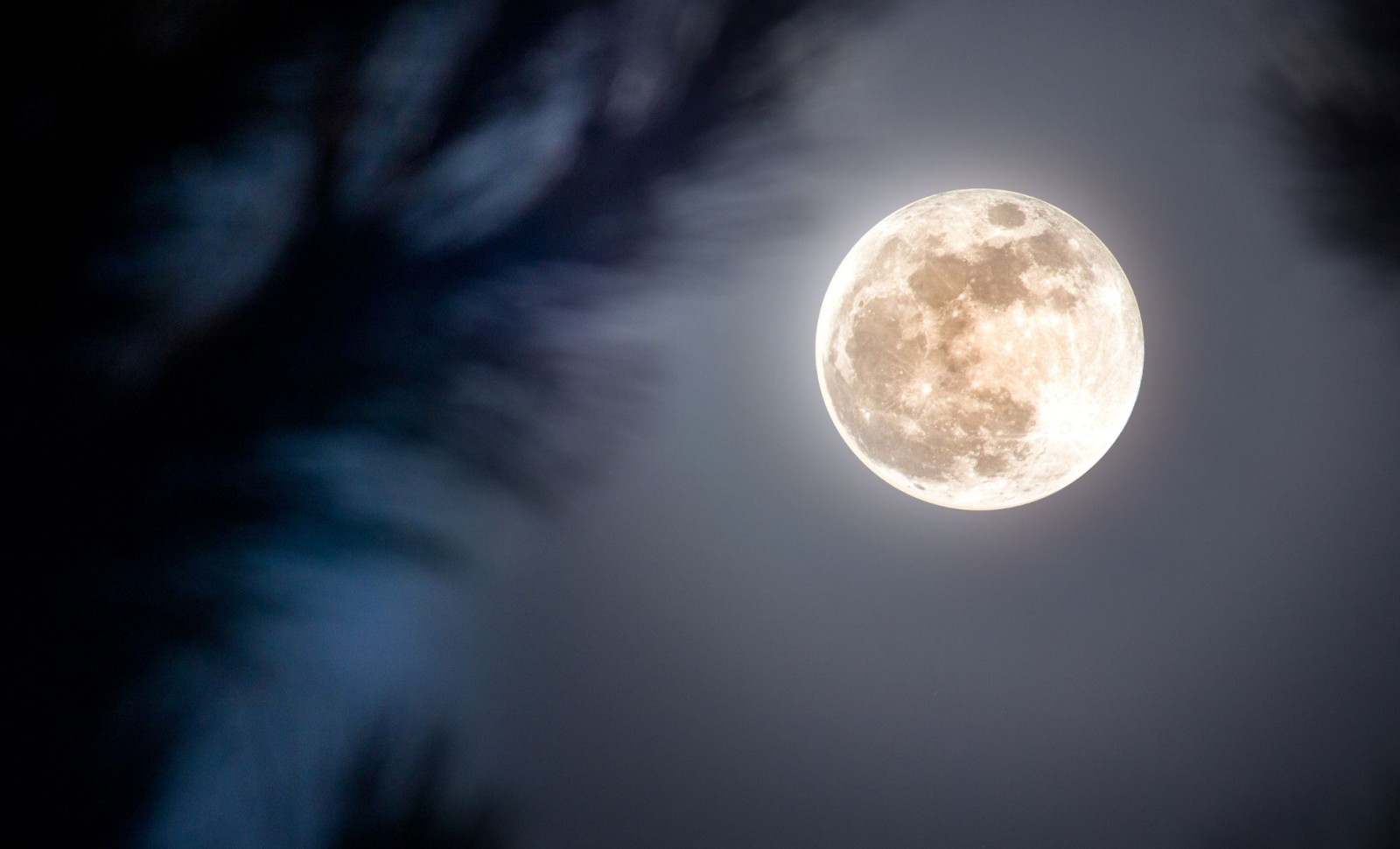
For years, the prevailing belief was that the Moon formed after a single colossal collision between Earth and a Mars-sized protoplanet named Theia. However, recent investigations suggest that the process might have been far more complex. Current models indicate the Moon’s creation might have involved three significant impacts during the solar system’s infancy.
This alternative framework could resolve persistent puzzles regarding the Moon’s composition and its relationship with Earth. The idea of multiple impacts challenges the traditional single-collision theory, which has struggled to fully explain certain chemical discrepancies between the two bodies.
The Established Concept: One Massive Collision
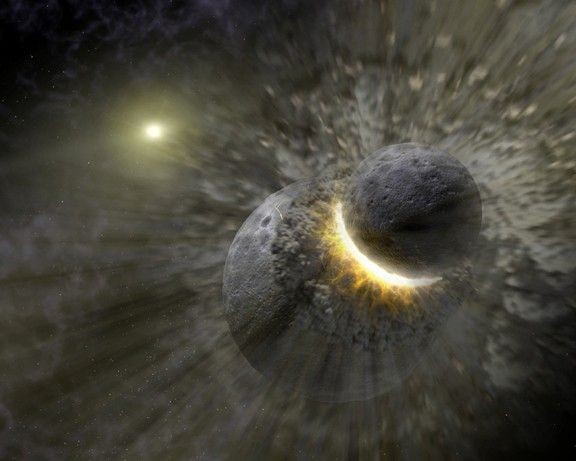
Traditionally, the Moon’s formation has been explained by the giant impact hypothesis. In this scenario, Earth collided with a Mars-sized body, Theia, approximately 4.5 billion years ago. The collision generated a vast debris disk around Earth, eventually coalescing to form the Moon. This theory is favored because it accounts for many of the compositional similarities observed between the Earth and its satellite.

Nonetheless, some issues remain unresolved. For example, subtle differences in chemical makeup—particularly variations in oxygen isotopes—between Earth and the Moon are difficult to reconcile if the Moon originated solely from Earth’s ejected material. This has encouraged scientists to explore different explanations, such as multiple impact events.
An Emerging Perspective: Three Collisions Rather Than One
Recent findings published in the Monthly Notices of the Royal Astronomical Society propose that the Moon may have formed as a result of three significant impacts rather than a single event.
According to this hypothesis, Earth experienced a series of collisions with bodies of varying sizes, including Theia, during its formative years. These cumulative impacts contributed debris that eventually assembled into the Moon we observe today.
This multi-impact explanation better accounts for the chemical and isotopic differences between Earth and its satellite, including the Moon’s comparatively lower density. By involving multiple sources of material, the lunar body’s composition could be more diverse.
“After three impacts, we put enough mass into orbit to make a full moon,” said Philip Carter at the University of Bristol.
Revising Our Understanding of the Early Solar System
This scenario of multiple impacts paints a picture of Earth’s early environment as far more tumultuous, with several large bodies striking the planet repeatedly throughout its history.
The Moon’s formation process is fundamental to comprehending Earth’s climate stability, as the lunar gravitational pull plays a key role in stabilizing Earth’s axial tilt. If the Moon resulted from several impacts, it might influence how scientists understand the conditions that fostered life on Earth.
Investigating the Multi-Impact Model
Though still theoretical, researchers are testing the three-impact model using advanced computer simulations and studying lunar materials. If validated, this concept could revolutionize our knowledge of the Moon’s origins and the early solar system’s dynamic activity.
“To actually calculate everything in detail is still really hard to do,” explained Robert Citron at the Southwest Research Institute in Colorado. “Personally, I favour this multiple-impact model over the canonical single-impact model.”
Unraveling Earth’s distant past is challenging due to limited direct evidence. Still, if the multi-impact hypothesis proves accurate, it may provide critical insights to solve long-standing mysteries about the Earth-Moon system.
- Categories:
- Science








0 comments
Sign in to Comment