
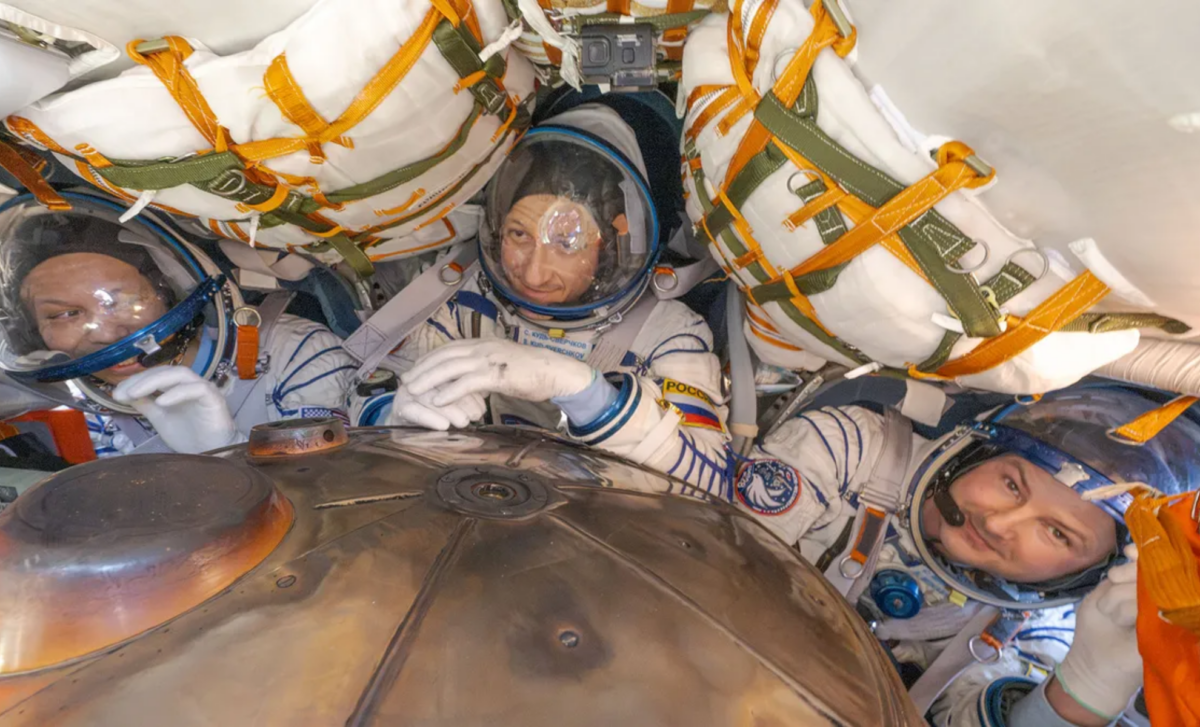
A NASA astronaut accompanied by two Russian cosmonauts has safely touched down on Earth aboard the Soyuz MS-28 spacecraft, concluding a lengthy mission on the International Space Station. NASA announced that the trio executed a carefully planned departure from orbit, returning to Kazakhstan after months dedicated to scientific work and station upkeep. This successful landing underscores ongoing international collaboration amidst evolving dynamics in human space exploration.
Soyuz MS-28’s Scheduled Descent Brings Crew Home
The crew aboard Soyuz MS-28 completed their journey back through Earth’s atmosphere following their deployment from the International Space Station. Their return followed established protocols, with the spacecraft detaching from the orbital outpost before initiating reentry procedures.
The descent included a series of meticulously timed steps such as orbital maneuvers, atmospheric entry, and parachute deployment, all coordinated by both ground control teams and the astronauts themselves.

Onboard were NASA’s Jonny Kim along with Roscosmos cosmonauts Sergey Ryzhikov and Alexey Zubritsky, who completed assigned tasks including scientific experiments, station maintenance, and daily operations essential for station safety and functionality.
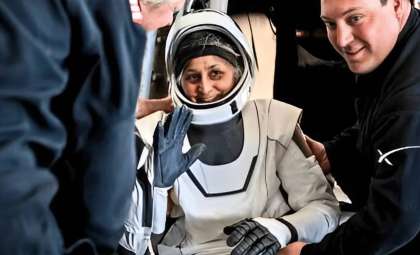
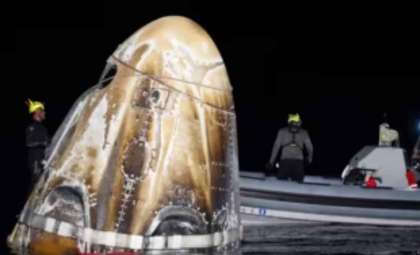
Landing occurred in Kazakhstan, where recovery teams were on standby to assist the crew post-touchdown. Once emerged from the capsule, the astronauts underwent initial health assessments before beginning recovery protocols.
NASA Emphasizes Significance of Multinational Station Roles
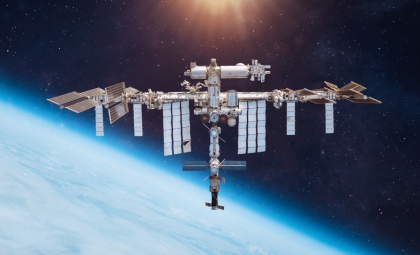
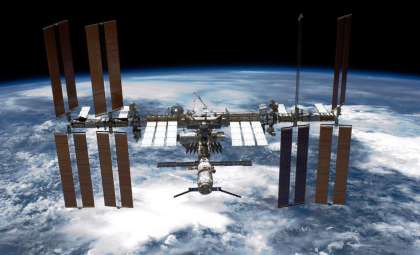
NASA has lauded the crew’s safe return, highlighting the International Space Station as a vital hub for collaborative research and international partnership. The orbital laboratory remains a primary location to investigate human, material, and technological behaviors in microgravity.
The station stands as one of the largest engineering collaborations, incorporating efforts by NASA, Roscosmos, the European Space Agency, JAXA, and the Canadian Space Agency. Rotational crew exchanges via spacecraft like Soyuz ensure continuous human presence in low Earth orbit with astronauts from multiple countries.
Research conducted during these missions advances preparation for deep-space exploration. Microgravity experiments are instrumental in readying humans for extended expeditions to destinations such as the Moon and Mars.
The return of the Soyuz MS-28 crew underscores the station’s reliable operational cycle, maintaining an uninterrupted human footprint in space.
Adapting to Earth’s Gravity After Extended Time Aloft
Astronauts face significant physiological shifts when transitioning back to Earth’s environment after months spent in weightlessness. Muscle strength, bone density, balance, and cardiovascular function all undergo changes during spaceflight.
Post-landing, crew members participate in tailored rehabilitation programs to regain physical strength and motor skills. Medical teams closely observe recovery, while scientists gather data to better understand prolonged space exposure effects.
Missions like Soyuz MS-28 provide valuable insights that help shape protocols for upcoming long-duration journeys. Understanding human recovery is crucial as agencies plan future exploration.
For the crew, returning marks the conclusion of a demanding chapter filled with scientific inquiry, operational challenges, and living aboard one of humanity's most advanced space stations.
Advancing the Future of Crewed Space Exploration
The successful Soyuz MS-28 landing arrives amid a transformative period in human spaceflight. Space agencies are broadening efforts in low Earth orbit while gearing up for ventures deeper into our solar system.
The International Space Station continues serving as a proving ground for new technologies and mission protocols critical to future lunar missions, including those aligned with NASA’s Artemis campaign.
Reliable crew transportation remains central to space operations, supported by international spacecraft that facilitate crew exchange in orbit. The longstanding success of flights like Soyuz MS-28 testifies to the robustness of the systems underpinning decades of human space endeavors.
As the astronauts reacclimate to life on Earth, their mission adds a vital chapter to humanity’s expanding legacy of space exploration. Each successful launch, experiment, and return delivers crucial knowledge shaping humanity’s future activities beyond our planet.
- Categories:
- News


0 comments
Sign in to Comment