
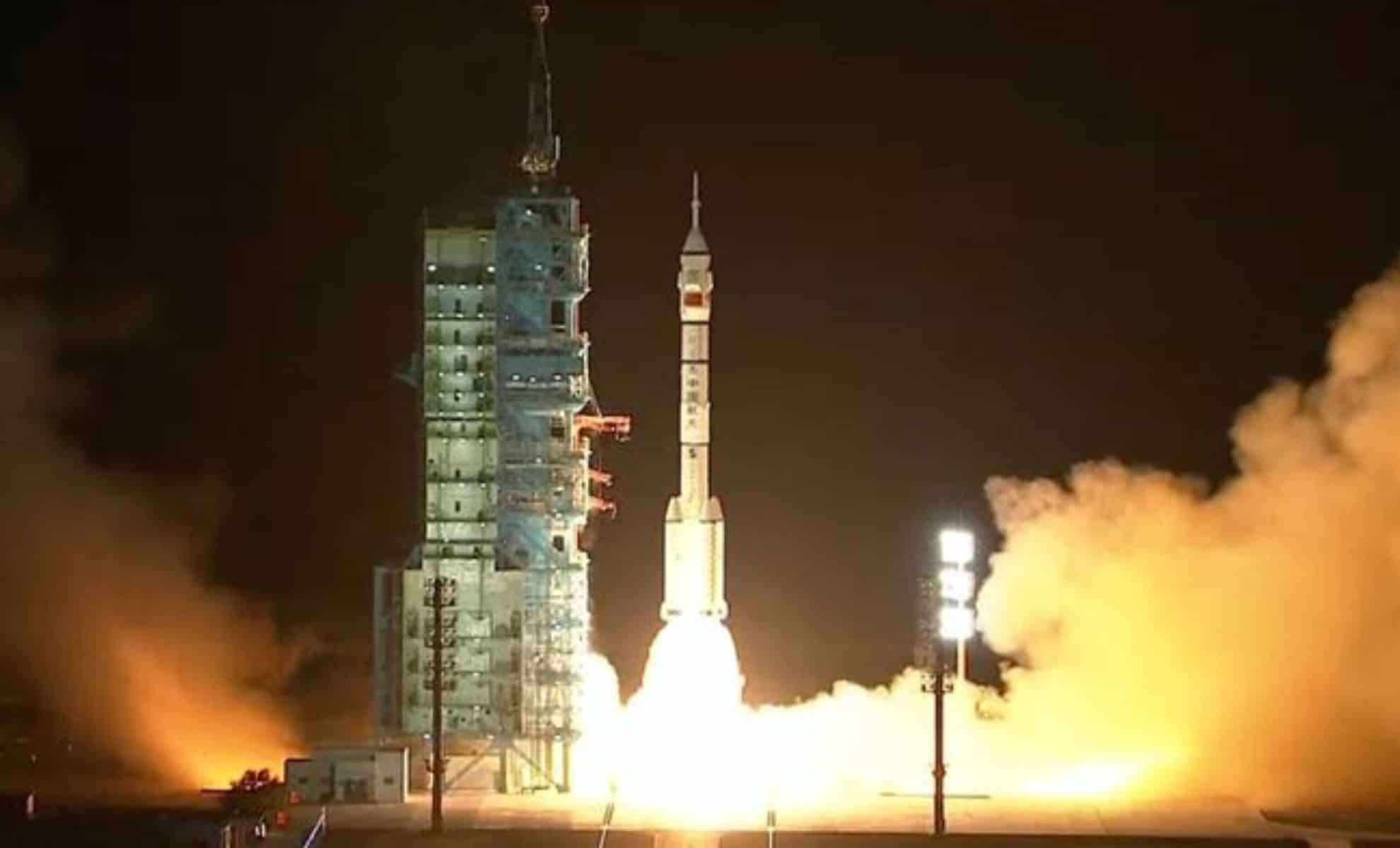
China has launched the Shenzhou-19 spacecraft, carrying a trio of astronauts to conduct a half-year expedition aboard the Tiangong space station.
On October 29, 2024, the team lifted off from the Jiuquan Satellite Launch Center atop a Long March 2F launch vehicle. This mission marks China's eighth extended stay in orbit as it develops Tiangong into a lasting orbital research facility.
Leading the mission is Commander Cai Xuzhe, accompanied by taikonauts Song Lingdong and Wang Haoze. Their work will span experimental science, equipment upkeep, and collaboration with the Shenzhou-18 crew returning to Earth. The upcoming months will focus on advanced scientific investigations, several spacewalks, and integrating cutting-edge technology critical for Tiangong’s long-term operation.

Profiles and Responsibilities of the Crew
Cai Xuzhe returns with prior space experience, having served on Shenzhou-14 in 2022, where he took part in China's inaugural spacewalk series on Tiangong. With over four hours spent on extravehicular activities, Cai is set to lead maintenance and research efforts while mentoring his teammates, exemplifying China’s strategy to cultivate experienced astronauts who can guide newer members.
Making her debut on orbit, Wang Haoze becomes China's first female spaceflight engineer, tasked with technical experiments and station support duties. Her inclusion marks an important milestone as the third Chinese woman in space, reflecting efforts to broaden astronaut diversity. Song Lingdong, a pilot for the Chinese Air Force, is also new to spaceflight. Before launch, he remarked, “Seeing the sunrise from 20,000 meters altitude made me feel both small and fortunate. Now, I am eager to witness the vastness of space from our station.”
Scientific Endeavors and Sustainability Efforts on Tiangong
The Shenzhou-19 expedition includes an array of experiments in biology, medicine, materials science, and environmental studies. These initiatives will deepen China’s knowledge of the challenges and advantages of extended space habitation. Using Tiangong’s advanced labs, the crew will explore microgravity effects, helping to drive progress in healthcare, environmental monitoring, and new materials development on Earth. The mission also prioritizes studying how long-term spaceflight impacts human health, vital for China’s growing ambitions in space exploration.
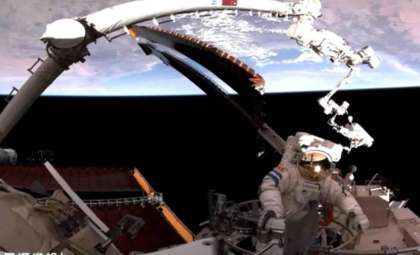
The team will also carry out several extravehicular activities (EVAs), testing gear durability and conducting upkeep work. Designed as a modular station, Tiangong’s continuous improvements will benefit from the data collected to enhance its operational sustainability.
Boosting Tiangong’s Role in Global Space Cooperation
China aims to position Tiangong as a collaborative research platform for the world, especially as the International Space Station (ISS) nears retirement. The country has expressed its readiness to engage in partnerships rooted in “mutual respect, mutual benefit, inclusiveness, and equality.” International scientists and astronauts have been invited to participate in Tiangong’s programs, which could serve as a successor facility for nations lacking direct space station access.
Tiangong will also be complemented by the upcoming deployment of the Chinese Space Station Telescope (CSST), or Xuntian. Planned for launch in the near future, this observatory will share the same orbit as Tiangong, surveying as much as 40% of the sky and investigating galaxies, stars, and cosmic phenomena. Its docking capability will allow Tiangong’s crew to maintain and upgrade the telescope, significantly enhancing the station’s scientific capacities.
China’s Expanding Horizons in Space Exploration
Beyond Tiangong, China’s space ambitions include crewed missions to the Moon and Mars. The Shenzhou-19 mission serves as a testament to China’s steady progress in autonomous spaceflight capabilities and technological innovation, alongside rigorous astronaut training. Each mission lays groundwork toward extensive lunar activities planned for the 2030s and ongoing contributions to space science globally.
By keeping Tiangong operational with rotating crews and active research, China is asserting a leadership role in space exploration. Its sustained investment in technology, coupled with an inclusive approach toward international cooperation, reflects a commitment to expanding humanity’s cosmic knowledge and expanding benefits for terrestrial life.








0 comments
Sign in to Comment