
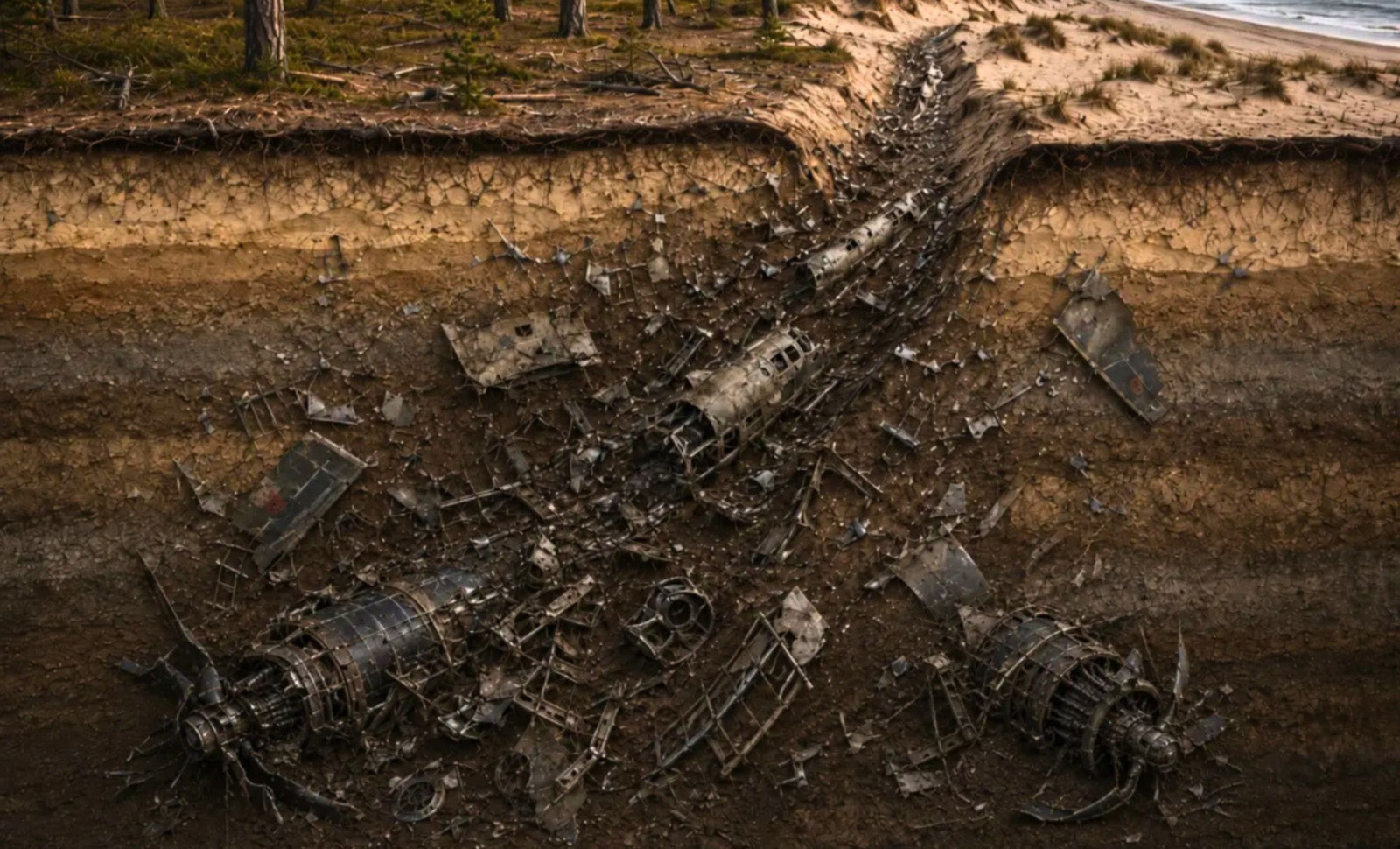
While collecting blueberries in a forest east of Świnoujście, a local resident stumbled upon a shallow depression surrounded by scattered aluminum pieces and charred ammunition. Bringing one fragment to the Underground City exhibition—formerly a Cold War command bunker and now part of the Museum of Coastal Defense at Fort Gerhard—museum workers traced the fragment back to the woods and uncovered numerous additional wreckage parts.
Wiktor Czeszewski, a museum expert, analyzed the materials first and noted that the thin aluminum panels, riveting patterns, and traces of burnt ammunition strongly suggested these were remnants of an aircraft rather than generic scrap metal, as detailed in a report shared by Polish aviation portal dlapilota.pl. “The nature of the sheets, the riveting, aircraft design indicators, and the charred ammo confirm these are aircraft fragments,” Czeszewski stated.
The spread and details of the debris led the museum to conclude they were likely examining the crash site of an Allied plane from World War II. The forest, situated on Świnoujście’s right bank near Fort Gerhard and the Underground City, rests atop layers of historic wartime activity.

British-Caliber Ammunition and Marked Tubing Uncovered
Among the debris, the burnt ammunition drew immediate scrutiny. Initial assessments identified it as .303 British rounds, typically used in Browning machine guns on British aircraft. This detail strongly indicated the wreck belonged to a British or Allied air crew operating British-standard weaponry.
After cleaning to reveal stamps and manufacturer information, a seamless copper tubing piece bore the marking “T7”. According to researcher Kacper Stachula, British Royal Air Force technical manuals classify T7 tubes as seamless copper tubing utilized in fuel, oil, gas, ignition, and other onboard systems, as reported by dlapilota.pl. “The T7 code, per RAF documentation, identified seamless copper pipes for oil, fuel, ignition, and similar aircraft systems,” Stachula explained.
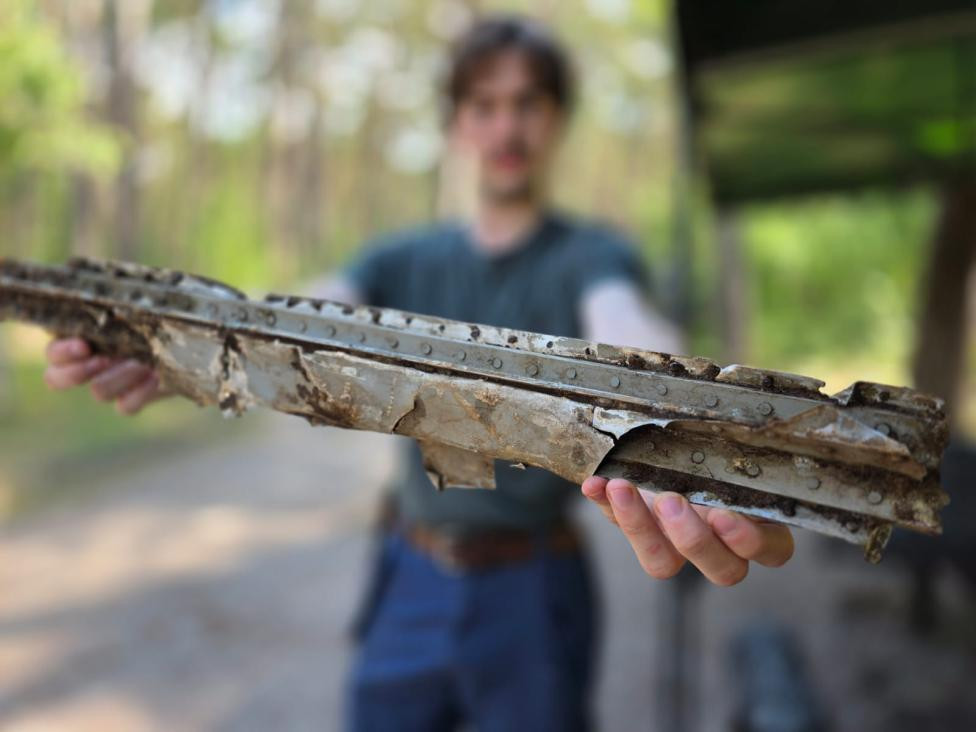
The tubing also featured an Avimo high-pressure connector, a type of fitting for joining pipes transporting liquids or gases under pressure in British aircraft. Notably, this connector is found in the cooling system of Rolls-Royce Merlin engines.
Milan Litwinowicz, a researcher, noted that the combined presence of the T7 mark and Avimo connector strongly suggests the pipe originated from a British plane. However, identifying the precise aircraft model remains challenging. The Merlin engine powered multiple Allied aircraft, such as the Avro Lancaster, de Havilland Mosquito, and Supermarine Spitfire, so the connector alone can’t specify the exact craft.
Possible Link to Lancaster Wing Recovered from Baltic Sea
The Museum of Coastal Defense already possesses a piece of an Avro Lancaster wing about 16 feet in length, which was recovered from the Baltic Sea by fishermen in 2009. This wing was found less than a kilometer away from the new forest debris site. Museum director Piotr Piwowarczyk shared with the Polish Press Agency—quoted by Discover Magazine—that both discoveries could originate from the same aircraft.
Prior research had tied the 2009 wing to three airmen whose names appear in records linked to that plane. Those pilots flew over Świnoujście on bombing missions targeting industrial sites near Police and Szczecin, reinforcing the connection as these areas lie within the corridor where the wreckage was recently found. The proximity of the two find spots, separated by under a mile, strengthens the theory of a shared source.
During the final months of WWII, the area experienced frequent Allied air missions. Świnoujście, called Swinemünde at the time under German control, was home to a naval base guarded by coastal artillery and anti-aircraft defenses. Both Allied and Soviet planes increasingly flew through the region targeting the port, the Świna strait, and various industrial zones along the Pomeranian coast.
Lancaster bombers, Mosquito fighters, reconnaissance planes, and aircraft from Soviet forces all operated in this airspace. The last plane recorded as downed near Świnoujście before the war’s end is believed to have been Soviet, lost during the conflict’s closing days.
Subsurface Wreckage May Conceal Crew Remains
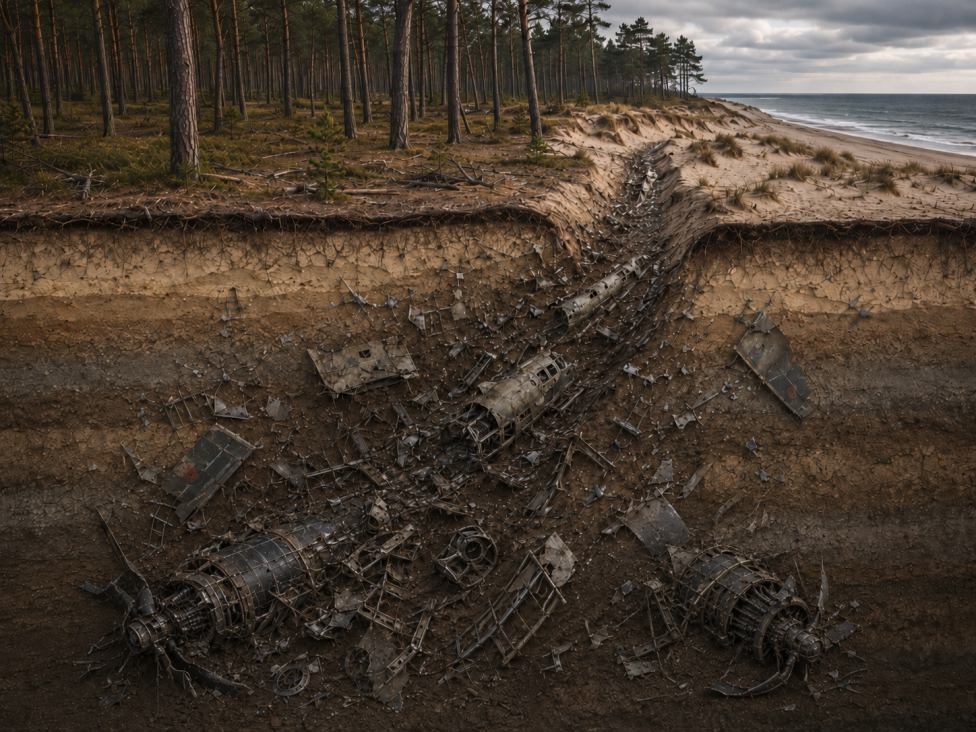
Piwowarczyk noted that the terrain around the new site shows unusual elevations and depressions inconsistent with natural landforms. This anomaly suggests the main fuselage likely rests buried beneath the surface. The distribution of surface wreckage, disturbed topography, and irregular terrain features collectively indicate a crash impact rather than mere discarded parts.
If the principal wreck is still underground, the location transcends aviation archaeology. Museum experts warn that crew members' remains might still be entombed with the aircraft. “We cannot rule out that crew remains are still interred here. This underlines the need for professional protection and investigation of the site,” Czeszewski emphasized. Such a scenario places the site under the purview of legal and ethical frameworks governing military war graves, beyond just historic preservation considerations.
The museum has informed the Regional Conservator of Historic Monuments, the Międzyzdroje Forest District authorities, and agencies responsible for military cemeteries. The exact site remains unmarked publicly, with cautions against unauthorized digging or souvenir hunting. No timeline for formal excavation has yet been set.
- Categories:
- News






0 comments
Sign in to Comment