
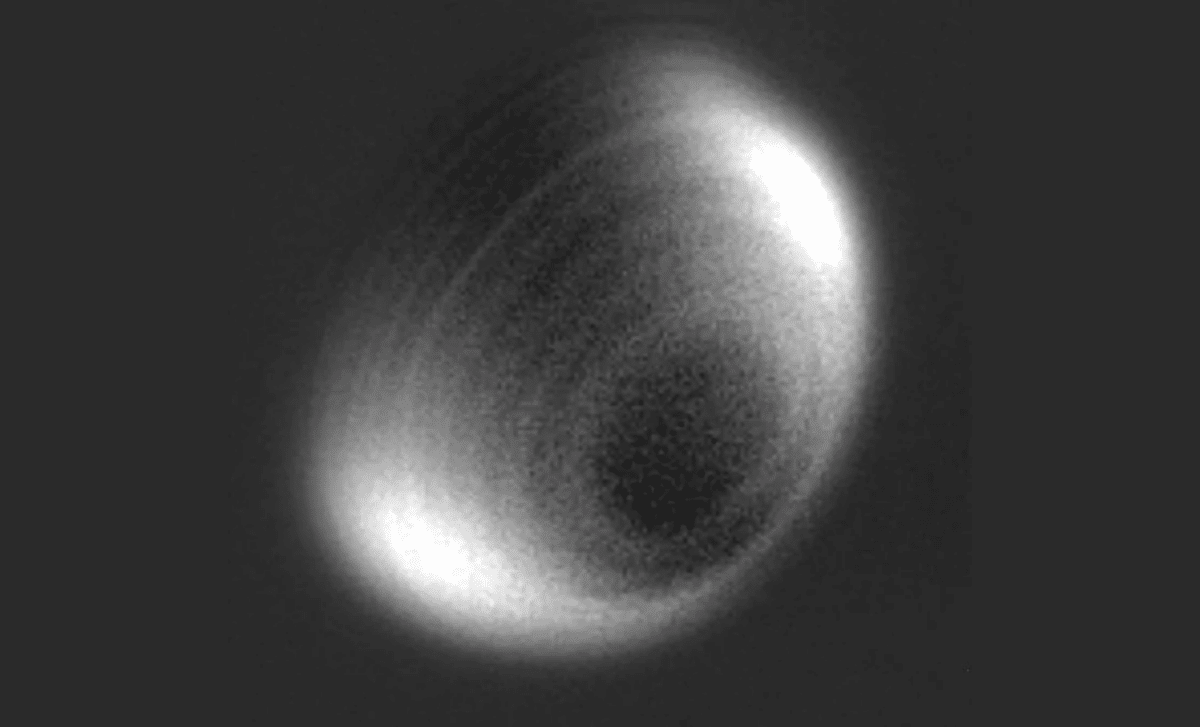
Researchers have identified massive concentric ring formations in Venus’s upper atmosphere, offering fresh insights into the planet's atmospheric dynamics and energy movement. This breakthrough, published in The Planetary Science Journal, unveils intricate patterns potentially linked to expansive atmospheric wave activity instead of mere observational glitches.
Unusual Atmospheric Rings Detected Over Venus
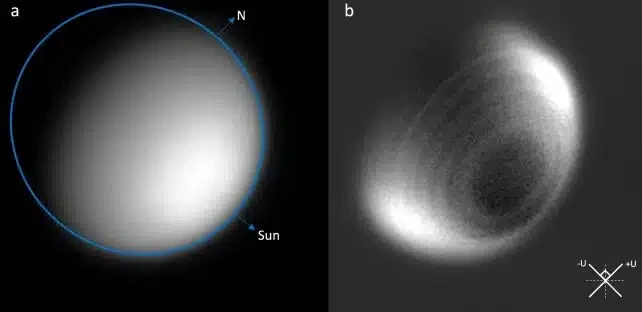
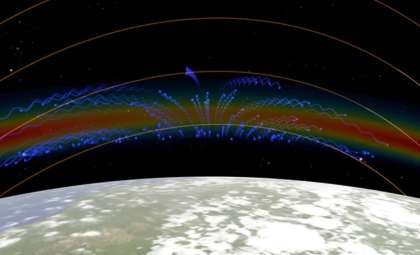
These striking concentric rings were observed encircling a luminous section of Venus's upper atmosphere. Stretching across a wide area, these patterns mark a novel atmospheric phenomenon not previously documented in detail.
Initially, scientists debated whether these structures arose from instrumental anomalies, especially given their symmetrical arrangement centered on the planet’s brightest observed region.

“The first thoughts were that they were due to an instrumental effect, especially because the rings seem to be concentric around the brightest area on the planet: They could be due to a digitization process in the detector or somehow smearing of the signal,” Mahapatra explained.
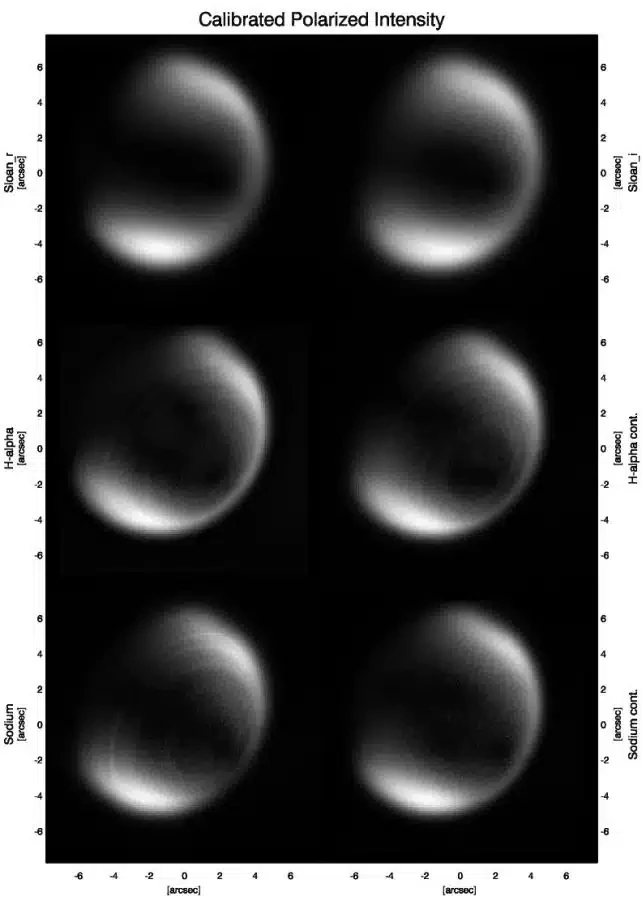
Upon deeper examination and comparison with existing atmospheric data, the team considered that these rings might stem from authentic atmospheric phenomena extending over considerable portions of Venus.
Linking the Rings to Atmospheric Wave Activity
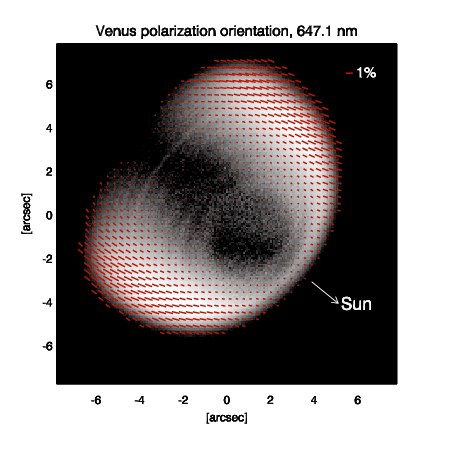
Published in The Planetary Science Journal, the research explores how atmospheric waves traversing Venus’s upper layers might generate these well-defined concentric features, which persist over extensive spatial scales.
Venus’s atmosphere is notoriously complex, with intense heat, dense carbon dioxide layers, and sulfuric acid clouds, making it a fascinating natural laboratory for planetary atmosphere studies.
The authors propose that these ring structures are signatures of wave-driven organization within Venus’s upper atmospheric materials, producing coherent patterns observable from afar.
“If they are confirmed, I think the most important result would be evidence that large-scale wave activity can produce coherent density structures across enormous regions of Venus’s upper atmosphere,” Mahapatra said.
This observation does not necessarily reveal a completely novel atmospheric process but might offer a fresh approach to studying phenomena previously hinted at by spacecraft and modeling efforts.
“We regard our observations not as evidence for a completely unknown kind of atmospheric physics, but potentially as a new way of observing atmospheric dynamics that we already have tantalizing evidence for from spacecraft measurements,” Mahapatra said.
The Enigma of Venus’s Rapidly Circulating Atmosphere
Venus features a phenomenon known as atmospheric superrotation, where the upper cloud layers orbit the planet much faster than Venus itself spins. Understanding what drives and sustains this rapid circulation has posed a long-standing puzzle for planetary scientists.
The newly discovered atmospheric rings might shed light on how planetary-scale waves transfer energy within Venus’s atmosphere, possibly influencing the mechanisms behind superrotation.
“That is exciting because these waves transport energy across the planet. Such processes may ultimately be important for understanding one of the long-standing mysteries of Venus: atmospheric superrotation, where the clouds circulate around the planet much faster than the solid planet rotates!”
Insights gained from these atmospheric dynamics might also prove valuable for interpreting atmospheres on other planets, as fundamental physical principles often transcend differing planetary environments.
“Indeed, while Venus has a very different atmosphere than the Earth – much thicker, hotter, with a different composition and sulfuric acid clouds – a better understanding of Venus also helps to better understand the Earth, because the underlying physical processes are the same.”
Opening New Avenues in Planetary Atmosphere Research
This discovery underscores the power of remote sensing to unveil hidden phenomena on planets that have been extensively observed. Venus continues to surprise by harboring atmospheric activities that remain elusive when viewed solely from its surface.
Upcoming Venus missions may help determine whether these concentric structures are permanent atmospheric fixtures or transient patterns linked to wave-driven processes. Advanced instruments aboard new spacecraft could clarify their origin.
“Venus helps to test and improve our fundamental knowledge about atmospheres, including the Earth’s.”
Growing interest in Venus exploration promises to enhance understanding of its atmosphere, geology, and evolutionary history, revealing how a planet comparable to Earth diverged into such an extreme environment.
The vast ring formations found on Venus offer another glimpse into the complex relationship between planetary atmospheres and underlying physics, aiding scientists in decoding similar processes throughout our Solar System.
- Categories:
- Astronomy









0 comments
Sign in to Comment