
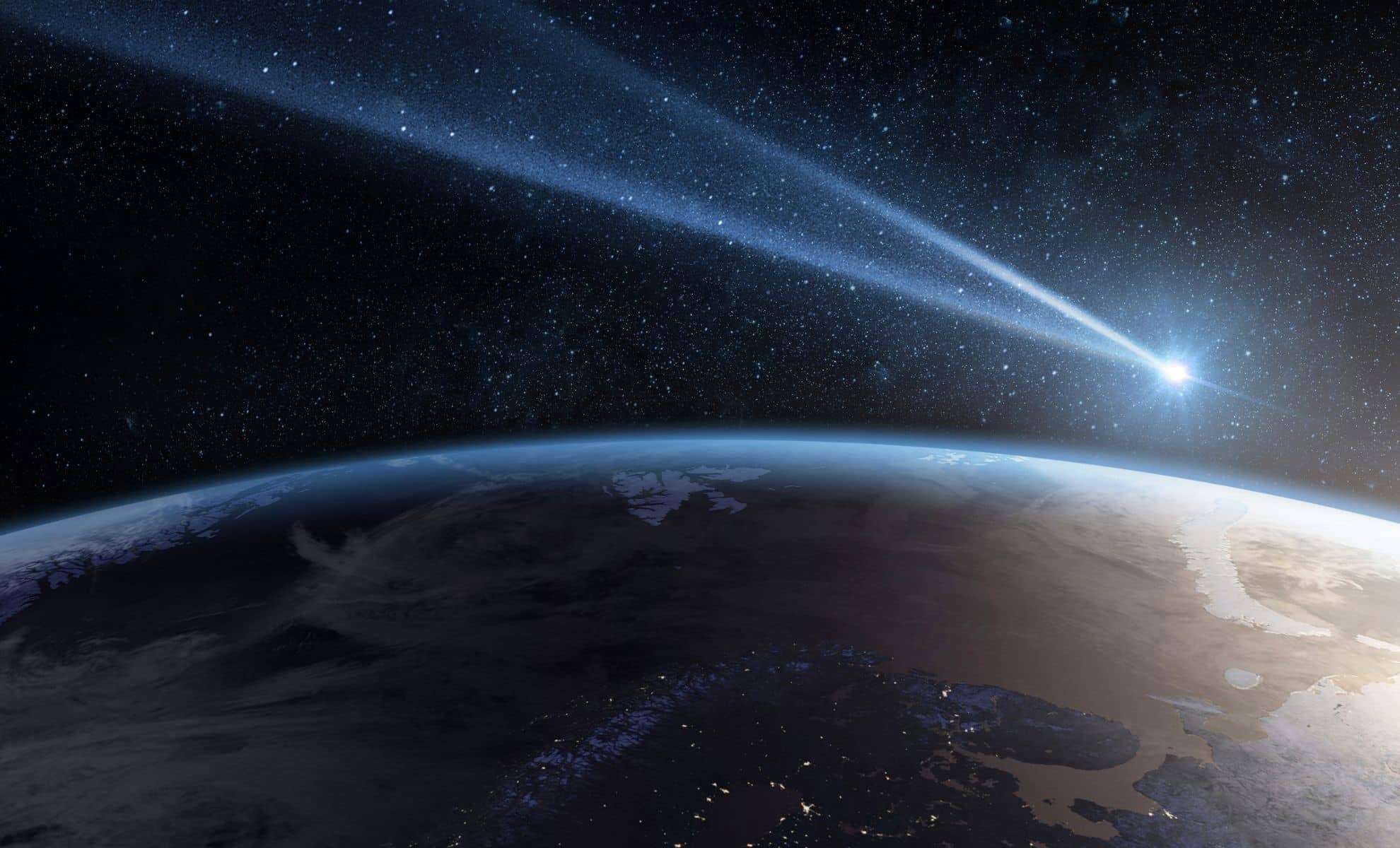
A seemingly new near-Earth asteroid spotted by a hobbyist astronomer has turned out to be a surprising case of mistaken identity. What was initially reported as an asteroid is actually an object linked to a remarkable chapter in private spaceflight history.
A Mistaken Identity in Space
On January 2, 2024, the International Astronomical Union’s Minor Planet Center (MPC) announced the discovery of a newly cataloged near-Earth asteroid, named 2018 CN41. The detection was credited to an amateur astronomer from Turkey who used accessible public data to identify the object.
Less than a day later, the MPC issued a correction clarifying that this object was, in fact, not an asteroid but rather the remnants of the Tesla Roadster launched by SpaceX back in 2018. Though initially mistaken, this vehicle has been orbiting the sun for almost six years.

The Tesla’s Solar Voyage
During SpaceX’s maiden flight of its Falcon Heavy rocket in February 2018, the car and its mannequin occupant, known as Starman, were sent into space as an unconventional payload. Originally aimed for Mars, the car overshot its destination, settling into a long-term orbit around the sun instead.
Since then, the Tesla has circled the sun about 4.5 times, reaching velocities as high as 45,000 mph (72,000 km/h). Though launched largely as a publicity effort, it remains an enduring symbol of Musk’s ambitious space vision. Impressively, the vehicle has exceeded its original 36,000-mile warranty by roughly 100,000-fold.
Exposure to the extreme environment of space likely means the Tesla’s glossy finish is long gone. Solar radiation and collisions with micrometeoroids probably stripped away much of its outer surface, and Starman has likely suffered substantial damage from tiny debris impacts.
Increasing Confusion Over Human-Made Space Objects
Misidentifications of artificial objects as asteroids are not unique to this incident. In the past, spacecraft such as the ESA’s Rosetta probe and NASA’s Lucy mission have also been mistakenly cataloged as natural space rocks. As space activities multiply, these mistakes risk becoming more frequent and costly.
Jonathan McDowell, an astronomer at the Harvard and Smithsonian Center for Astrophysics, cautions about the consequences: “in the worst-case scenario, you spend a billion [dollars] launching a space probe to study an asteroid and only realize it’s not an asteroid when you get there.” With the escalation of human space endeavors, astronomers are increasingly concerned that such errors might disrupt scientific investigations.
Advocating for Enhanced Space Object Monitoring
While Earth-orbiting objects are closely tracked by space agencies, objects like the Tesla Roadster that have escaped Earth’s gravity do not receive the same level of observation. Currently, there is no legal requirement for companies or agencies to disclose the whereabouts of their space objects once they enter deep space.
The issue of space situational awareness has garnered growing attention among astronomers. The American Astronomical Society recently stressed the need for improved tracking of human-made objects to prevent mission conflicts, confusion with natural celestial bodies, and to promote safe, coordinated space exploration.
- Categories:
- News










0 comments
Sign in to Comment