
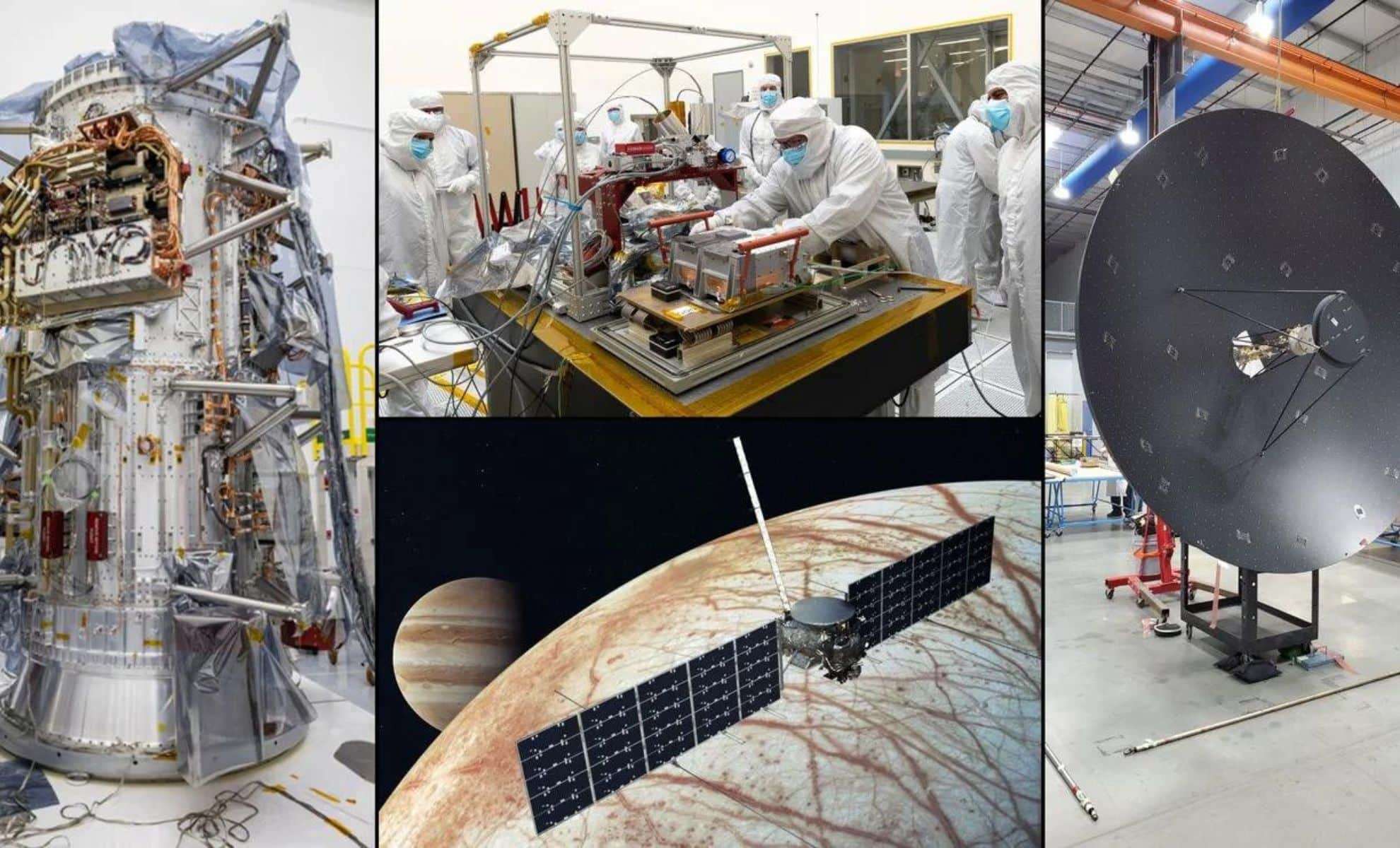
NASA announced its Europa Clipper mission is set to launch on October 10, 2024. The mission plans to investigate Europa, one of Jupiter’s frozen moons believed to conceal a vast, subsurface ocean. By studying this icy moon’s unique environment, Europa may reveal whether it has the right conditions to sustain life beneath its icy crust.
The Journey Behind Europa Clipper
The Europa Clipper mission, under development for more than ten years, focuses on assessing the habitability of Europa. It recently completed a major technical checkpoint called Key Decision Point E (KDP-E), clearing the path toward its upcoming launch. The spacecraft will be sent into space on a SpaceX Falcon Heavy rocket from NASA’s Kennedy Space Center in Florida.
“This mission represents an extraordinary opportunity,” explained Curt Niebur, Europa Clipper's program scientist at NASA, during a media briefing. “We’re not exploring a world that was suitable for life billions of years ago, but one that might still be habitable right now.”

The project faced a critical challenge earlier this year after concerns arose that the spacecraft’s transistors, which regulate electrical currents, might falter under Jupiter’s harsh radiation. After extensive testing, engineers confirmed these components will endure the radiation, keeping the mission on schedule.
Key Scientific Goals of Europa Clipper
Arriving at Jupiter in 2030, the spacecraft will conduct about four years of close flybys around Europa. It carries nine advanced instruments designed to examine the icy moon’s surface and search for clues of biological potential. These tools will measure the thickness of the ice shell, characterize the chemical elements on the surface, and probe the ocean beneath the ice.
Rather than hunting for life itself, the mission aims to assess whether Europa offers the fundamental components required for life—liquid water, energy sources, and suitable chemistry. This data will pave the way for future missions that could directly search for biosignatures.
“Our goal isn’t to find life outright,” Niebur noted. “It’s to determine if the conditions to support life are present on Europa.”
Enduring Jupiter’s Extreme Radiation
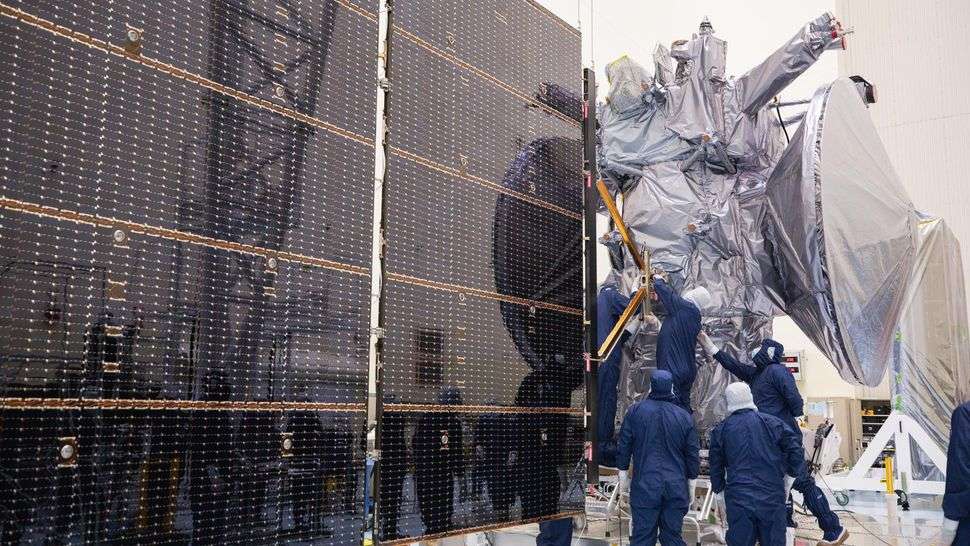
The mission faces the formidable obstacle of Jupiter’s intense radiation environment, which is unmatched anywhere else in our solar system. Jupiter’s magnetic field is roughly 20,000 times stronger than Earth’s, capturing high-energy particles that relentlessly bombard moons like Europa. To survive, the spacecraft relies on radiation-resistant electronics.
Jordan Evans, project manager for Europa Clipper at NASA’s Jet Propulsion Laboratory (JPL), outlined the thorough testing regimes that verified the resilience of onboard transistors against radiation. Simulated space exposure showed the transistors can recover between nearly 50 planned Europa flybys.
“Our tests proved that although the spacecraft will traverse radiation belts, it will have sufficient time outside radiation to allow the transistors to heal,” commented Evans.
The spacecraft also features a radiation monitor to continuously track transistor conditions throughout the mission. These safeguards provide strong confidence in Europa Clipper’s ability to complete its scientific objectives.
Revealing the Secrets of Europa’s Ocean
Data from Europa Clipper will be essential in understanding whether the moon’s hidden ocean can nurture life. Beneath Europa’s thick ice lies a deep, salty ocean that may contain the ingredients to support living organisms. By probing the ice shell, detecting potential plumes of water, and analyzing surface chemicals, the spacecraft will offer unprecedented insights into the moon’s environmental conditions.
“If Europa Clipper confirms favorable conditions exist, we’ll be eager to pursue follow-up missions aimed directly at detecting life,” said Niebur.
Success for this mission could revolutionize our perception of where life might exist beyond Earth. Confirmation of habitability on Europa would mean that both our planet and one other in the solar system meet the essential criteria for life, reshaping the future of astrobiological exploration.









0 comments
Sign in to Comment