

NASA’s next-generation infrared observatory, NEO Surveyor, is advancing steadily as it approaches its launch target set for late 2027.
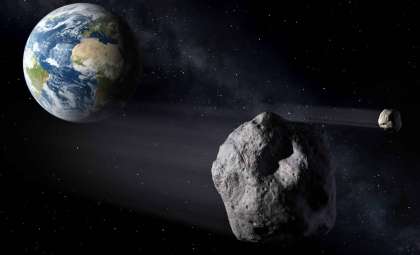
Its mission focuses on identifying asteroids and comets that could endanger Earth, marking NASA’s inaugural space telescope dedicated solely to planetary defense.
Positioned at the L1 Lagrange point, roughly one million miles from Earth, the spacecraft will have a clear vantage point to monitor near-Earth objects (NEOs) coming from the Sun’s direction—an area notoriously difficult for ground-based observatories to observe.

Cutting-Edge Infrared Technology Boosts Planetary Defense Capabilities
Utilizing advanced mercury-cadmium-telluride infrared sensors, NEO Surveyor can detect the heat emitted by asteroids and comets heated by the Sun, regardless of their surface reflectivity. This allows it to discover and analyze both small, shiny objects and larger, darker bodies that are often elusive to traditional optical telescopes.
Amy Mainzer, professor at UCLA and the survey’s director, emphasized the mission’s critical role: “NEO Surveyor is designed with one goal in mind: to find the most dangerous asteroids and comets early enough for us to take action.” Beyond threat detection, the mission promises to deepen our understanding of the origins and development of near-Earth objects.
Advances in the Construction of the Telescope Instrument
The primary instrument—NEO Surveyor’s telescope—is currently being built in NASA’s Jet Propulsion Laboratory (JPL) clean room. Comparable in size to home laundry machines, its innovative three-mirror anastigmat system focuses infrared light with high precision and minimal distortion, enhancing its detection capabilities.
Brian Monacelli, JPL’s lead optical engineer, noted the meticulous care taken during mirror fabrication: “By July, all telescope mirrors had been delivered and meticulously inspected within our clean room.” Crafted from solid aluminum with diamond-turning technology, these mirrors surpass stringent mission standards. In August, they were securely mounted to the optical bench—a milestone in the telescope’s assembly.
The following step includes fitting the telescope inside a specially designed instrument enclosure. This dark composite housing will minimize heat intrusion to ensure the telescope remains cool, thus preserving observation sensitivity. The enclosure is being constructed and will undergo thorough testing before final installation on the spacecraft.
Tom Hoffman, project manager for NEO Surveyor at JPL, expressed pride in the team’s efforts: “It’s been a long, dedicated journey, and we’re thrilled to see the hardware coming together with invaluable contributions from partners nationwide.”
NEO Surveyor’s Upcoming Mission and Its Impact
As the spacecraft readies for launch, it is expected to revolutionize how we detect and characterize threatening near-Earth objects by delivering an unprecedented comprehensive survey. Its ability to find and monitor hazardous asteroids and comets will greatly improve our preparedness against possible impact risks.
In addition to its defense role, NEO Surveyor could also yield new information about Earth Trojans, asteroids sharing Earth’s orbit but rarely visible from the ground. Studying these objects will enhance knowledge of their origins and behavior, enriching our broader solar system perspective.
Progress on assembly and testing continues steadily, with NEO Surveyor poised to become a vital asset in securing Earth’s safety from asteroid collisions and marking a major milestone in space exploration and planetary defense.
- Categories:
- Astronomy ,
- News ,
- Space ,
- Nasa











0 comments
Sign in to Comment