

The Thetford Treasure, discovered in 1979 in East Anglia, is under renewed examination following research that proposes a later burial date. This remarkable collection of gold ornaments and silver spoons might originate from a different era than previously assumed.
Located at Fison’s Way on Gallows Hill near Thetford, the treasure has long been recognized as one of Britain's most impressive late Roman finds. It comprises 81 artifacts now housed within the British Museum.
A key challenge with this assemblage has been the absence of coins, which typically provide precise dating in Roman archaeology. Without them, experts have relied on stylistic analysis and comparisons to other European hoards, resulting in evolving interpretations, including the latest insights detailed in the Journal of Roman Archaeology.

Contextual Clues Behind the Treasure's Origin
The hoard was initially found by a metal detectorist on a construction site in 1979, according to excavation reports. The items were not all stored together; a portion was placed inside a shale container, while the rest were found nearby, suggesting either deliberate separation or later disturbance.
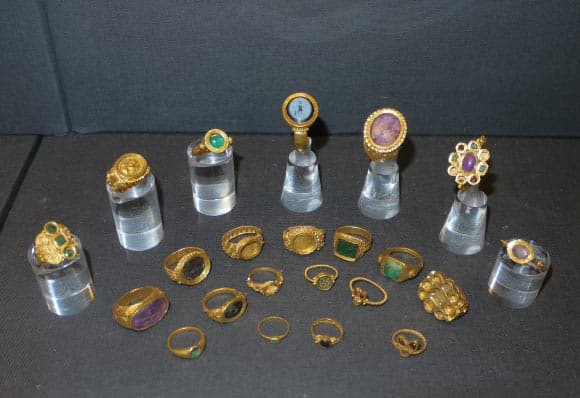
Among the collection are 22 gold rings, more gold jewelry, and 36 silver spoons or strainers. Museum documentation emphasizes that this assortment combines personal luxury goods and elite dining implements, indicating affluent ownership.
The ongoing lack of coins makes firm dating difficult. The new research stresses that the hoard’s age must primarily be determined through stylistic parallels with comparable finds across Europe rather than definitive archaeological evidence.
Reevaluating the Dating of the Hoard
The groundbreaking aspect of this study is its assertion that the treasure was buried later than once believed. Professor Ellen Swift from the University of Kent explained:
“There is compelling evidence that the treasure was buried in the 5th century CE rather than the late 4th CE,” she said. “Since wider evidence found at the site confirms the religious context previously established by inscriptions on the spoons within the hoard, this means, remarkably, that the re-dating of the Thetford hoard suggests a pagan cult center survived there into the 5th century CE.”
The study, published in the Journal of Roman Archaeology, links various artifacts in the hoard to later stylistic periods, extending the timeframe and altering perspectives on Roman decline in the area.
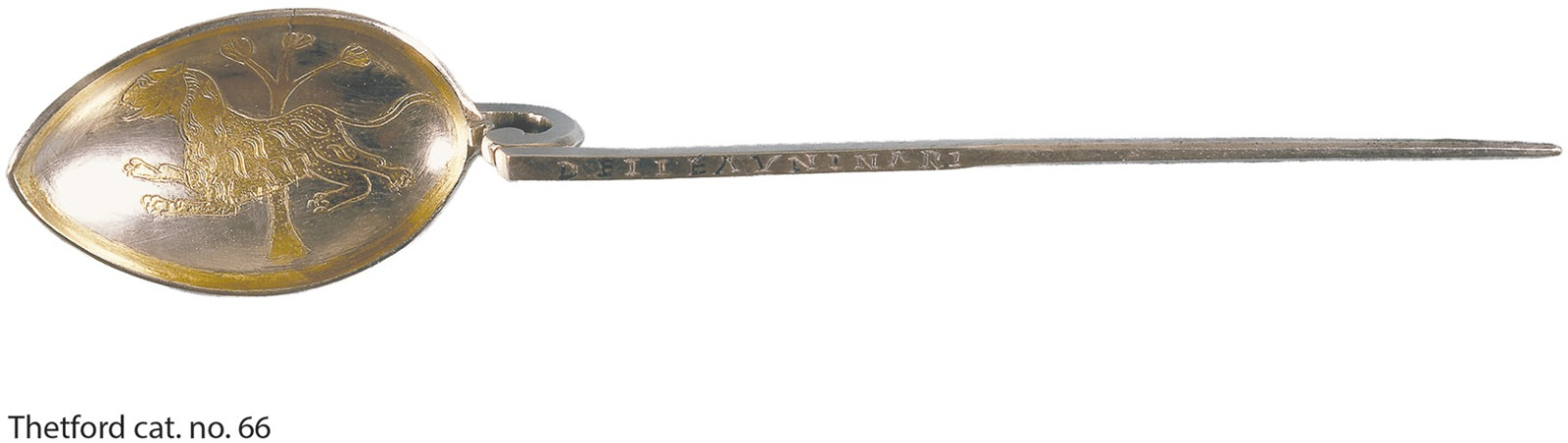
Several silver spoons bear inscriptions indicating religious significance, and the updated timeline implies such practices may have persisted in East Anglia well into the 5th century CE.
This research highlights the hoard's richness, indicating access to considerable wealth and status amid a period often regarded as turbulent.
Evidence of Extensive Roman Connections
The jewelry displays an intriguing blend of styles. According to Professor Swift, the artifacts don’t stem from a unified design tradition but instead represent diverse influences throughout the Roman domain. Some of the more recent rings may have originated from northern Italy or nearby, while a necklace featuring conical beads links to the Balkans.
“Most of the jewelry is generically ‘Mediterranean Roman’ in style illustrating a geographically widespread shared culture among elites,” Professor Swift said.
The findings suggest that even on the empire's periphery, Britain remained embedded in far-reaching trade and cultural networks, facilitating the exchange of goods, styles, and ideas.
- Categories:
- News








0 comments
Sign in to Comment