
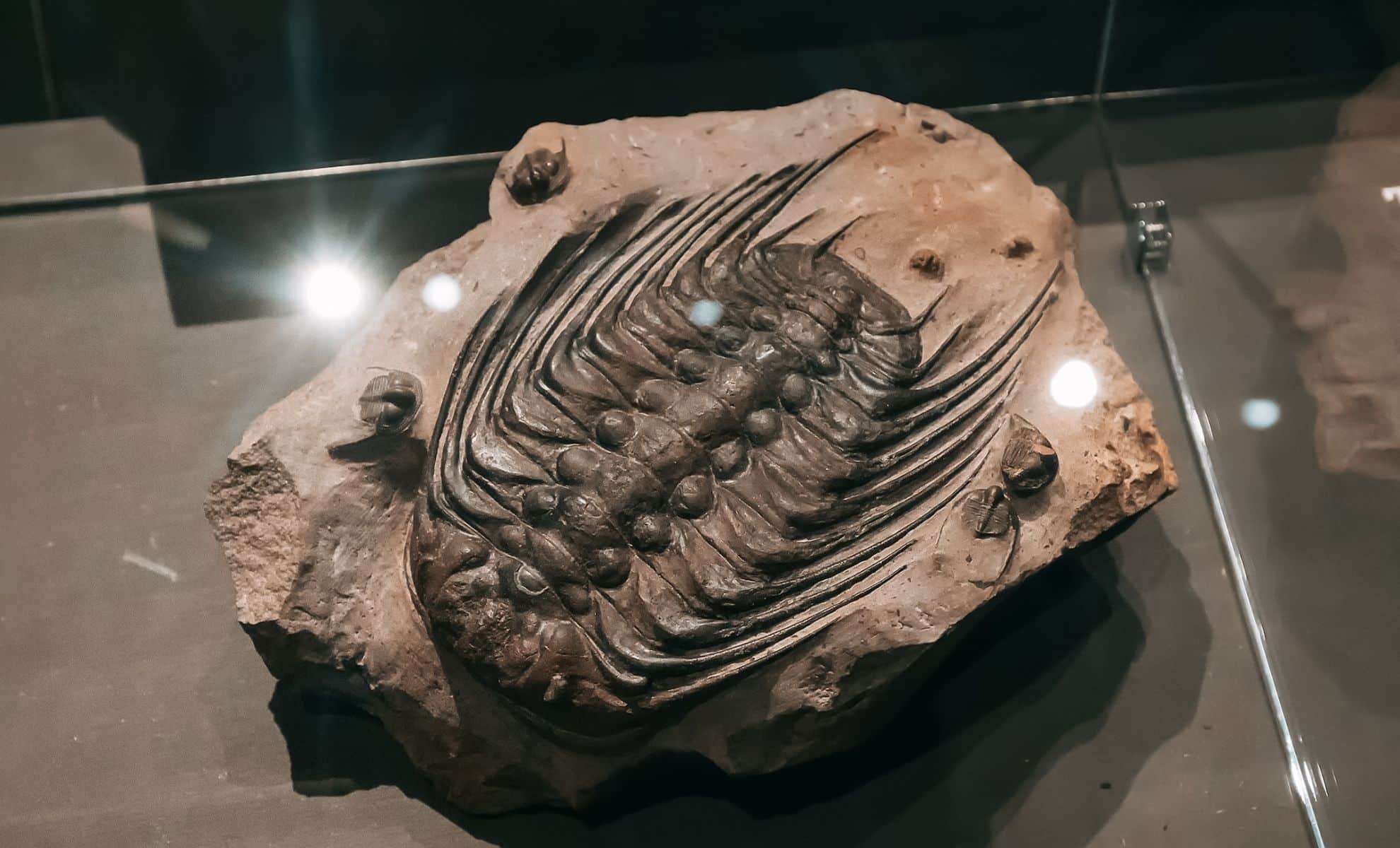
The Cambrian explosion, widely considered a pivotal moment in Earth’s biological history, is now thought to have begun earlier than the widely accepted 530 million years ago. Recent findings indicate that this surge in biodiversity might have started several million years prior.
Reconsidering the Cambrian Timeline
A new study featured in Geology presents compelling evidence that complex-bodied animals were thriving about 545 million years ago, pushing back the onset of the Cambrian explosion. By examining trace fossils from that era, scientists discovered indications of animals exhibiting advanced traits such as segmentation, muscle structures, and purposeful movement.
Leading the research, Olmo Miguez Salas, a postdoctoral scientist at the University of Barcelona, and Zekun Wang from London’s Natural History Museum emphasized the importance of trace fossils. As Miguez Salas stated, “The trace fossil record reveals crucial information about evolutionary stages dominated by soft-bodied organisms.”

Decoding Ancient Activity Through Trace Fossils
Traditional paleontological focus tends to highlight hard-bodied fossils due to their preservation potential, but many early life forms in the Ediacaran-Cambrian transition were soft-bodied and left behind only trace fossils—evidence of their movements and interactions. These traces provide unparalleled insight into the behavioral complexity of early animals.
Concentrating on the Ediacaran-Cambrian boundary is vital because it marks a dramatic shift in Earth’s biosphere, where soft-bodied Ediacaran organisms were replaced by hard-bodied Cambrian species.
Miguez Salas commented, “The Cambrian transition entailed the extinction of much Ediacaran fauna and the rapid emergence of diverse multicellular animals with hard anatomical features—the evolutionary foundation for most modern animal families.”
Evidence of Advanced Locomotion and Interaction
The trace fossils analyzed reveal that creatures from 545 million years ago exhibited intricate structures like coelomic hydrostatic bodies with defined anteroposterior axes, musculature, and possible segmentation. Their directional movement, likely responses to environmental cues, points to significant evolutionary advancements predating the established timeline.
This research suggests that the initial stages of the Cambrian explosion were set long before its traditional dating based on prior fossil evidence.
Changing Perspectives on Early Animal Evolution
The study’s implications extend far beyond adjusting the Cambrian timeline. It highlights how animals with complex mobility existed earlier than expected, reshaping our understanding of early evolutionary processes. According to Miguez Salas, “This discovery paves the way for quantitative analyses of future Ediacaran trace fossils, supporting the claim that the Cambrian explosion occurred much earlier than previously assumed.”
Moreover, this approach introduces a refined technique for examining fossilized traces of ancient animal movement, enabling scientists to gain deeper insights into evolutionary milestones like the Ordovician diversification.
- Categories:
- News











0 comments
Sign in to Comment