
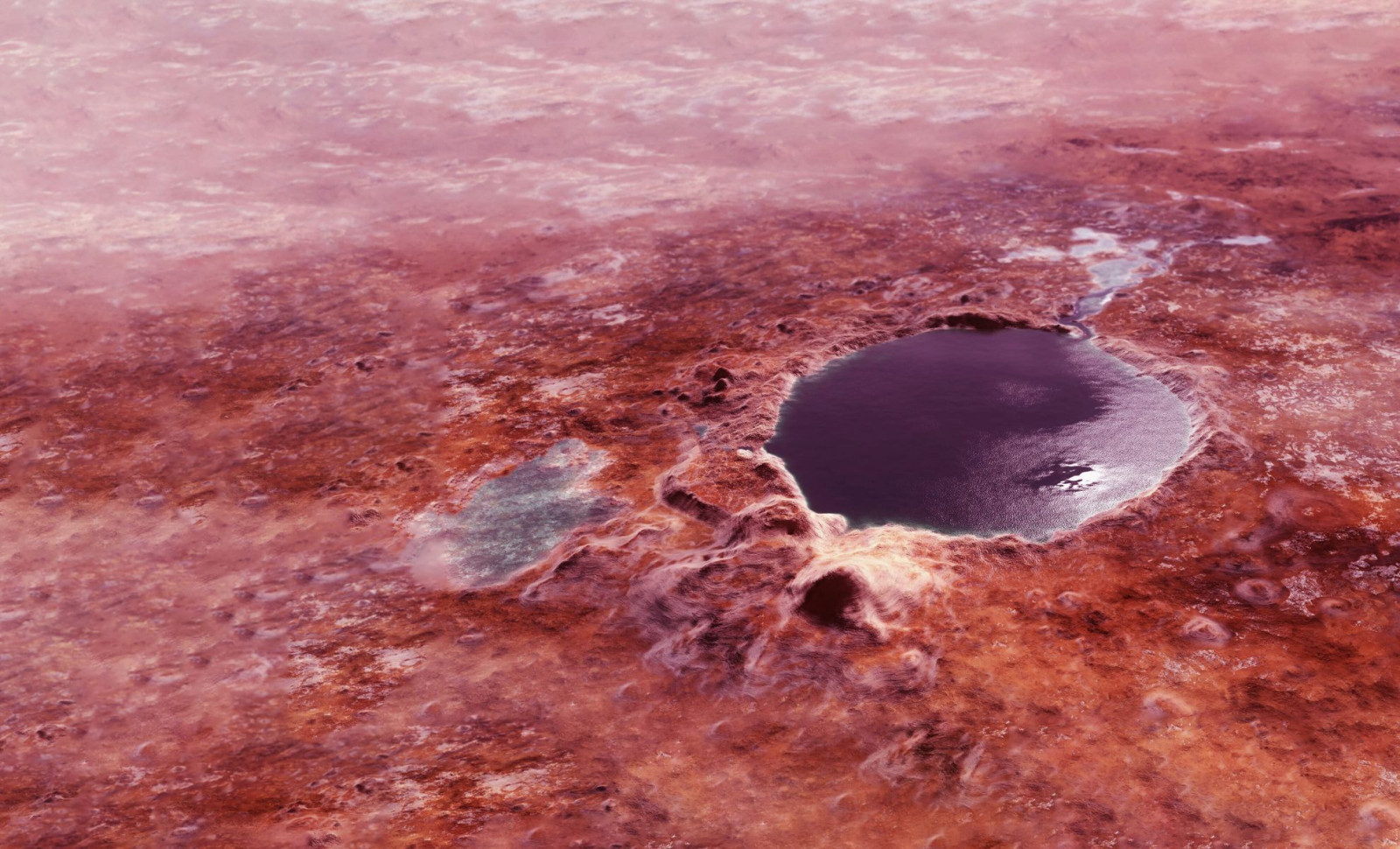
Mars, once home to extensive surface water, now appears drier, but recent findings suggest much of its water moved below ground rather than vanished entirely. Geological evidence from deep crater basins reveals a potential planet-wide aquifer system that endured well beyond the decline of surface water.
For years, experts have debated how abundant and long-lasting Martian water was. By examining specific landforms, a recent paper published in the Journal of Geophysical Research: Planets provides compelling insights into Mars’ water history spanning billions of years.
In-Depth Examination of Craters Highlights Ancient Water Activity
Led by Dr. Francesco Salese from Utrecht University, the investigation focused on 24 enclosed craters located in Mars’ northern hemisphere. These basins, situated roughly 2.5 miles (4 km) below Martian sea level, display distinct water-related geological markers.

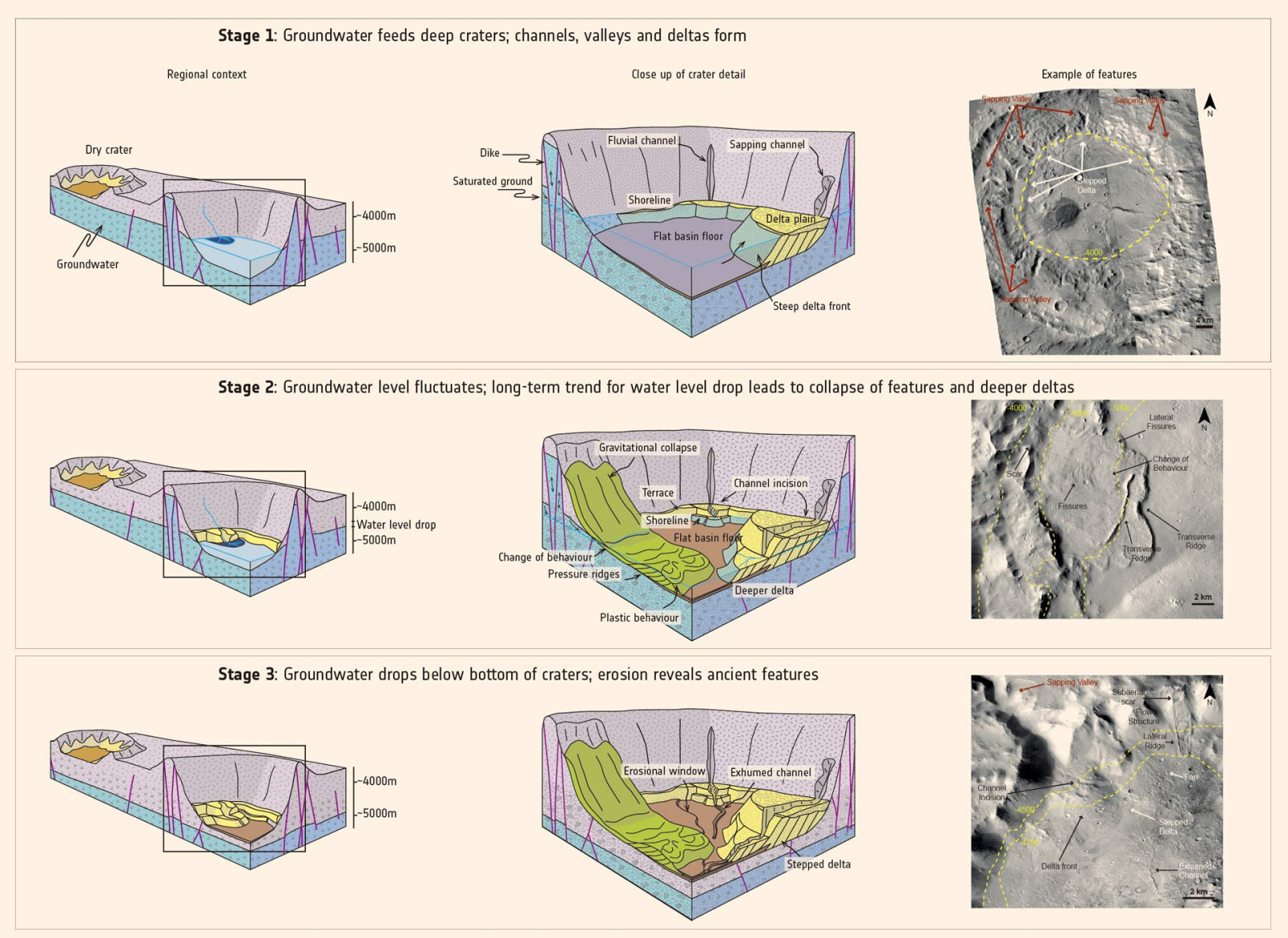
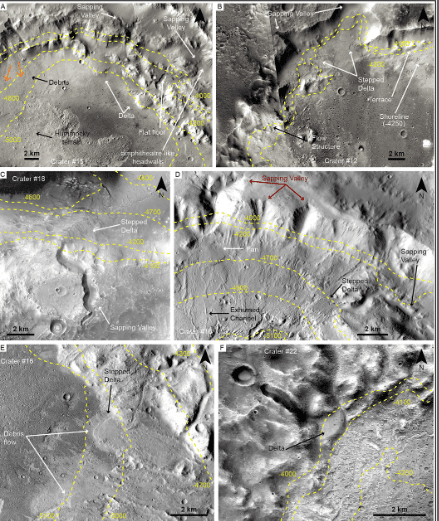
The study identified crater wall channels, valleys shaped by groundwater, delta-like sediment piles, and terraces—an ensemble of features indicating long-lasting water presence. Many such structures appear consistently at depths of 4 to 4.5 km, implying a stable, widespread water table beneath the surface.
According to Salese, this uniformity signifies an extensive underwater reservoir system rather than sporadic isolated water bodies.
“We traced this water in our study, as its scale and role is a matter of debate, and we found the first geological evidence of a planet-wide groundwater system on Mars.”
Clues to Mars’ Once Water-Rich Environment
The consistent elevation of these water-related formations points to a global subsurface water table. Co-author Dr. Gian Gabriele Ori suggested this groundwater network may have been connected to an ancient ocean thought to exist between 3 and 4 billion years ago.
“We think that this ocean may have connected to a system of underground lakes that spread across the entire planet,” Ori explained.
These subterranean lakes likely formed an interconnected hydrological system during Mars’ more active geological era. The model proposes that as surface water receded, it seeped downwards, stabilizing underground and sustaining these underground water reservoirs over extended periods.
Mineral Evidence Suggests Habitability Potential
Within five of the studied craters, researchers detected clays, carbonates, and silicates—minerals that typically form in water-rich environments and suggest the presence of life-friendly conditions on Earth. These deep basins likely intersected the hydrated parts of the crust for prolonged intervals, increasing the chance that remnants of ancient life might still exist in buried layers.
Dr. Dmitri Titov, project scientist for ESA’s Mars Express mission, emphasized how these discoveries guide future exploration efforts.
“Findings like this are hugely important; they help us to identify the regions of Mars that are the most promising for finding signs of past life.”
- Categories:
- Astronomy










0 comments
Sign in to Comment