
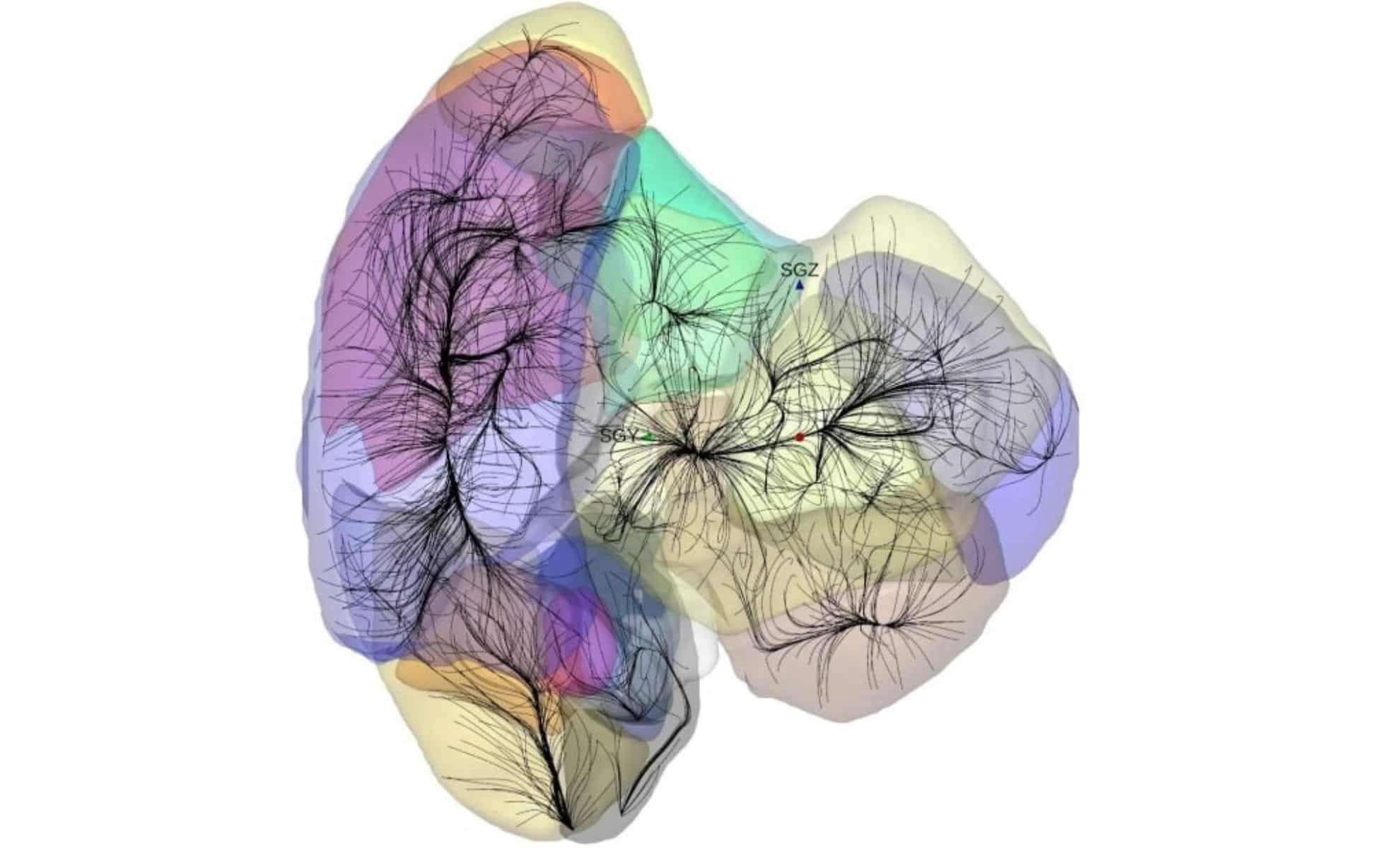
Emerging research has transformed our view of the Milky Way by placing it within a far more expansive cosmic framework than once believed. Scientists now propose that the Laniakea supercluster, which encompasses our galaxy, may itself reside within an even grander structure known as the Shapley Supercluster. This insight offers profound new perspectives on the gravitational influences that organize the universe's large-scale architecture.
The Shapley Supercluster: An Immense Gravitational Domain
The Shapley Supercluster is a colossal cosmic region packed with numerous galaxy clusters alongside concentrated dark matter. Its intense gravitational attraction affects galaxies located far beyond its central zone. First discovered by astronomer Harlow Shapley during the 1930s as a dense grouping in the Centaurus constellation, it is now regarded as the most massive assembly of matter in our local universe. Hosting thousands of galaxies and significant dark matter, it exerts a powerful gravitational force across vast distances.
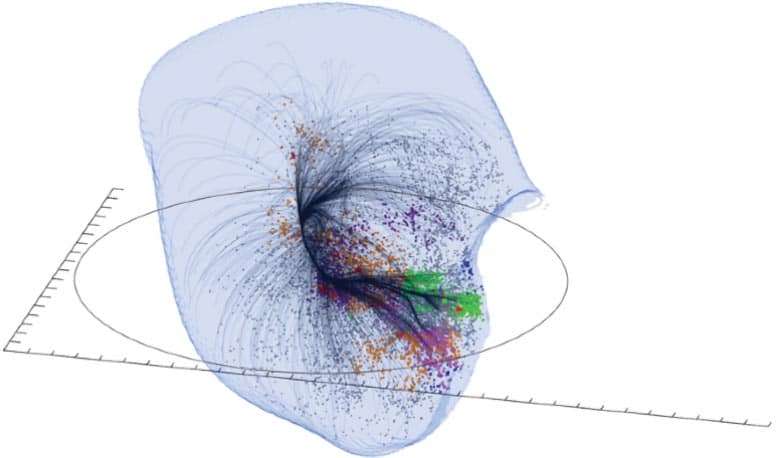
Teams from the University of Hawai’i and international collaborators have analyzed extensive redshift measurements from over 56,000 galaxies, including data from the Cosmicflows project. Their results imply that our Milky Way, along with the entire Laniakea supercluster, might be drifting toward the Shapley Supercluster, which could be nearly tenfold larger than Laniakea itself. According to R. Brent Tully, principal investigator: “The cosmos forms a vast network of filaments where galaxies align and congregate in gravitational hubs. Similar to how rivers run through watersheds, galaxies move within cosmic gravitational basins.”

This study, featured in Nature Astronomy, introduces a fresh outlook on the Milky Way's cosmic environment. While Laniakea spans approximately 500 million light-years and was once considered among the largest known superclusters, the Shapley Supercluster’s enormity suggests a far vaster, interconnected cosmic landscape enveloping our galaxy and its neighbors.
Gravity’s Role Within the Cosmic Network
The large-scale structure of the universe is a sprawling cosmic web, where galaxies form along intricate matter filaments, gathering at numerous intersection points under gravitational influence. As a dominant gravitational basin, the Shapley Supercluster profoundly affects galactic motions across immense distances.
Galaxies, including the Milky Way, do not exist in isolation but are drawn towards other massive structures. The Cosmicflows initiative has been vital in decoding these cosmic motions by interpreting how galaxies redshift — an indicator of their velocities and directions relative to us. Tully and colleagues highlight that recognizing the Milky Way as part of the larger Shapley Supercluster could fundamentally shift our grasp of the universe's intricate structure.
Gravity creates a dynamic cosmic environment where galaxies are pulled in varying directions based on surrounding mass distributions. The enormous gravitational influence of the Shapley Supercluster positions it as a major force guiding the trajectories of many galaxies within its reach. As Ehsan Kourkchi, co-author of the research, remarks: “While our observational tools give us giant eyes on the cosmos, even these may fall short in capturing the universe’s full extent.”
Enhancing the Scale of Cosmological Surveys
The identification of the Shapley Supercluster as a structure potentially ten times the volume of Laniakea challenges existing cosmological paradigms. Previously, Laniakea was viewed as the boundary of our cosmic neighborhood, but Shapley’s discovery reveals much larger, more intricate formations influencing galactic evolution.
Studying these superclusters is complicated due to their immense scale and complex composition. Through redshift observations, the Cosmicflows team has tracked galaxy dynamics within and between superclusters, but these data currently fall short of mapping the entire scale of the Shapley Supercluster. Kourkchi emphasizes the limits of present technologies: “Our surveys may still be too limited to fully map these immense cosmic basins.”
Understanding the Shapley Supercluster also impacts dark matter research — the enigmatic substance constituting most of the universe’s mass yet remaining invisible. Since dark matter governs many gravitational interactions within superclusters, improving galactic motion maps promises to refine models of dark matter’s cosmic distribution.
Charting New Frontiers in Cosmic Research
Discovering that the Milky Way is encompassed by a vaster cosmic structure marks a major milestone in unraveling the universe’s architecture. The Shapley Supercluster's recognition reshapes our comprehension of galactic movement and the gravitational forces sculpting the cosmos. This breakthrough not only questions prior assumptions about Laniakea’s scale but also facilitates exploration of the universe’s largest components.
As astronomers harness advanced observational technology and expand surveys, they are likely to uncover even more colossal and sophisticated cosmic structures, deepening our understanding of the universe’s true enormity. The pioneering research by Tully, Kourkchi, and collaborators lays the groundwork for these future endeavors, highlighting a universe far more interconnected and complex than ever imagined. Continued refinement of supercluster mappings will propel our knowledge of cosmic forces and expand the horizons of astrophysical discovery.
- Categories:
- Astronomy ,
- News ,
- Science ,
- Physics





0 comments
Sign in to Comment