
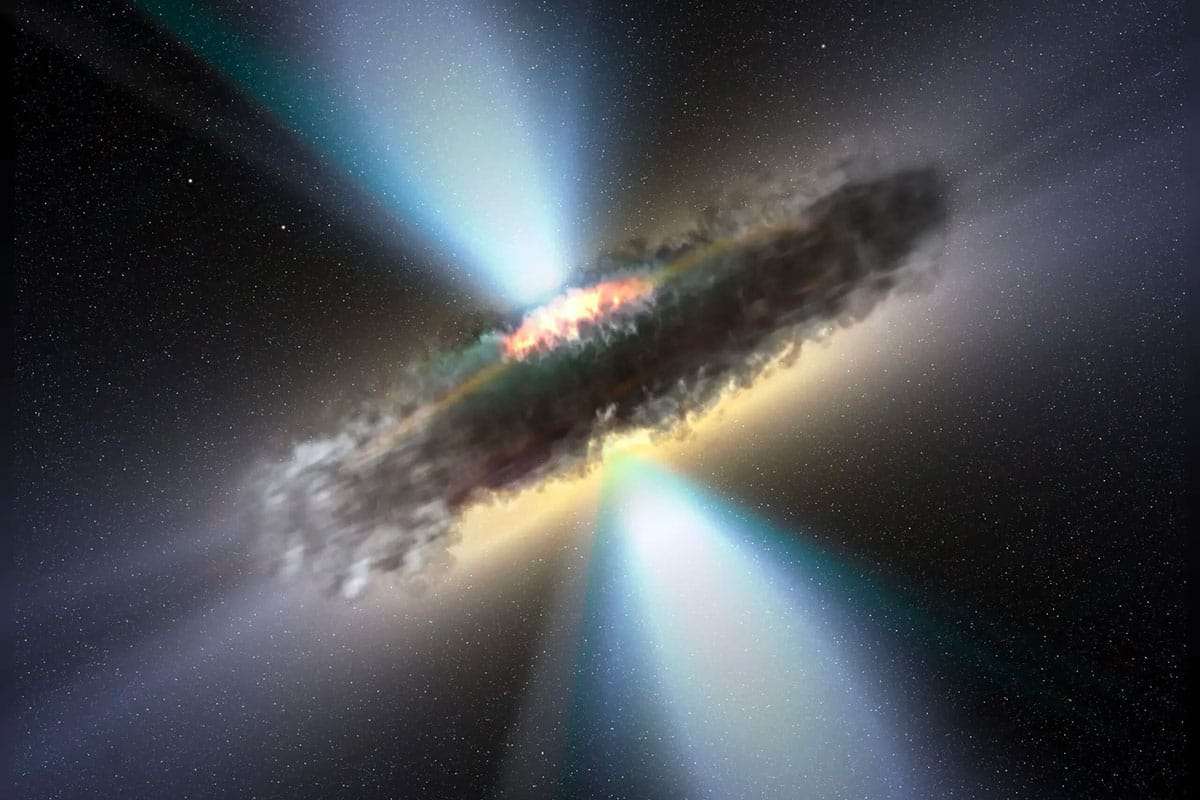
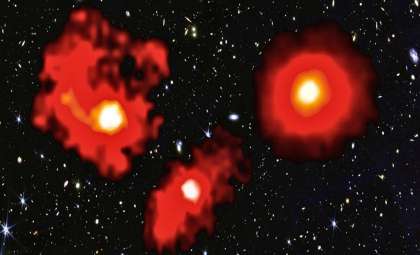
Scientists have uncovered an extraordinary cosmic reservoir of water enveloping the quasar APM 08279+5255, spanning a remarkable distance of hundreds of light-years. Matt Bradford, a lead researcher from NASA’s Jet Propulsion Laboratory, highlights how this discovery enhances our grasp of the universe’s elemental makeup and the widespread presence of water far beyond our planet.
The magnitude of this cosmic water stash is staggering:
- Contains 140 trillion times the volume of Earth’s oceans
- Extends across hundreds of light-years
- Situated more than 12 billion light-years away from Earth
This breakthrough not only showcases the universe’s rich water content but also offers valuable insights into the conditions during the universe’s infancy. Supported partly by NASA funding, the findings have been published in the esteemed Astrophysical Journal Letters, underscoring their importance in astrophysical research.

Quasars: Energetic Titans Harboring Vast Water Clouds
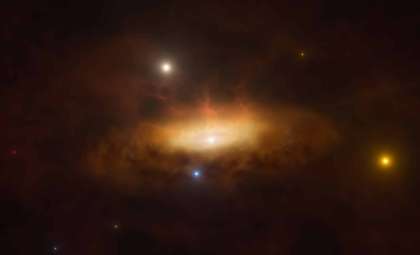
Central to this immense reservoir is a quasar—among the brightest and most powerful objects known in space. Quasars derive their immense energy from supermassive black holes that actively consume nearby matter and radiate enormous energy outputs. The quasar APM 08279+5255 hosts a black hole with a mass 20 billion times that of our sun, radiating the equivalent energy of a trillion suns multiplied by a thousand.
The detection of such extensive water vapor in proximity to this quasar sheds light on early cosmic environments. While water vapor exists within our own galaxy, the quantities measured here exceed those by a factor of 4,000, highlighting the extraordinary nature of this setting and its role in shaping galaxy formation and development.
Water vapor acts as a crucial tracer gas, revealing the physical characteristics near the quasar:
Exploring Universal Mysteries: Observations and Their Impact
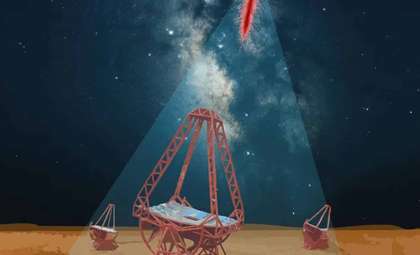
The detection of this vast water reservoir was achieved through sophisticated observational tools. Bradford’s team employed the Z-Spec instrument at the Submillimeter Observatory, located on Mauna Kea in Hawaii, which comprises a 33-foot telescope. Additional data were collected using the Combined Array for Research in Millimeter-Wave Astronomy (CARMA) nestled in California’s Inyo Mountains.
This pioneering study pushes the frontiers of knowledge about cosmic water presence and lays groundwork for deeper exploration of how dark matter interacts with ordinary matter. The immense water volume observed in the distant past sparks curiosity regarding water’s influence on cosmic evolution and the potential for extraterrestrial life.
Beyond astronomy, these insights are pivotal for understanding the formation and composition of planetary systems, including our own. The work aligns with ongoing investigations into brown dwarfs and other celestial bodies beyond our galaxy, broadening our view of the universe’s complexity.
Venturing further into the cosmos, revelations like this colossal water reserve inspire awe and scientific pursuit. Discovering such abundant water—a key component for life—in the ancient universe fuels exciting research prospects and challenges existing ideas about the universe’s evolution and the possibility of life in remote cosmic locales.
- Categories:
- Astronomy






0 comments
Sign in to Comment