
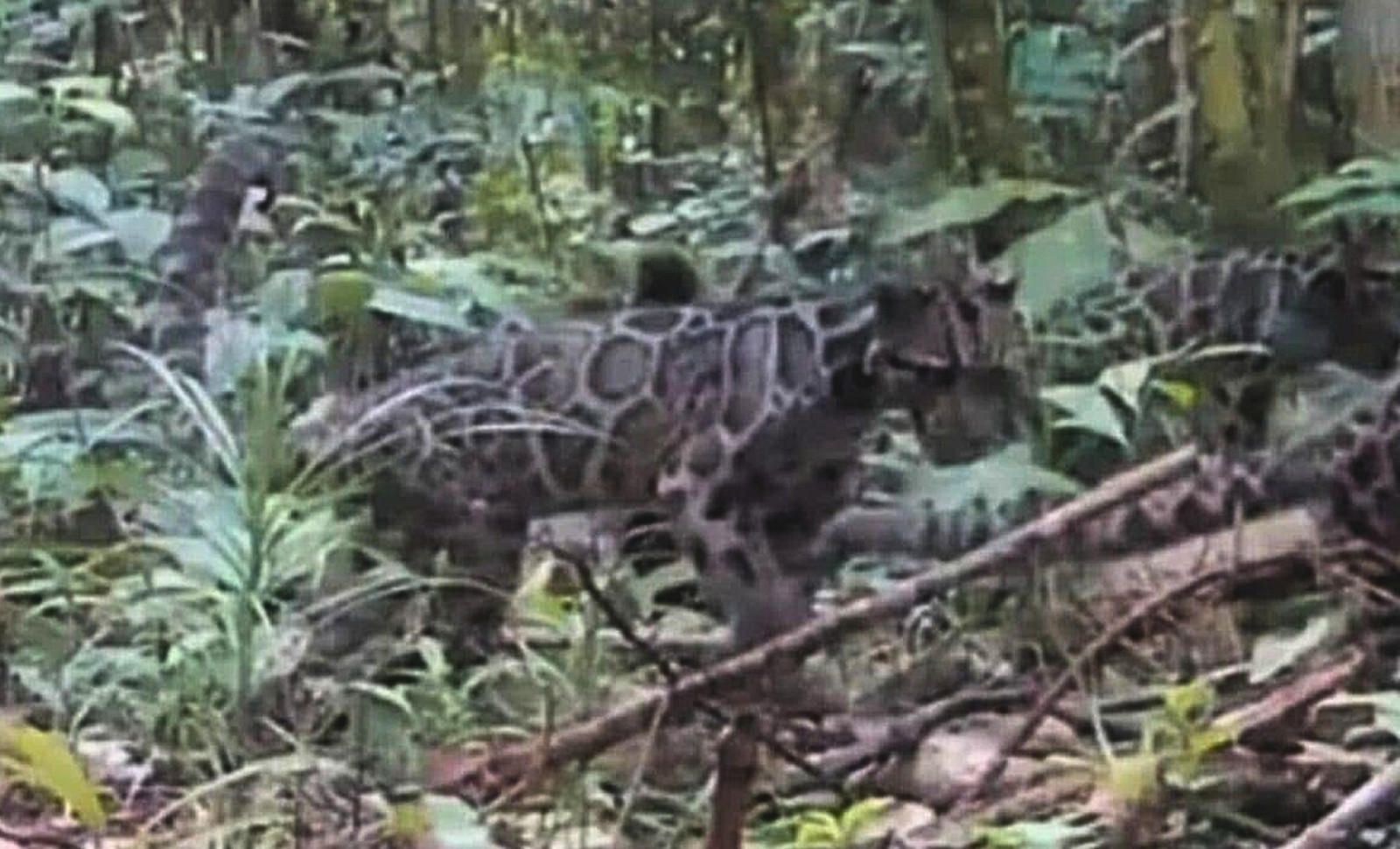
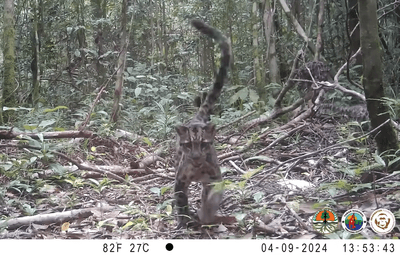
Hidden within the thick lowland rainforest of Tanjung Puting National Park in Central Kalimantan, Indonesia, a camera trap captured an extraordinary sight: a mother Bornean clouded leopard (Neofelis diardi borneensis) moving gracefully with her two playful cubs. Notably, one cub paused to gaze straight into the camera lens. This incredible footage, obtained through a collaboration between the Orangutan Foundation and Tanjung Puting National Park, represents the first recorded instance of a breeding female with young in this protected region.
While previous camera traps have documented lone clouded leopards navigating the park, the presence of a mother with her offspring provides crucial evidence that the forest ecosystem remains robust enough to support successful reproduction and early cub development.
“As an arboreal and adept terrestrial hunter, the clouded leopard plays a critical ecological role,” explained Anxious Yoga Perdana, Research Manager at the Orangutan Foundation. “Capturing images of a female with cubs confirms the population is thriving and actively reproducing.”

Unveiling the Mysteries of a Recently Defined Species
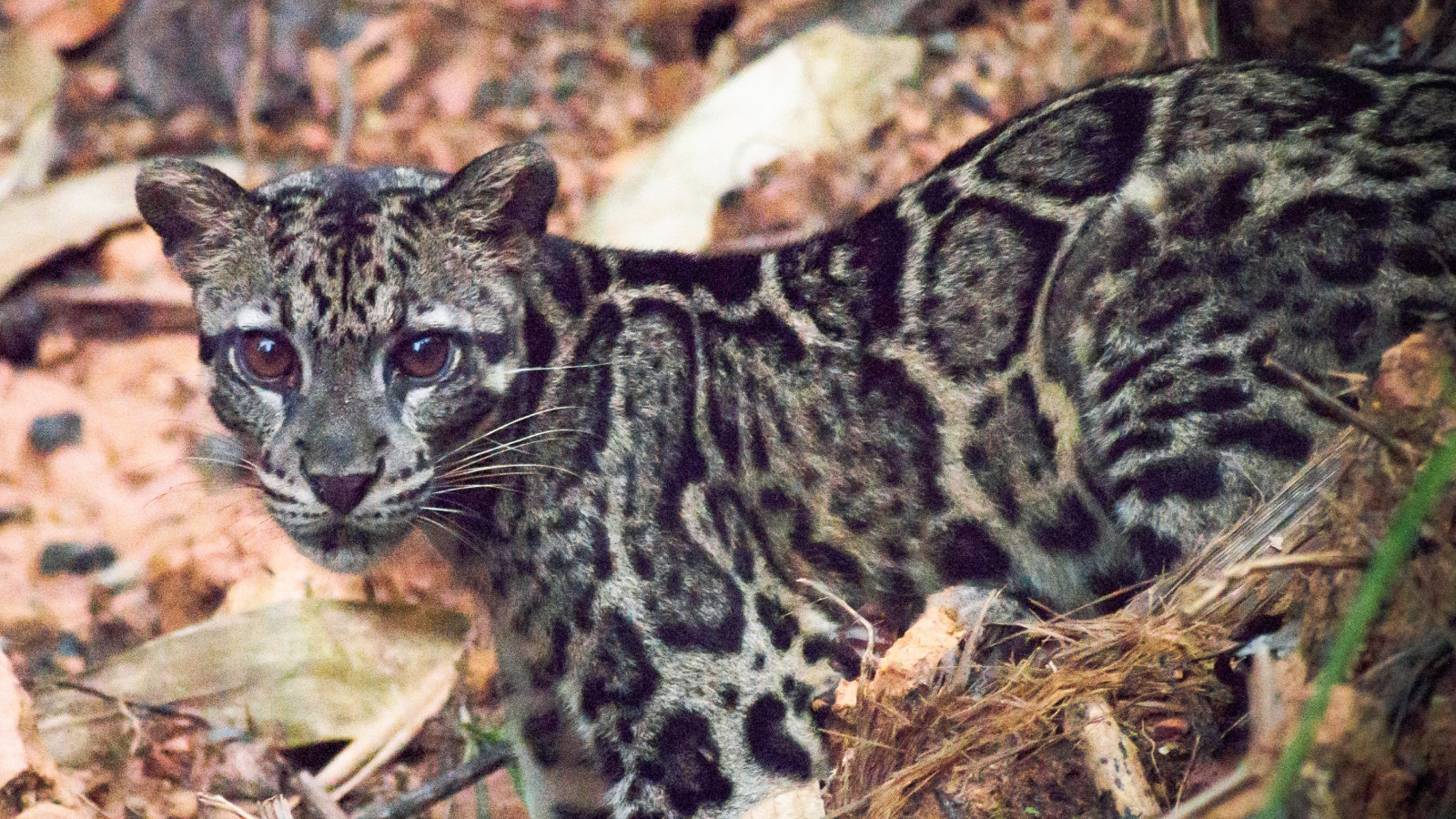
This particular feline belongs to a species only formally recognized around 20 years ago. A pivotal 2007 genetic analysis revealed that clouded leopards found on Borneo and Sumatra differ markedly from their mainland Southeast Asian counterparts, akin to the divergence between tigers and jaguars. This distinction led to their classification as a separate species, Neofelis diardi. The Bornean subspecies, borneensis, is characterized by a darker coat adorned with denser spots, smaller cloud-shaped markings, and a prominent double stripe running along its back.
Among the species’ unique features are elongated canine teeth that measure up to two inches, making them the longest fangs relative to body size among all cats. Their tails extend as long as their bodies, aiding balance while maneuvering through treetops. On the forest floor, these carnivores hunt a variety of prey such as monkeys, deer, and wild pigs, occasionally supplementing their diet with birds and reptiles.
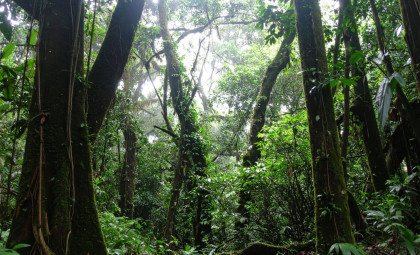
The clouded leopards favor dense lowland and hilly forests and are extremely vulnerable to disruptions caused by human activities. They generally avoid open areas lacking sufficient tree cover, underscoring the importance of intact habitat for their survival.
Implications of a Family Encounter for Preservation Efforts
Classified as Endangered on the IUCN Red List, Bornean clouded leopards face a precarious future. Population estimates vary significantly—from 5,000 to 11,000 on Borneo and 3,000 to 7,000 on Sumatra—reflecting how little is still known about them. Conservationists warn that numbers likely have declined by over a third in recent decades, primarily due to relentless deforestation of the lowland and hill forests vital to their existence.
Another concern is the species’ generally low reproductive success, with relatively few offspring surviving to maturity and breeding age around two years old. Habitat fragmentation further reduces this survival window, making every confirmed family group a highly valuable sign of hope for the species’ persistence.
The Orangutan Foundation highlights that the footage from April indicates that Tanjung Puting continues to serve as a vital sanctuary. A mother successfully raising two young cubs confirms adequate prey availability and an intact environment supporting the complete reproductive cycle.
Using Camera Traps to Foster Conservation
With over 30 years of presence in Indonesian Borneo, the Orangutan Foundation primarily focuses on safeguarding critically endangered orangutans and preserving their forest homes. Integral to their conservation strategy are extensive camera trap networks deployed across Tanjung Puting to monitor wildlife diversity and population patterns.
Although individual clouded leopards had been detected previously, the discovery of a mother with cubs on April 9 has expanded researchers’ understanding of local population dynamics. According to the Orangutan Foundation, conserving the forest is directly linked to sustaining an environment where these elusive cats can thrive, reproduce, and ensure the species’ future.
- Categories:
- News









0 comments
Sign in to Comment