
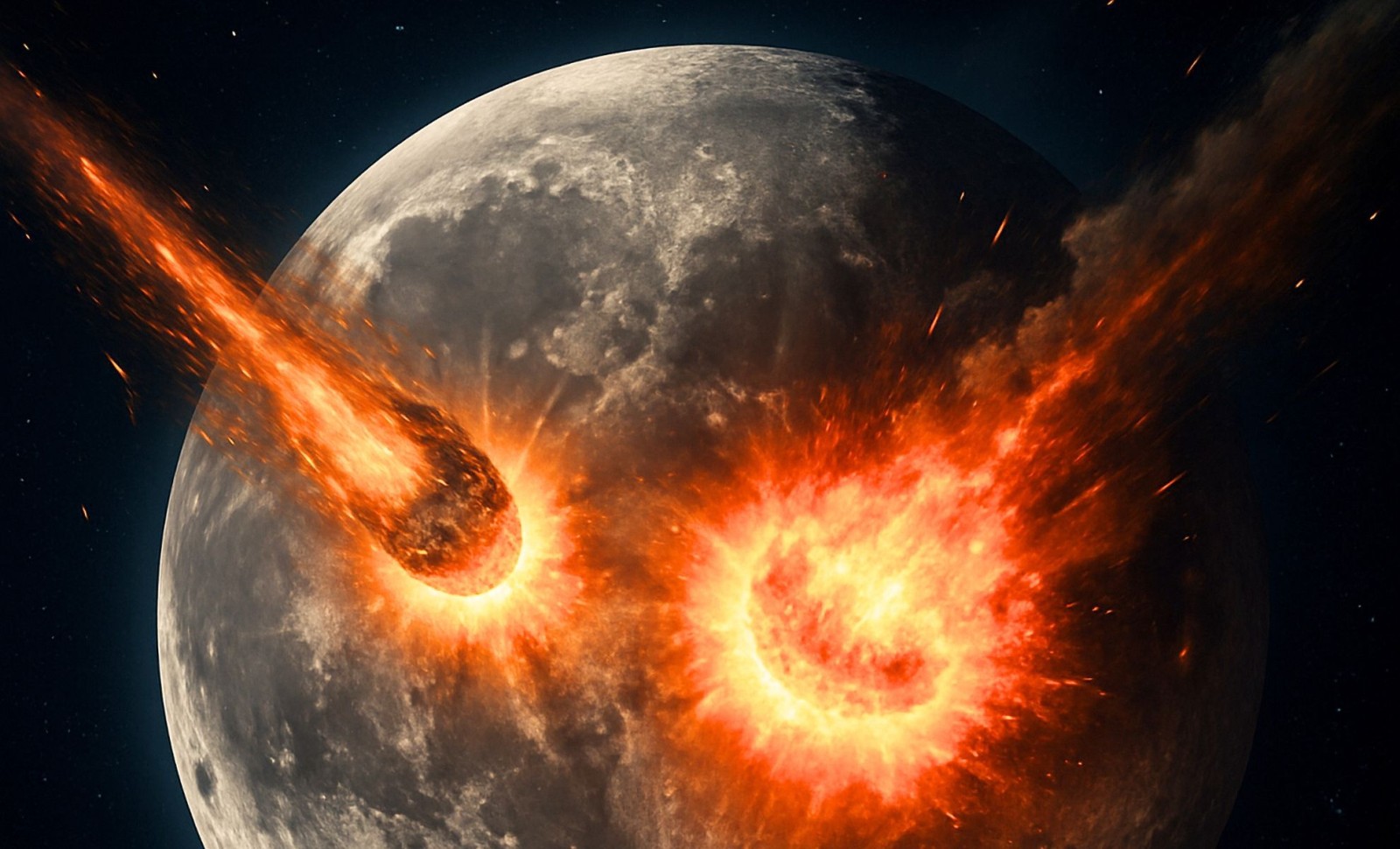
Japanese astronomer Daichi Fujii recorded two luminous flashes on the lunar surface caused by meteoroids impacting the Moon at staggering velocities. These brief but spectacular events drew significant attention from the astronomy community. Fujii linked the meteors to the Taurid meteor shower, which was at its peak during his observations. Through videos shared on his X profile, he offered an uncommon look at the Moon being hit by space fragments, a frequent yet rarely seen phenomenon.
Although these impacts appear minor from Earth's perspective, they highlight an intriguing reality: the Moon’s surface is continuously bombarded by meteoroids—a process largely hidden on Earth due to our atmosphere’s shielding effect. These fleeting glows underscore the energy involved in such collisions.
Capturing the Strikes in Real Time
The two meteors collided with the lunar surface within two days, first on October 30 at 8:30 PM and then on November 1 at 8:49 PM Japan Standard Time. Using a 20cm telescope, Fujii documented and posted these remarkable moments online, quickly drawing widespread interest. The initial impact took place to the east of Gassendi crater, while the second hit the western region near Oceanus Procellarum.

Though visible from Earth only briefly, both flashes were strong enough to be seen directly and meticulously recorded. Fujii estimated the first meteor’s speed at 27 km/s (almost 60,000 mph), accounting for the intense brightness seen during the crash.
The impact on October 30 generated a crater about 3 meters across, even though the meteor weighed just 0.2 kg. While relatively tiny, this showcases the Moon’s sensitivity to impacts—small space particles can produce remarkable flashes. The November 1 strike happened close to another intriguing zone, Oceanus Procellarum, the largest of the lunar “seas.” However, despite the precise timing and location, the meteoroid’s origin remains uncertain.
The Moon’s Unique Environment for Meteor Impacts
The absence of a substantial atmosphere on the Moon drastically alters how meteors behave. On Earth, atmospheric friction causes most meteoroids to burn up before reaching the surface. The Moon, lacking this protective layer, gets struck directly at velocities that can exceed 160,000 km/h. Even tiny meteoroids can generate brilliant light flashes upon impact.
Fujii noted that a meteor as small as 5 kg could form a crater more than 9 meters wide, throwing several tons of lunar material into surrounding areas. These momentary impacts leave lasting signatures on the Moon’s surface, shaping its geological features. Such meteoroid showers are more common on the Moon than we often recall, continuously reshaping its terrain beneath the surface.
- Categories:
- News



0 comments
Sign in to Comment