
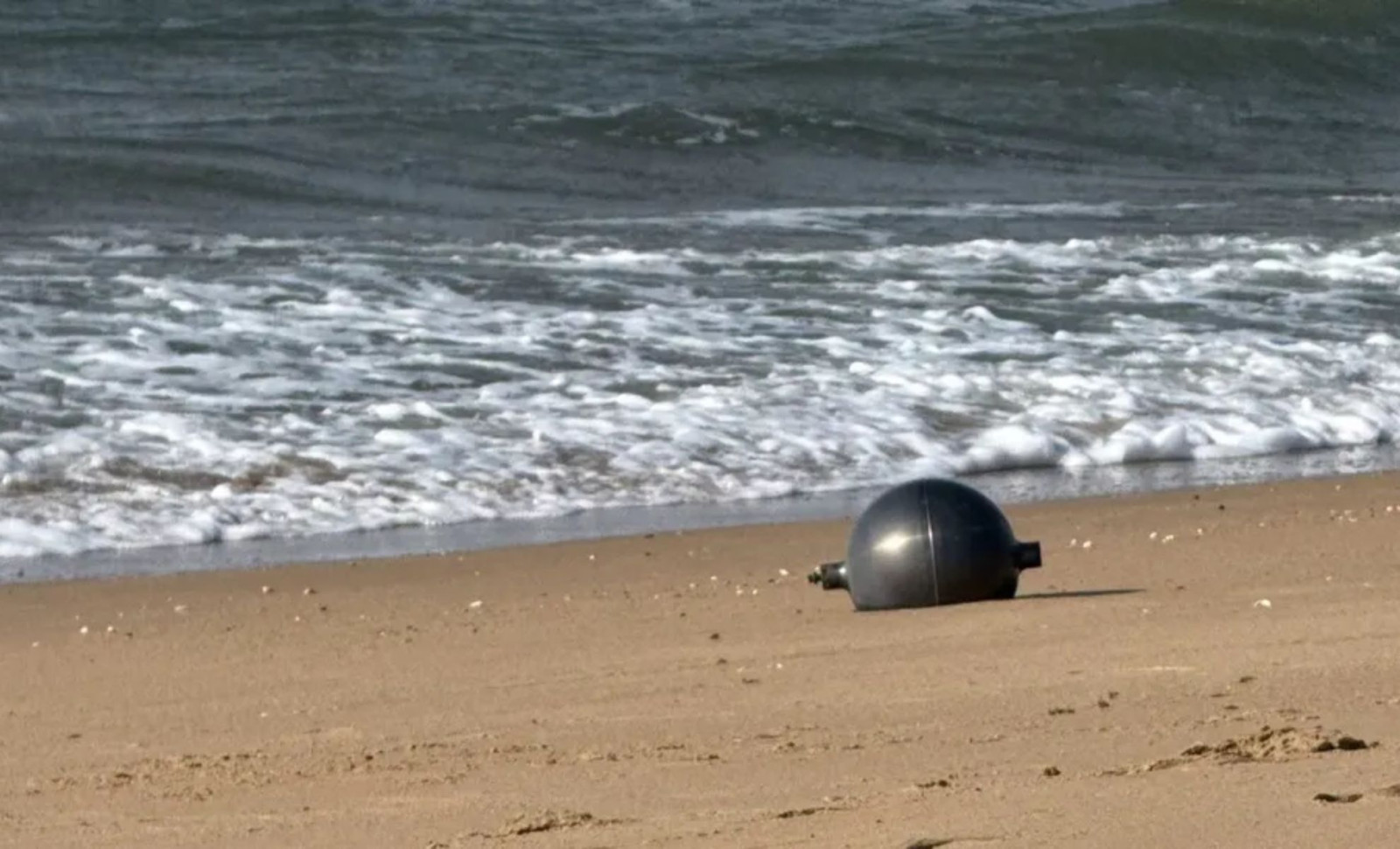
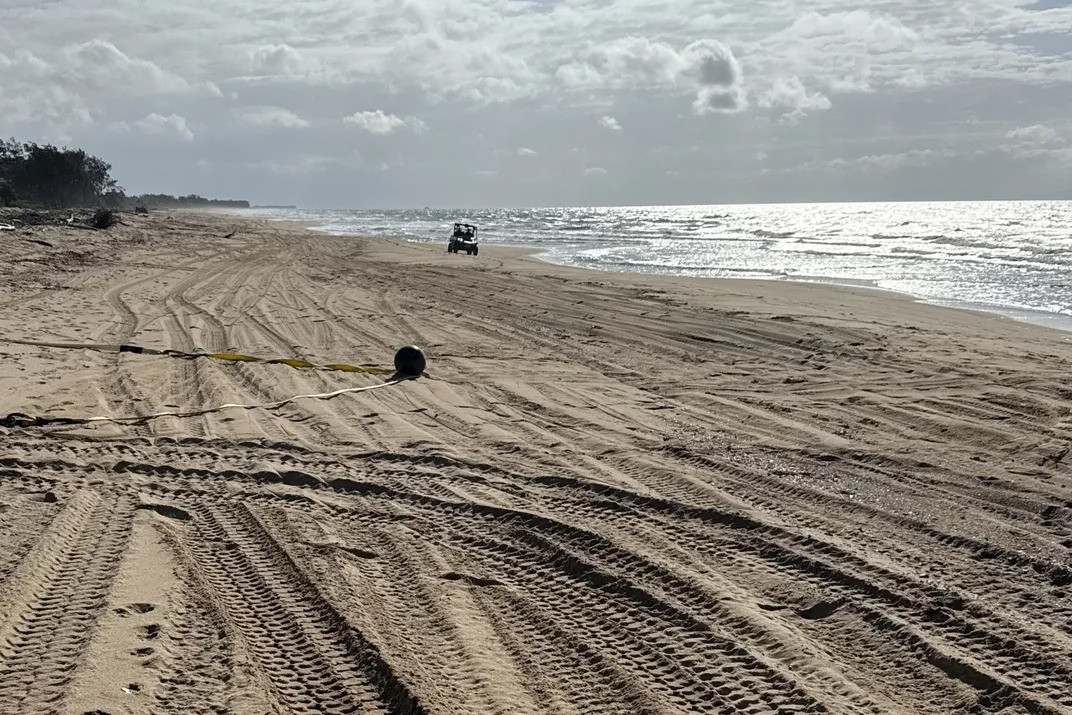
In early July 2026, six metallic spheres washed ashore near Forrest Beach, Queensland, igniting curiosity about their origins. Authorities, including the Australian Space Agency, suggest these spheres are likely pressure vessels from a rocket launch system. Emergency crews quickly established a 50-meter safety perimeter to investigate these unusual finds.
Australia has a history of encountering space debris, with previous recoveries ranging from fragments of NASA’s Skylab to parts of SpaceX’s Dragon spacecraft and components from foreign rocket missions.
For experts tracking orbital debris, these spheres offer unique insights into the survival of spacecraft parts during uncontrolled returns to Earth, revealing gaps in our knowledge about reentry processes.

Pressure Vessels: Resilient Survivors of Reentry
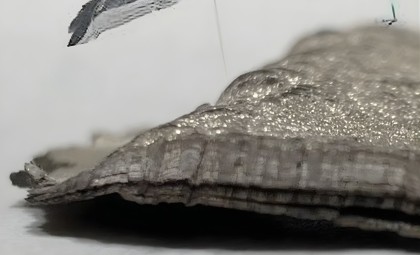
These metal spheres are believed to be pressure vessels designed to contain gases within rockets or spacecraft. Their robust construction often enables them to withstand the intense heat and pressure of atmospheric reentry, making them some of the rare debris that remain intact. Marlon Sorge, head of the Center for Orbital Reentry Debris Studies at Aerospace Corporation, explains:
“Very often they will be made of something like titanium which is really good at surviving.”
Sorge elaborated on their descent behavior, pointing out that these spheres decelerate in ways that help preserve their structure during reentry.
“Even if they heat up, they don’t care,” Sorge noted, referring to the resilience of titanium components.
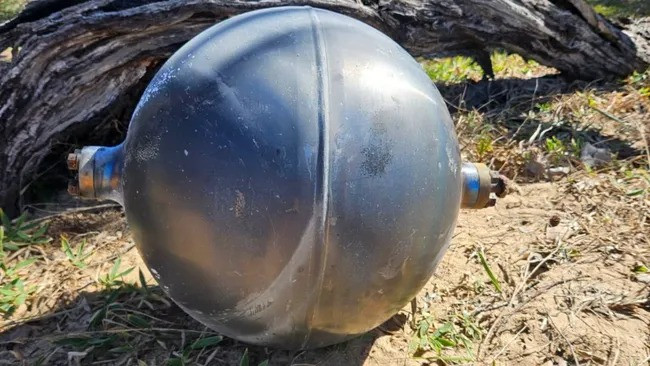
Sorge also mentioned Composite Overwrapped Pressure Vessels (COPVs) as crafted spacecraft components designed to endure extreme environments, which can sometimes complicate debris identification.
Recovered fragments like these offer scientists a valuable opportunity to analyze how reentry conditions affect spacecraft materials, shedding light on heat, pressure, and atmospheric interactions.
Australia’s Frequent Encounters with Space Debris
This recent incident joins a pattern of space hardware found in Australian territory. Notably, parts of the American Skylab space station scattered over Western Australia in 1979. More recently, 2022’s discovery of a SpaceX Dragon trunk section in New South Wales and 2023’s recovery of an Indian rocket booster pressure vessel near Perth highlight the country’s continued role in space debris retrieval.
The Australian Space Agency advises that anyone who encounters suspected space debris should refrain from touching it and report it to local officials so professionals can safely handle the object.
Tracing the origins of such debris can be a complex process. Michelle Hanlon, director of the Center for Air and Space Law at the University of Mississippi, remarked:
“t may seem surprising that pieces of the same rocket can show up in Australia, Canada or on a farm in Africa, but that’s actually what we’d expect.”
Challenges of Forecasting Space Junk Reentry
Objects orbiting in low Earth orbit cross vast portions of the planet’s surface. When parts begin an uncontrolled descent, atmospheric drag gradually pulls them down, but exact locations of ground impact are difficult to anticipate.
“They’re built to withstand enormous pressures, so they are also among the pieces most likely to survive reentry. That’s why they seem to turn up so often,” she stated.
Most debris fragments eventually fall into the oceans, which cover much of Earth. Nonetheless, some durable sections like pressure vessels endure and wash ashore or are found on land.
Scientists argue that enhanced tracking during the final moments of reentry would improve the ability to link debris with their origins. Sorge emphasized that pinpointing the precise time and place of a splashdown yields critical data on the dynamics of falling space junk.
- Categories:
- Science






0 comments
Sign in to Comment