
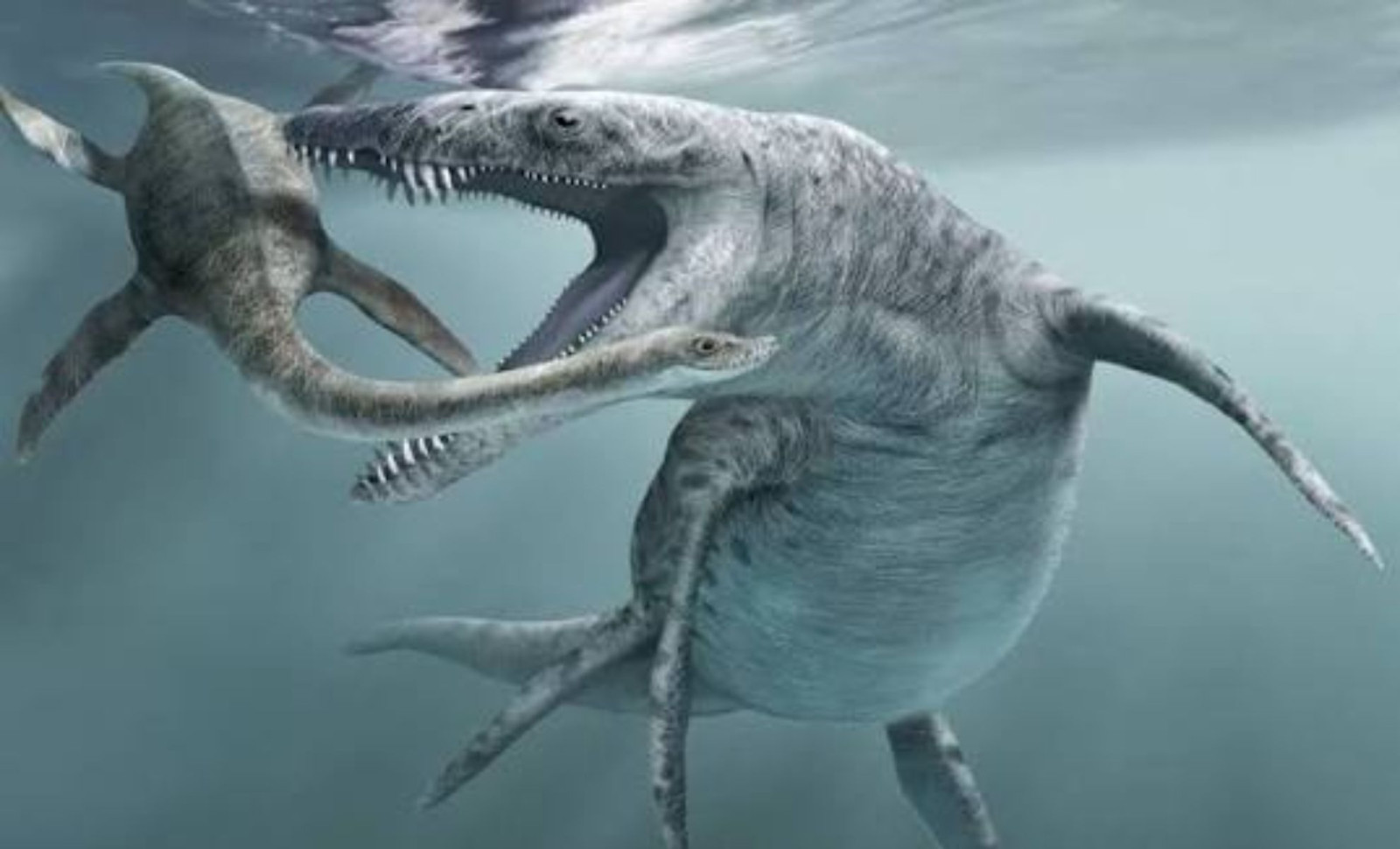
The Jurassic marine predator Liopleurodon ferox, once famously illustrated as a colossal 25-meter titan, is now being reconsidered thanks to fresh research that reshapes our understanding of its actual size and hunting capabilities.
Widely recognized among prehistoric marine reptiles, this short-necked pliosaur thrived approximately 163 million years ago in the ancient seas that spanned areas of present-day England and France during the Middle Jurassic epoch.
Its massive reputation stemmed from partial fossil evidence, evolving scientific perspectives, and popular media portrayals, notably the 1999 BBC documentary Walking with Dinosaurs, which popularized the idea of a 25-meter-long Liopleurodon. Researchers at the University of Portsmouth have now rigorously reexamined the fossil evidence to provide a more accurate depiction.

Reassessing Liopleurodon’s True Dimensions
Paleontologist Edward Bartlett and his colleagues conducted a comprehensive review of all known Liopleurodon ferox fossils, analyzing a total of 37 specimens in what is the most extensive reevaluation of this species to date.
Their conclusions indicate that lengths varied between about 2.46 and 8.09 meters, with the most complete skeletons generally measuring between 4.8 and 6 meters.
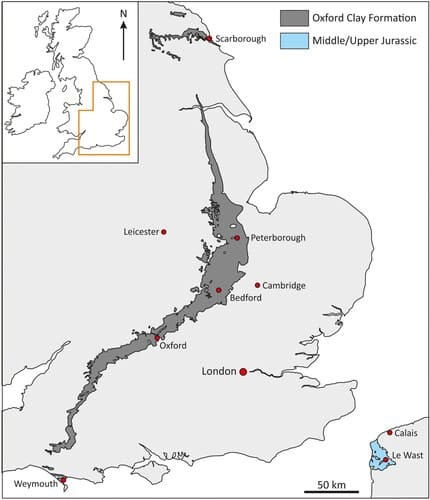
Typical specimens likely reached around 5 meters in length, much smaller than the previously believed giant. Nevertheless, this size still establishes it as a significant predator within the Oxford Clay Formation ecosystem.
“By bringing together all of the available material, we can finally provide a robust estimate of its size and body proportions,” Dr. Bartlett said. “Although it was smaller than some famous reconstructions, it was still the dominant marine predator in the Jurassic Oxford Clay seas.”
The Impact of a Massive Skull on Predatory Power
Despite its reduced body size, Liopleurodon ferox maintained its status as a formidable hunter largely due to its distinctively large skull, which played a crucial role in its hunting efficiency.
To clarify its body proportions, researchers examined two exceptionally preserved skeletons—one housed in Tübingen, Germany and another at the Natural History Museum in London. A complete skull specimen also helped refine size estimations.
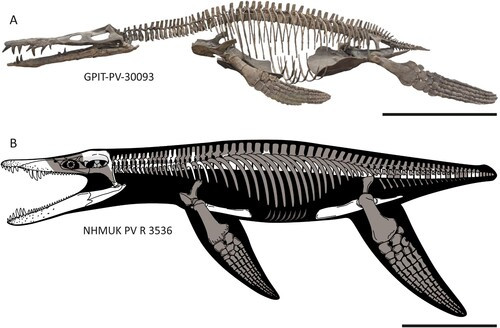
The findings revealed the skull accounted for roughly 24% of the animal’s total skeletal length, a notably large fraction that implies Liopleurodon ferox could capture relatively large prey compared to other pliosaurs from the same period.
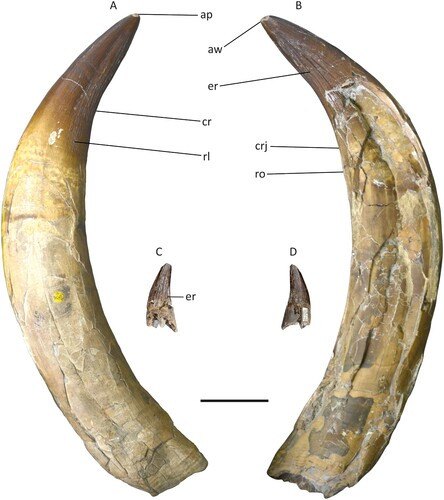
The study emphasized that even after adjusting size estimates downward, Liopleurodon ferox remains the largest identified species within the Oxford Clay Formation fossil assemblage.
Evidence of Even Larger Jurassic Sea Predators
Interestingly, the analysis uncovered partial fossils from coexisting pliosaurs suggesting that some individuals may have been substantially bigger than Liopleurodon ferox.
Though these incomplete remains, found within the Oxford Clay Formation, could represent creatures between 7.02 and 12.2 meters in length, they lack definitive identifying characteristics to assign a precise species name.
The research highlights that pliosaurs exceeding 10 meters in length existed during the late Middle Jurassic, illustrating a diverse predator assemblage in Jurassic marine ecosystems with unknown giants sharing the habitat alongside Liopleurodon ferox.
Published in the Journal of Vertebrate Paleontology, this study redefines the iconic sea monster’s size without diminishing its ecological dominance, underscoring the remarkable significance of its large skull and top-tier predator role during the Jurassic.
- Categories:
- Science







0 comments
Sign in to Comment