
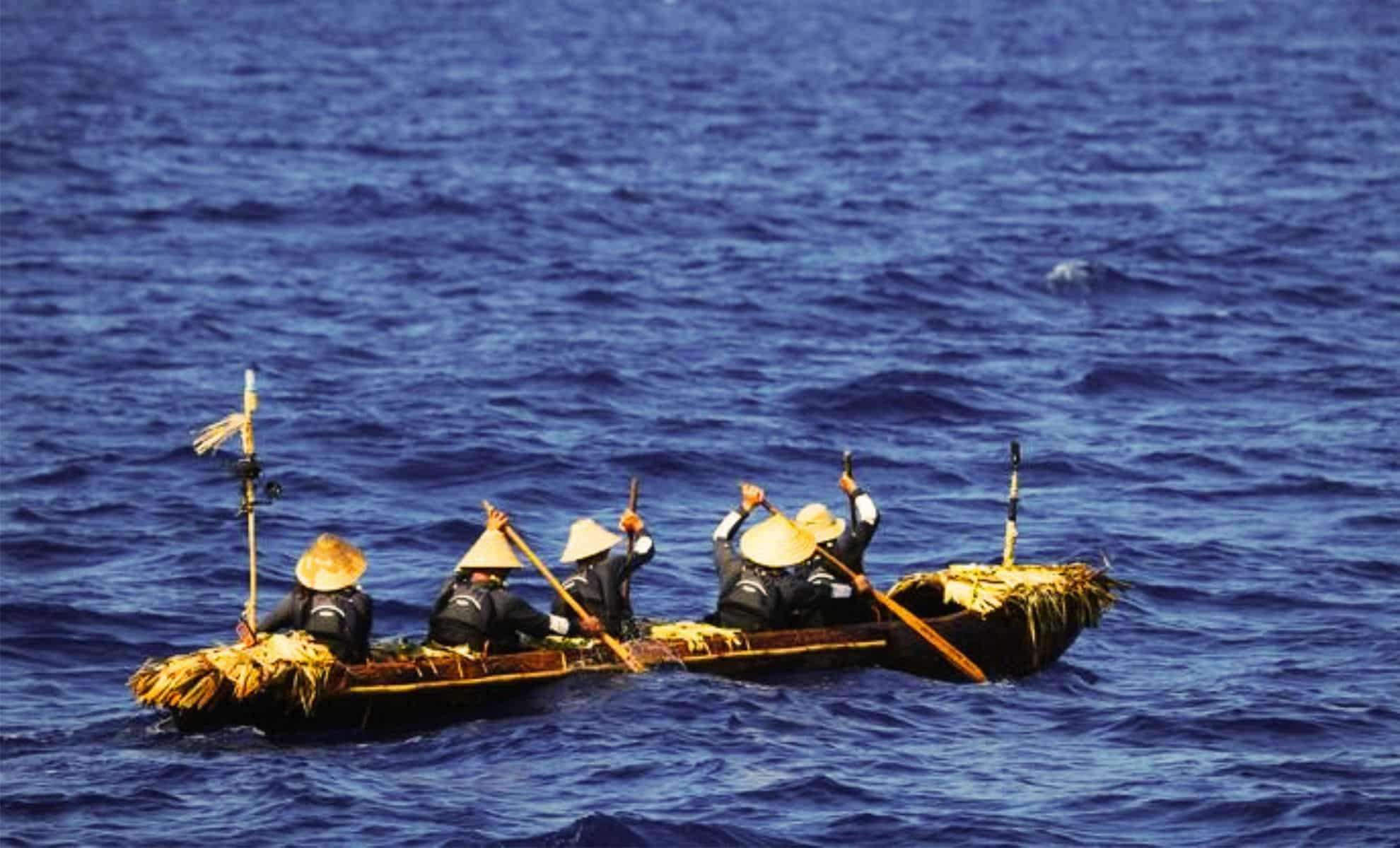
Deep in the woodlands of eastern Taiwan, researchers embarked on a mission to solve a long-standing archaeological mystery: how did Paleolithic humans navigate to the distant islands of southern Japan without modern instruments? Their explorations culminated in a daring hands-on experiment linking the ancient past with present-day science.
Under the leadership of Professor Yousuke Kaifu from the University of Tokyo, a collaborative group of scientists from Japan and Taiwan sought to retrace one of humanity’s earliest maritime journeys. Traveling from eastern Taiwan to Japan’s Yonaguni Island, they crossed approximately 225 kilometers of open sea in a dugout canoe constructed using tools modeled after Paleolithic stone implements dating back 30,000 years.
Crafting Ancient Tools for a Modern Experiment
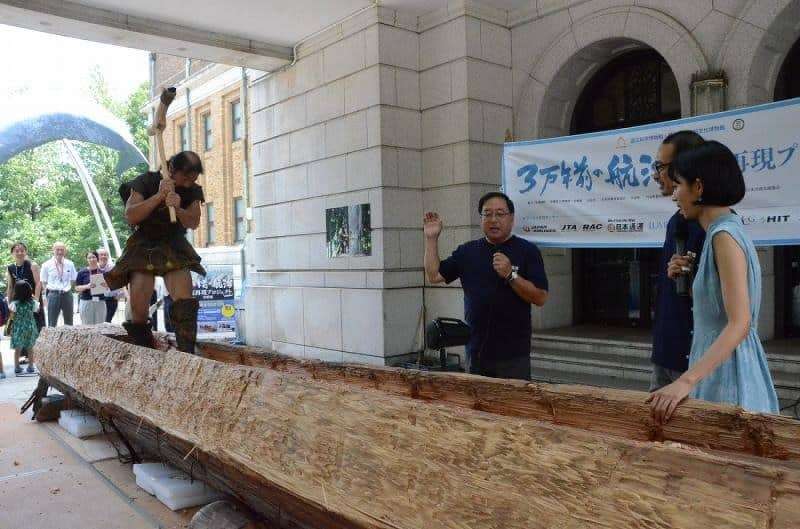
The canoe was crafted starting in 2019 from a single Japanese cedar tree using a replica Paleolithic axe. This intricate process took place openly at Tokyo’s National Museum of Nature and Science. Skilled artisan Kunihiro Amemiya donned traditional animal hide garments and demonstrated ancient woodworking methods during the public demonstrations.

Okinawa-born actress Hikari Mitsushima joined the crafting sessions, expressing, “Hollowing out the log feels like channeling the memories of ancient craftsmen.” The canoe, named Sugime, was designed to endure the challenging conditions of the open ocean voyage.
Guided Solely by Nature’s Clues
In 2025, the team set sail in Sugime onto the East China Sea, retracing what is believed to be a prime migration corridor for ancient humans. They paddled continuously for more than 45 hours without technological navigation aids, relying only on natural indicators like celestial bodies, ocean currents, and their instincts. Departing from eastern Taiwan, the expedition successfully landed on Yonaguni Island in Japan’s Ryukyu Islands chain.
With the land barely visible during much of the crossing, the findings highlighted the advanced seafaring abilities of early humans. Professor Kaifu observed, “Our project confirmed that these canoes were both swift and sturdy enough for such a journey. Yet, the real challenge was the skilled paddlers, equipped with effective techniques and a profound curiosity to venture into uncharted waters.”

Virtual Models Reveal Ancient Navigation Skills
Complementing the physical voyage, hundreds of virtual simulations were run to analyze ocean patterns, varied launch points, seasons, and rowing tactics. The simulations showed that setting off from northern Taiwan notably improved success probabilities.
A crucial insight was the benefit of steering slightly southeast rather than directly aiming for the destination. This strategic adjustment counteracted the Kuroshio Current, among the strongest ocean currents globally. Oceanographer Dr. Yu-Lin K. Chang from JAMSTEC explained, “I initially thought entering the current meant drifting uncontrollably, but our models exceeded those expectations.”
New Perspectives on Early Human Travel
The study backs the idea that early Homo sapiens traveled to the Japanese islands via canoes. Conventional archaeological methods, hampered by the ocean erasing physical traces, have struggled to fully reveal this migration. This experimental approach fills in that knowledge gap.
Professor Kaifu drew parallels to later maritime cultures, stating, “For example, ancient Polynesians navigated vast Pacific distances without maps. They read signs from the ocean, such as land silhouettes, stars, waves, and winds. We, too, embraced some of these skills during our journey.”
- Categories:
- News










0 comments
Sign in to Comment