
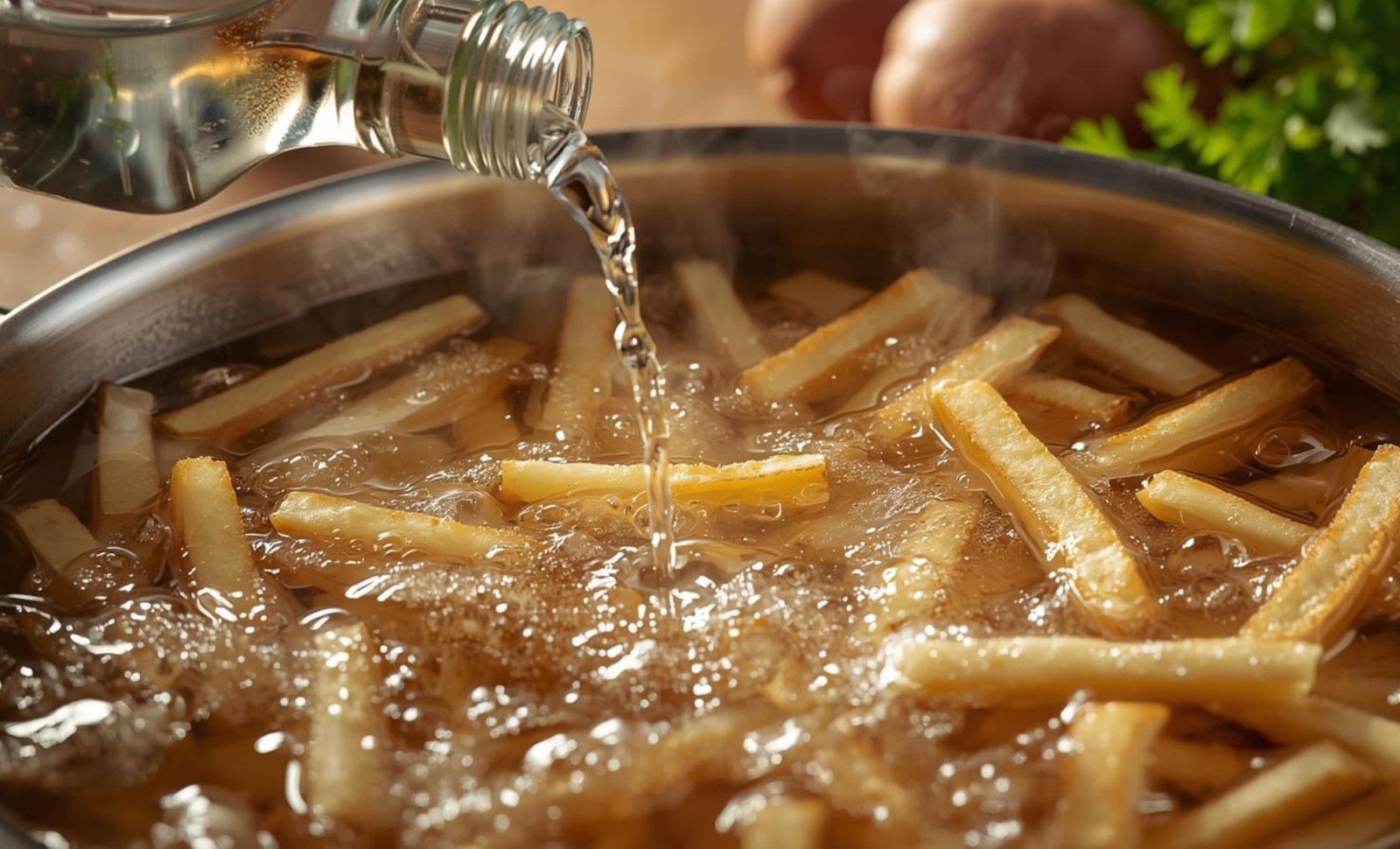
Chefs are increasingly turning to a simple chemical trick to prevent soggy or floppy homemade French fries. Introducing a bit of distilled white vinegar into the water used for parboiling the potatoes can dramatically improve their texture. This method strengthens the potato pieces during cooking, resulting in fries with a crispier outer layer.
The proportions are easy to follow. Most experts advise using about one tablespoon of vinegar per liter of water, along with a generous pinch of salt. According to experiments documented by Food Republic, mixing two tablespoons of vinegar and two tablespoons of salt into two quarts of water creates the perfect cooking environment. Potatoes boiled in this solution retain sharp edges and uniform shapes, while those without vinegar often break apart or develop jagged surfaces that cause uneven cooking and burnt spots.
How Pectin Chemistry Supports Potato Texture
To grasp how vinegar enhances potato texture, it helps to understand the role of pectin, a key plant component responsible for keeping potato cells adhered. Pectin acts as a natural binding agent within the vegetable. When boiling potatoes in standard water, pectin begins to soften around 140°F and quickly dissolves under high heat and moisture.

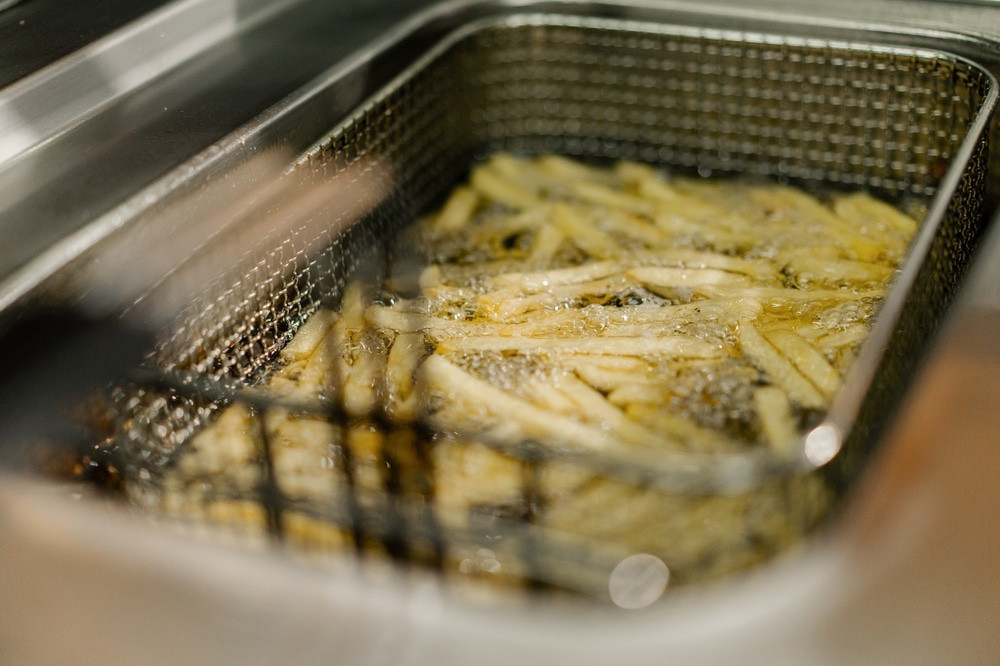
Continuing to boil potatoes until soft can cause the outer layer to weaken excessively, making it prone to damage when transferring to hot oil. The acidity introduced by vinegar lowers the water’s pH level, which slows pectin breakdown. This process firms the potatoes’ exterior during parboiling, preventing them from becoming crumbly. Kitchen tests show untreated potatoes often display frayed edges post-boil, whereas those treated with vinegar maintain crisp, clean lines.
Starch Migration Creates a Crispy Shell
The vinegar bath does more than stabilize shape—it also redistributes starch inside the potato. Contrary to common belief, starch plays a vital role in making the ideal fry. Potatoes like russets or those from Idaho are preferred because their high starch content delivers a crunchy crust and fluffy center. The key is reorganizing, not removing, the starch.
When boiled in acidic water, starch granules shift from the dense core toward the surface. This results in an interior that stays soft and floury through steaming during frying, while the exterior develops a concentrated starch coating. After drying, this coating crisps into a glass-like crust when submerged in hot oil. The salt seasons the potato internally as the vinegar reinforces the structure.
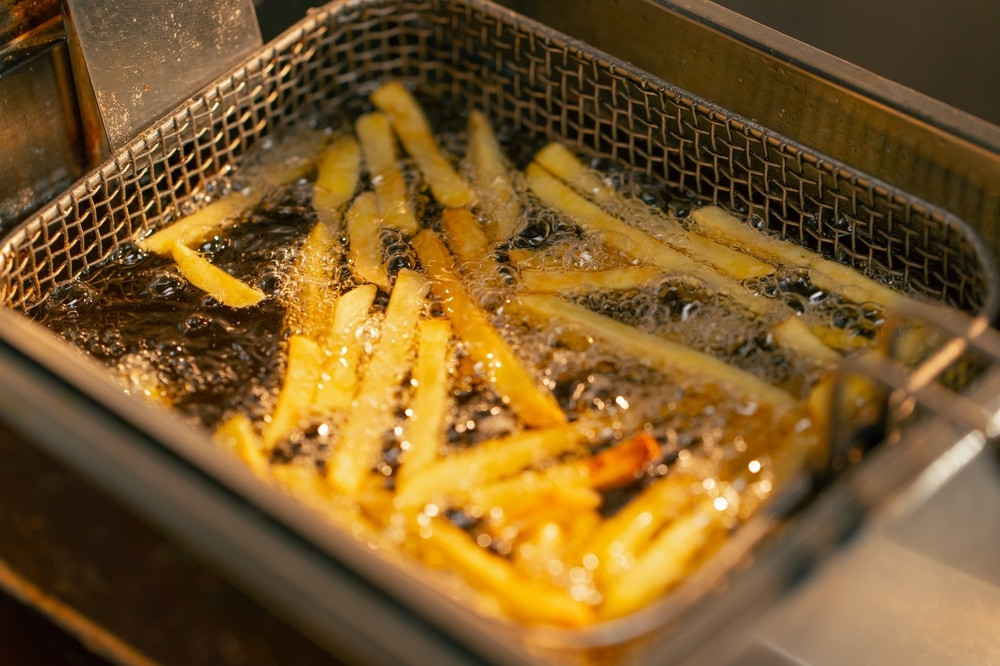
Without vinegar, cooks might underboil potatoes to avoid breaking, leading to fries that are cooked on the outside but possibly raw or waxy inside. Using vinegar lifts this limitation by allowing thorough cooking with a sturdy, intact exterior.
Controlling Sugars to Prevent Over-Browning
Besides enhancing texture, boiling helps remove excess simple sugars from potato surfaces. Too many sugars can cause fries to brown unevenly during frying due to the Maillard reaction, resulting in a burnt look while the inside may remain underdone.
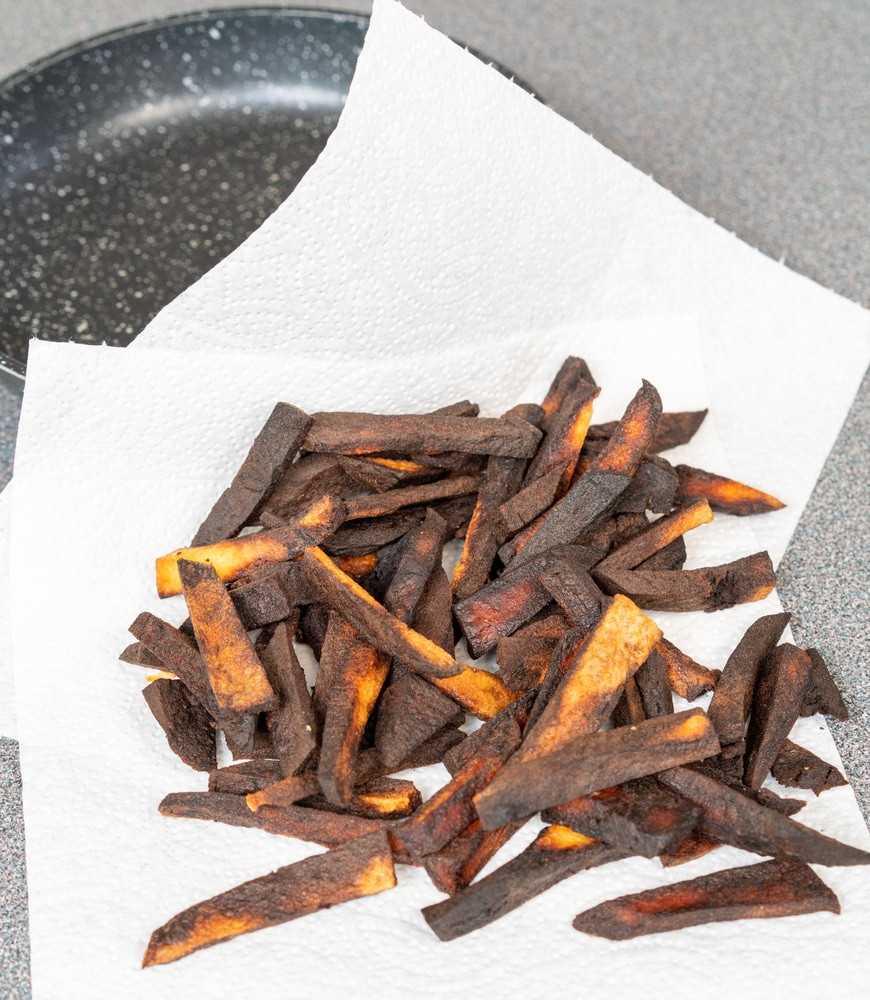
While vinegar doesn’t directly stop browning, the extended boiling it facilitates more effectively rinses away these sugars. By the time the fries touch the hot oil, their surfaces mostly contain starch and reinforced pectin, which slow down browning and promote a vibrant golden color instead of burnt patches. Any vinegary flavor disappears through the double-frying process.
How to Use Vinegar in Fry Preparation
Start by peeling and cutting potatoes into similarly sized sticks for consistent cooking. Place the strips in a pot of cold water, adding vinegar and salt. Using cold water allows heat to distribute evenly from the outside inward.
Heat the pot until it reaches a boil, then reduce to a simmer for about ten minutes. Avoid overcrowding so the water rapidly returns to a boil after each batch. The goal is tender potatoes that hold their shape—easily pierced by a fork without crumbling. Retaining clean edges shows that the vinegar protected the pectin during boiling.
Once boiled, drain and spread the fries on a wire rack or a paper towel-lined tray to dry. Removing moisture is critical for crispness. Some chefs use a fan or refrigerate the potatoes to speed drying. When cool and dry to the touch, the fries are ready for frying.
Creating a Perfect Triple-Cooked Fry
The vinegar soak is a foundational step for the widely praised triple-cooked fries favored in restaurants and experimental kitchens. After boiling and drying, the fries are fried at a low temperature (~325°F) to set their surface.
They are then cooled or frozen before undergoing a final hot fry (~375°F). This last phase forms a thick, bubbled crust due to reinforced pectin and starch gelatinization. Pro chefs freeze the fries between cooking stages, using ice crystals to break starch cells and produce a lighter, fluffier interior.
This vinegar method works with diverse frying equipment such as deep fryers, Dutch ovens, or even air fryers. Flies prepared with the acidic boil sustain their crunch far longer than those started in plain water, consistently delivering a satisfying texture from kitchen to table.
- Categories:
- News










0 comments
Sign in to Comment