
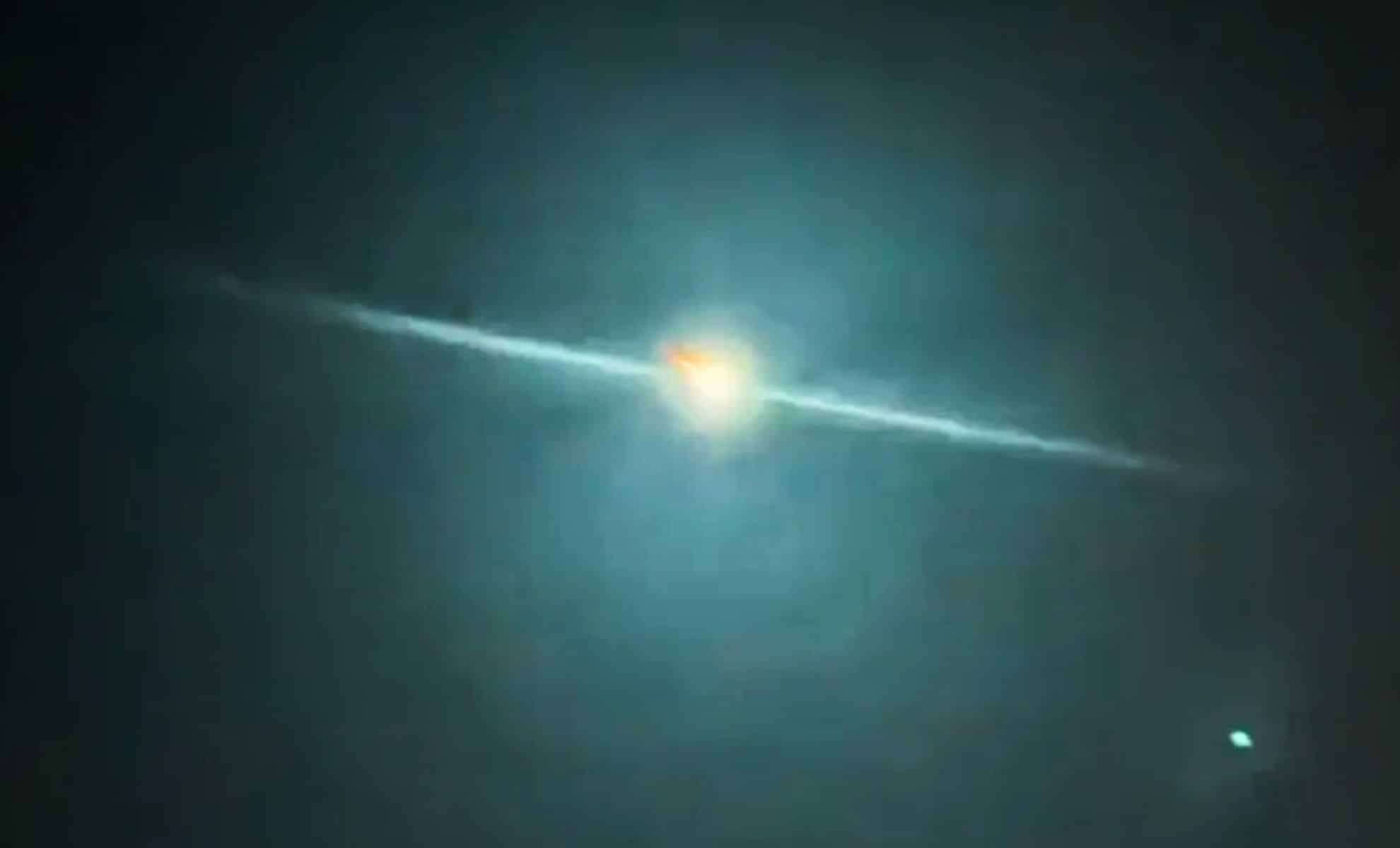
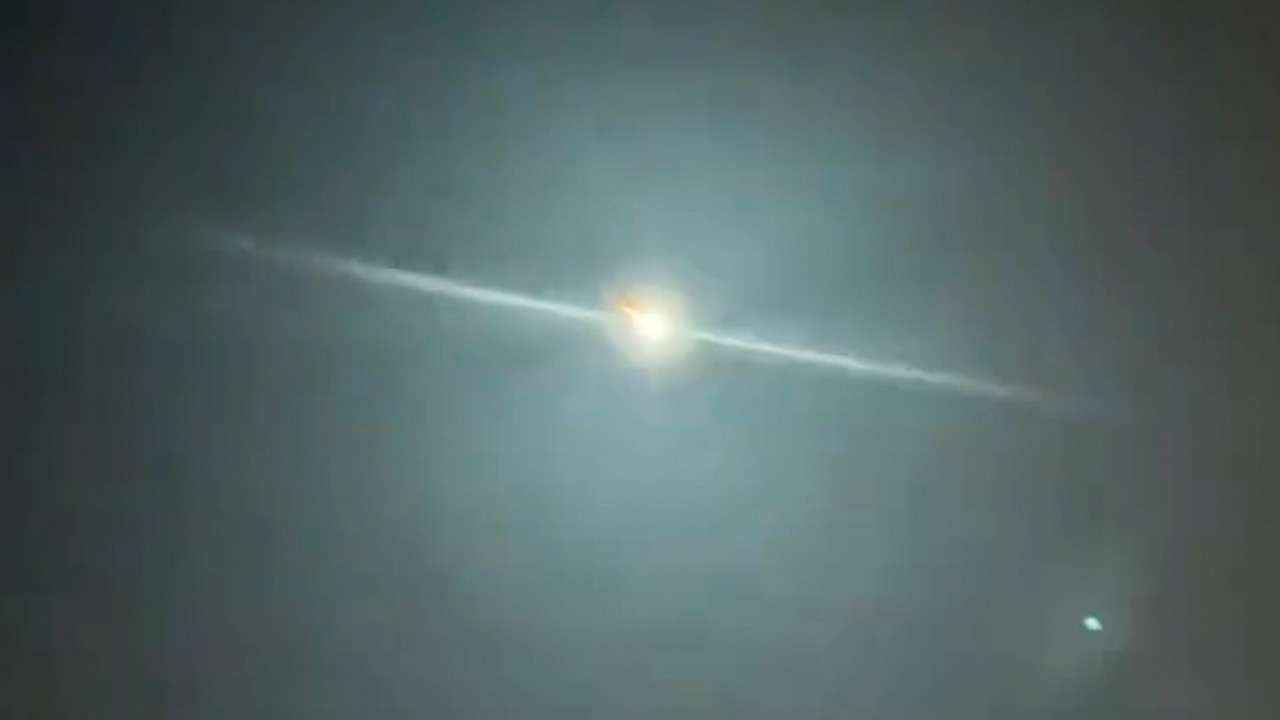
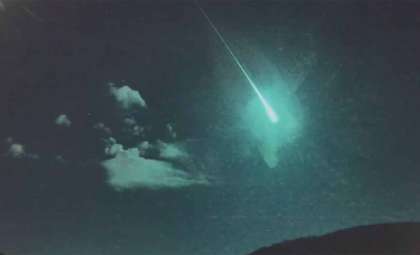
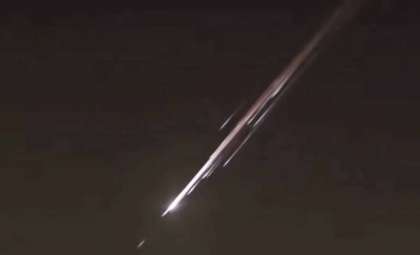
In the early hours of February 2023, residents across northern France witnessed a spectacular event: a brilliant fireball blazing across the sky, briefly illuminating the night. Unknown to many at the time—but monitored by astronomers—this fireball was caused by asteroid 2023 CX1, a near-Earth object detected mere hours before it entered the atmosphere. Now, in September 2025, researchers have successfully retrieved a fragment of this celestial visitor from the French countryside.
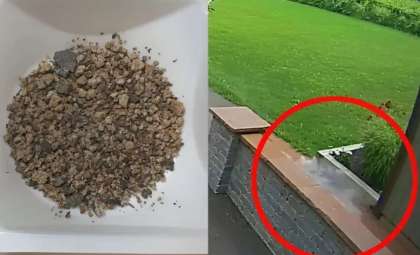
The recovered meteorite piece was found near Saint-Pierre-le-Viger, a village situated in the Seine-Maritime area close to Dieppe, as confirmed by teams working in partnership with the Institut de mécanique céleste et de calcul des éphémérides (IMCCE) of the Paris Observatory.
This achievement is extraordinary not only for the fragment’s retrieval but also because it captures the full, traceable journey of the asteroid—from detection to impact to recovery—with remarkable precision.

A Rare Pre-Impact Asteroid Detection
Asteroid 2023 CX1 belongs to a small group, with fewer than ten recorded asteroids ever observed before striking Earth’s atmosphere. It was spotted just seven hours ahead of impact by Hungarian astronomer Krisztián Sárneczky at the Piszkéstető Observatory, prompting intense monitoring by the European Space Agency (ESA) and other organizations as it sped toward Earth.
Most incoming meteoroids strike Earth without warning, but CX1 provided a unique chance to track an asteroid’s complete path before impact. This event marked Europe’s first instance of an asteroid being observed before hitting the atmosphere, tracked during descent, and finally having fragments retrieved on the ground. The bright fireball was visible over Normandy just prior to 4 a.m. on February 13, 2023, accompanied by sonic booms audible as far away as Rouen.
“This is a landmark achievement for science,” commented Dr. Patrick Michel, a planetary scientist at the CNRS and ESA’s planetary defense team member. “For the first time, we weren’t simply spectators; we had advanced warning.”
Meteorite Fragments Initially Scattered, Then Eventually Found
Experts predicted surviving fragments would have fallen between Fontaine-le-Dun and Dieppe, an area characterized by farmland and some wooded patches. In the months following, professional and amateur meteorite hunters searched the region, recovering a handful of fragments, though most were small and incomplete.
The latest discovery, reported by Paris-Normandie and confirmed by France Bleu, represents the largest intact piece of CX1 located to date. Approximately the size of a golf ball, the fragment’s preserved features suggest it endured limited breakup during atmospheric entry. Early analysis classifies it as a chondrite, a stony meteorite containing some of the solar system’s most ancient materials.
Scientists believe the recovered fragment could offer fresh insights into planetary formation during the early solar system, similar to studies conducted by the Natural History Museum in London and NASA’s Astromaterials Research and Exploration Science Division.
Advancing Efforts in Planetary Protection
This find arrives amid increasing global focus on enhancing planetary defense capabilities. Earlier this year, NASA shared results from its DART mission, which successfully altered the course of a small asteroid using a kinetic impactor. In parallel, ESA is preparing the Hera mission, scheduled to launch in late 2026 to further examine DART’s aftermath.
The CX1 incident, though modest in magnitude, highlights the critical role of prompt detection and international cooperation. NASA’s Scout system and the Center for Near Earth Object Studies (CNEOS) were instrumental in rapidly identifying the asteroid’s projected impact zone over France.
Since small asteroids strike Earth every few months—often unnoticed—experts stress that early warning remains essential for ongoing risk reduction. According to ESA data, there are now over 30,000 cataloged near-Earth objects with new discoveries continuing almost daily as of 2025.







0 comments
Sign in to Comment