
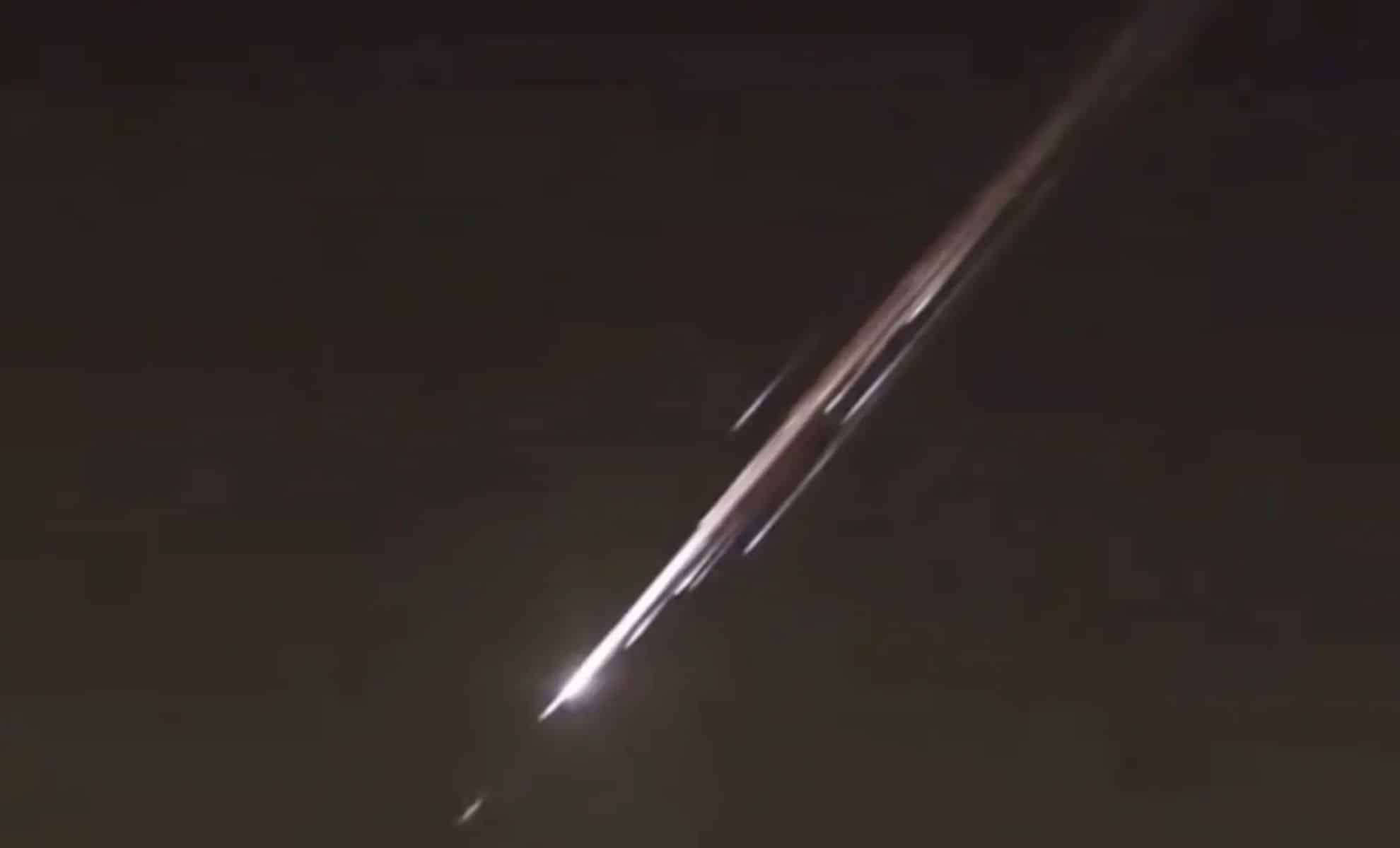
A brilliant streak of light illuminated the night sky across the Southern United States, leaving witnesses both amazed and concerned as it fragmented into glowing pieces. Although initially mistaken for a large meteor, the dazzling phenomenon was soon confirmed to be far more unusual and contentious. Scientists traced the spectacular event to a defunct Chinese satellite plunging back into Earth's atmosphere.
The incandescent debris lit up the skies over Louisiana, Alabama, Missouri, Arkansas, and Tennessee, drawing wide public attention, curiosity, and numerous conspiracy theories regarding the satellite’s purpose. But what exactly occurred, and why do some still doubt the official accounts?
The Spectacular Fireball That Captivated the South
Late on Saturday night, eyewitness reports flooded in from Alabama, Georgia, and Mississippi about an intense fireball streaking vividly across the sky. Videos showcased a long, blazing trail that gradually broke apart as it descended beyond the horizon. Observers described the event as both breathtaking and mysterious, with many guessing it was a meteor shower or an uncommon celestial occurrence.

Experts promptly ruled out the possibility of it being a natural meteor. Jonathan McDowell, an astrophysicist at the Harvard-Smithsonian Center for Astrophysics, clarified that the phenomenon was caused by a Chinese satellite reentering Earth’s atmosphere. The object was identified as CZ-3B R/B, a segment of China’s Chang Zheng 3B rocket launched in 2016.
“This event was the anticipated reentry of an aging rocket stage,” McDowell stated. “The timing and flight path perfectly match the footage shared by locals in the region.”
Understanding Space Debris and Its Importance
Space debris—also called “space junk”—includes obsolete satellites, used rocket parts, and fragments produced by collisions in orbit. Although harmless while orbiting Earth, these objects become dangerous when descending through the atmosphere, generating intense heat and blazing trails visible from the ground.
Usually, the debris vaporizes fully during reentry, yet larger fragments sometimes endure the fiery descent and pose risks upon reaching Earth’s surface. This concern intensifies due to the rapid increase in satellite launches worldwide.
Key details about space debris include:
- Quantity: Over 27,000 tracked pieces orbit Earth, with innumerable smaller, unmonitored fragments.
- Sources: Mainly generated by satellite launches and orbital collisions.
- Hazard Zones: While much debris lands in oceans or unpopulated areas, some fragments could threaten inhabited regions.
Tackling the Rising Volume of Orbital Debris
Similar to other countries, China has significantly expanded its space activities, deploying numerous satellites for communication, navigation, and research purposes. This expansion has increased the volume of orbital debris. The Chang Zheng 3B rocket, linked to Saturday’s fireball, is just one example of discarded rocket parts lingering in orbit.
“This incident highlights an escalating problem concerning orbital space debris,” McDowell commented. “With the growing pace of satellite launches, reentry events like this, while still uncommon, are occurring more frequently.”
The challenge extends beyond any single nation. The global space sector experiences a boom, especially with mega-constellation projects like SpaceX's Starlink. While these advancements make space more accessible, they also create new challenges for managing orbital traffic and debris.
Assessing the Risks of Space Debris Reentries
The fireball seen over the southern US posed no harm, but it raises important safety questions regarding space debris. Experts note that most objects incinerate during reentry, significantly reducing the chance of debris striking the ground. Nonetheless, exceptions exist.
Larger remnants, including rocket or satellite parts, can survive the extreme heat and reach Earth. In 2022, debris from another Chinese rocket landed in rural Australia, sparking renewed discussions about global responsibility and the necessity for stricter regulations for safe deorbiting.
“This isn’t only a technical matter but also an international policy issue,” McDowell stressed. “We must establish global agreements to ensure responsible and secure deorbiting practices.”
- Categories:
- News










0 comments
Sign in to Comment