
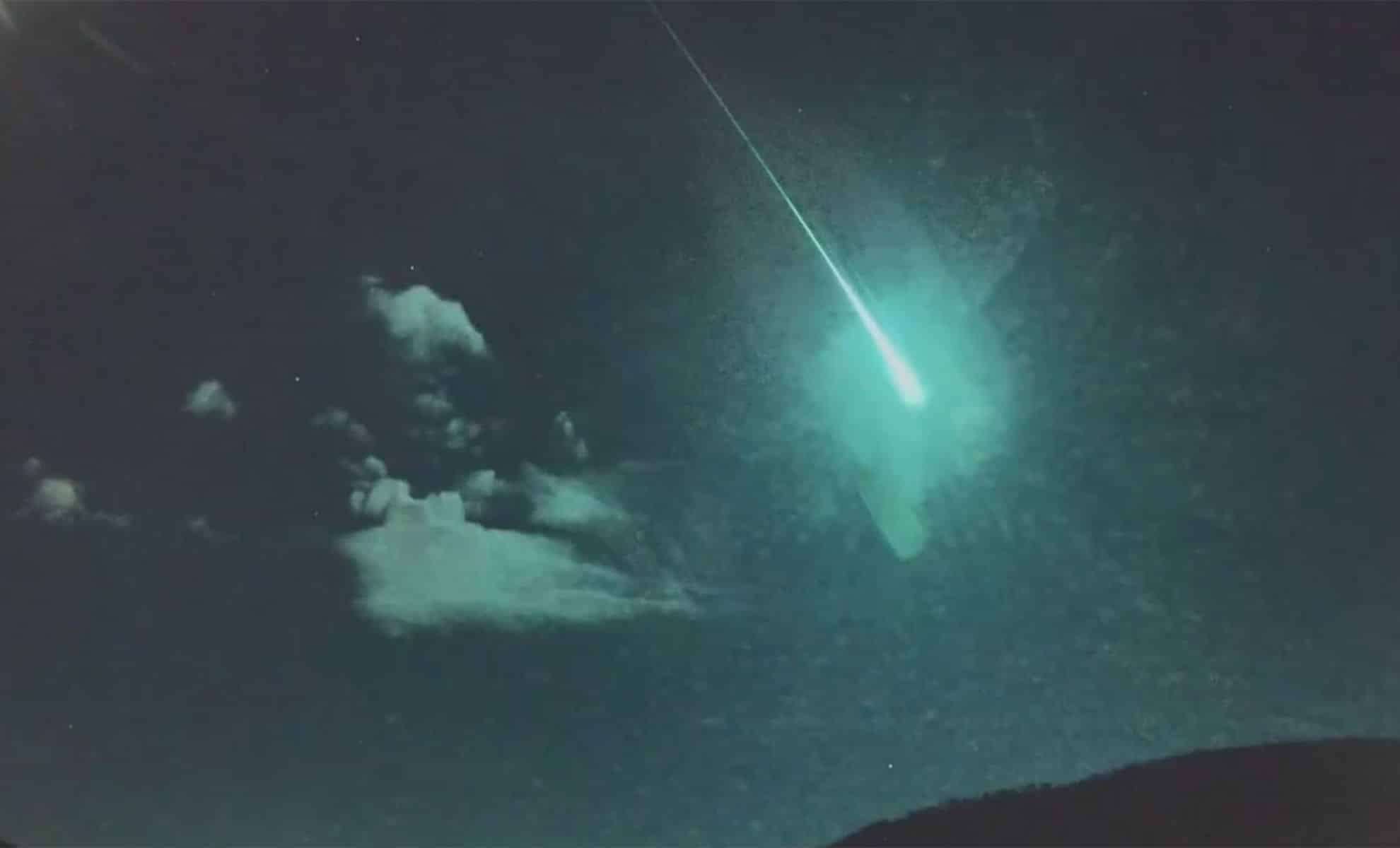
On the evening of May 18, 2024, a brilliant fireball, most likely linked to a comet, dazzled observers across Spain and Portugal. The International Meteor Organization (IMO) confirmed the event, highlighting its vivid display across the night sky.
Eyewitnesses reported an exceptionally bright and sizable fireball, stirring excitement among both the scientific community and the general public.
An Unforgettable Celestial Event
Residents in Spain and Portugal were privileged to witness an extraordinary sky show on May 18. The glowing fireball, believed to be a fragment from a comet, trailed across the heavens, captivating viewers. The IMO gathered numerous observations noting the fireball's intense brightness and impressive scale. Beyond its visual wonder, the event has valuable scientific importance.

In essence, fireballs are extremely luminous meteors observable over vast regions. They occur when larger meteoroids enter Earth's atmosphere and ignite due to air friction. The more massive the meteoroid, the greater the fireball’s luminosity. The May 18 event's brilliance suggests it stemmed from a substantial meteoroid or a small comet piece.
Why Fireballs Matter to Science
Fireballs surpass usual meteors in both size and brightness and attract scientific interest for this reason. This phenomenon gives researchers a chance to analyze the chemical makeup and trajectory of such celestial bodies. Insights gathered can deepen our understanding of comet constituents and how they interact with the atmosphere.
The IMO and other astronomy groups routinely analyze these sightings to enhance knowledge of meteoroid distributions and their possible risks to Earth. By examining the fireball’s emitted light spectrum, scientists identify the elements present, as each element produces unique wavelengths when burning up in the atmosphere.
Tracking the fireball’s path also helps pinpoint its origin point in the solar system, shedding light on the movement and composition of meteoroids and comets, as well as their interactions with Earth's orbit.
Public Enthusiasm and Observations
The dazzling fireball sparked widespread excitement throughout Spain and Portugal, flooding social media with images and footage of the event. Many people described the moment as awe-inspiring, recalling the fireball’s quick, brilliant flash that brightened the night sky.
Citizen reports are invaluable for understanding events like this. The prevalence of smartphones and rapid sharing on social media enable swift documentation that complements professional astronomical data. Such public contributions enrich scientific research.
Witnesses in Portugal described the fireball as a “radiant burst lighting up the entire sky briefly,” while observers in Spain compared it to “a shining, fast-moving star that erupted into a cascade of sparks.” These firsthand accounts help experts reconstruct the event’s dynamics and atmospheric effects.
Estoy asimilándolo todavía, en Galicia parecía que se podía tocar #meteorito pic.twitter.com/8K1Hd16mvB
— aan (@rvgzan_) May 18, 2024
Fireballs in History
Throughout history, fireballs have evoked awe and sometimes fear, often regarded as omens by ancient cultures. Today, we recognize them as natural astronomical phenomena that continue to intrigue us.
A notable recent example is the Chelyabinsk meteor that exploded over Russia in 2013. This event involved a meteoroid roughly 20 meters wide, releasing energy equivalent to 500 kilotons of TNT and causing injuries and destruction. Although the fireball over the Iberian Peninsula was smaller, it reminds us of the dynamic and occasionally volatile nature of near-Earth space.
Learning Opportunities from Celestial Displays
Spectacular events like the May 18 fireball offer unique chances for education. Academic institutions can utilize these real occurrences to deepen students' understanding of astronomy and planetary science. Hands-on learning about solar system processes inspires curiosity and knowledge.
Beyond classrooms, wide public interest in such spectacles helps boost support for space science and exploration. These moments of wonder can ignite enthusiasm in future scientists and innovators eager to explore space’s mysteries.
Implications for Space Monitoring
This striking fireball highlights the ongoing fascination with and importance of tracking objects entering Earth's atmosphere. Collaboration between amateur skywatchers and professional astronomers remains vital in advancing our comprehension of such events.
With technological progress, detection and study of fireballs and meteoroid impacts will become more precise. Networks of automated cameras and monitoring systems provide continuous observations, enabling quicker responses and thorough analysis of celestial hazards.
- Categories:
- Astronomy ,
- News ,
- Space




0 comments
Sign in to Comment