
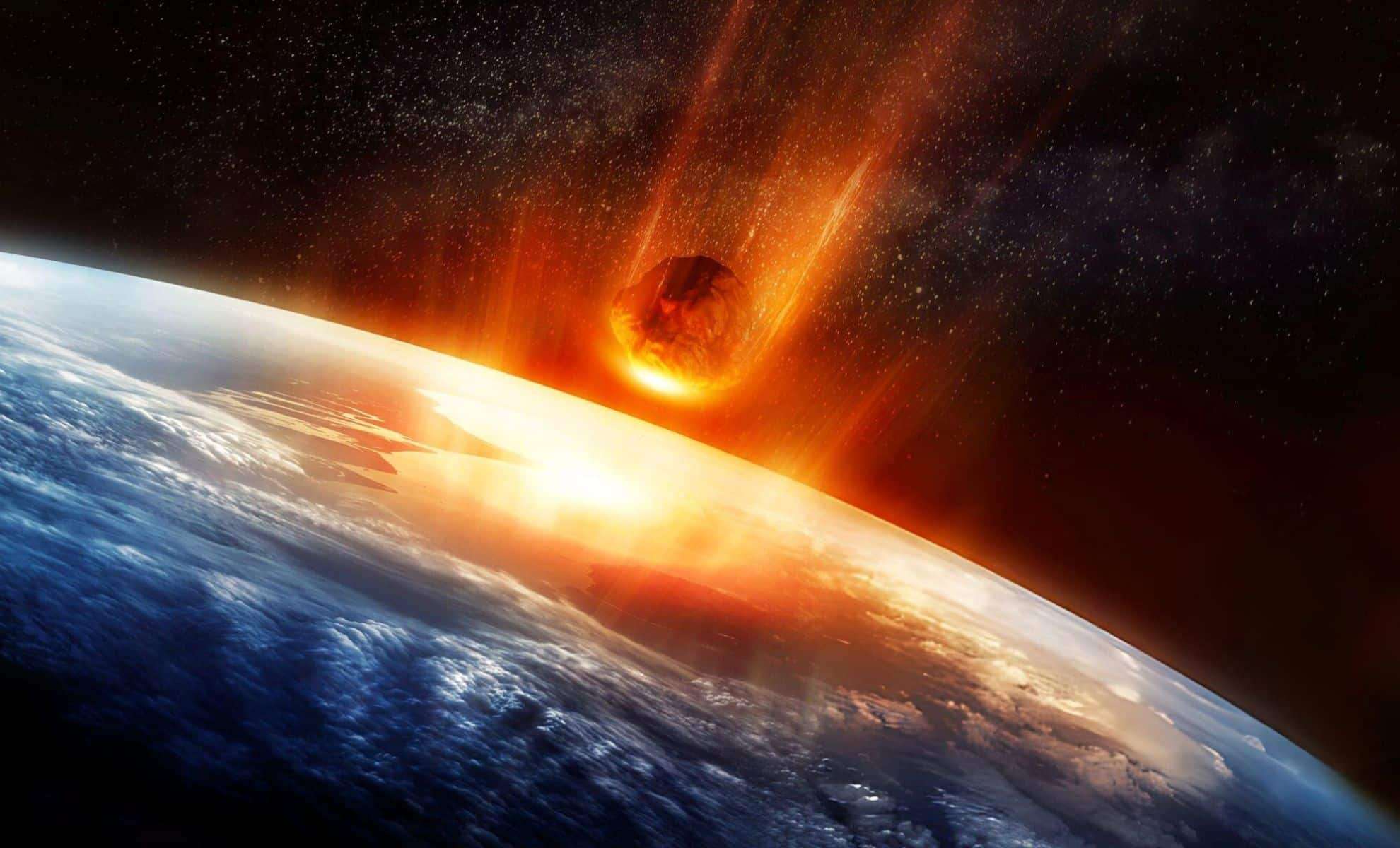
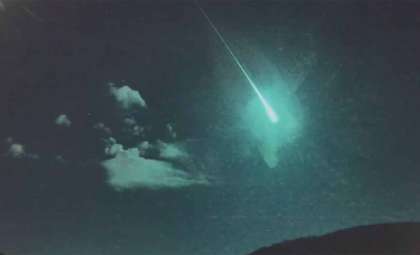
On December 3, 2024, a modest asteroid approximately 70 cm (27.56 inches) across entered Earth’s atmosphere above Siberia, producing a dazzling fireball visible to observers in the remote Sakha Republic. This small space rock ignited upon entry, creating an awe-inspiring display, although the isolated location ensured there was no threat to people or property.
As it burned through the atmosphere, the asteroid’s brilliant glow lit the sky, providing a striking celestial show. This incident underscored advancements in asteroid detection technology, as scientists had anticipated its arrival with remarkable accuracy.
Though smaller than notable events like the Chelyabinsk meteor impact of 2013, this recent occurrence served as a vivid reminder of the potential hazards from near-Earth objects.

A Luminous Fireball Over Siberia
At exactly 4:15 p.m. UTC on December 3, the asteroid surged into the atmosphere, generating a spectacularly bright fireball captured on video. The glowing phenomenon briefly lit up the sky, ending with a red flash as the asteroid fragmented. Despite the impressive visuals, there was no danger to the surrounding population or infrastructure.
- Diameter: 70 cm (27.56 inches)
- Location: Above Siberia’s Sakha Republic
- Time: 4:15 p.m. UTC, December 3, 2024
- Fireball: Visible with red glow upon breaking apart
No injuries or damage ensued, but the event captivated astronomers and enthusiasts alike. Numerous videos showcasing the fireball circulated widely on social media, highlighting both its mesmerizing beauty and the awe-inspiring nature of such cosmic encounters.
Asteroid Impact Forecasts Hit New Milestone
This fireball event was the 11th occasion where researchers successfully forecasted an asteroid’s entry into Earth’s atmosphere earlier this year, demonstrating enhanced precision in planetary defense capabilities. Scientists are now adept at calculating asteroid paths with impressive detail, enabling timely alerts of incoming objects.
The initial detection of this asteroid was made by the Kitt Peak National Observatory in Tucson, Arizona, which quickly allowed experts to compute the exact timing and location of atmospheric entry.
The year 2024 has set a record with four predicted asteroid impacts, including this one and earlier events:
- January: A vivid fireball over Berlin
- September: A fiery explosion witnessed over the Philippines
- October: Another notable fireball event above the Pacific Ocean
These frequent successful forecasts emphasize the significant progress in global asteroid observation networks, enhancing Earth’s preparedness against space objects.

Low Threat But Heightened Awareness
Unlike larger, potentially destructive asteroids, this object was small enough to burn up almost entirely before reaching the surface. For comparison, the Chelyabinsk meteor in 2013 was nearly 30 times larger and caused injuries to more than 1,500 people due to the shockwave it generated.
The recent asteroid’s disintegration was nearly complete, with experts estimating that no substantial fragments survived the fiery descent to impact Earth’s surface, ensuring no damage occurred.
Despite this being a minor event, it serves as an important cautionary tale about the risks space debris can pose. Larger impacts could have severe consequences, underscoring the significance of continued vigilance in tracking all near-Earth objects.
- Chelyabinsk Meteor: Roughly 30 times bigger, caused widespread injuries and damage
- Recent Asteroid: Accurately predicted, likely left no debris on the ground
NASA Confirms Larger Asteroid 2020XR to Pass Earth Safely
Separately, NASA’s Jet Propulsion Laboratory has announced that a far larger asteroid, named 2020XR, will fly past Earth today. Measuring about 1,200 feet in diameter, 2020XR dwarfs the recent Siberian fireball. However, it will safely pass at an estimated distance of 1.37 million miles, more than five times the gap between Earth and the Moon.
A NASA spokesperson emphasized, “The chances of 2020XR colliding with Earth are nearly zero. Despite this, it remains classified as a ‘potentially hazardous asteroid’ because of how close it will come.” The safe flyby highlights the importance of continuous tracking of large space objects near Earth.
- Asteroid 2020XR Size: Around 1,200 feet (365.76 m) wide
- Distance from Earth: Approximately 1.37 million miles
- Impact Risk: Almost none, but still labeled potentially hazardous
Enhancing Planetary Defense Systems Worldwide
These achievements are part of a larger global initiative to bolster planetary protection. Facilities such as Kitt Peak are key components of ongoing efforts to survey and observe near-Earth objects with precision.
Advanced analytic tools and software enable astronomers to quickly determine asteroid trajectories and monitor even small celestial bodies. This enhanced capability not only mitigates threats from significant asteroids but also enriches our understanding of small objects that reveal clues about the solar system’s origins.
The growing dataset gathered from predicted impacts improves scientific knowledge and fosters international cooperation aimed at reducing risks posed by near-Earth space hazards.
- Categories:
- Astronomy ,
- News ,
- Space








0 comments
Sign in to Comment