
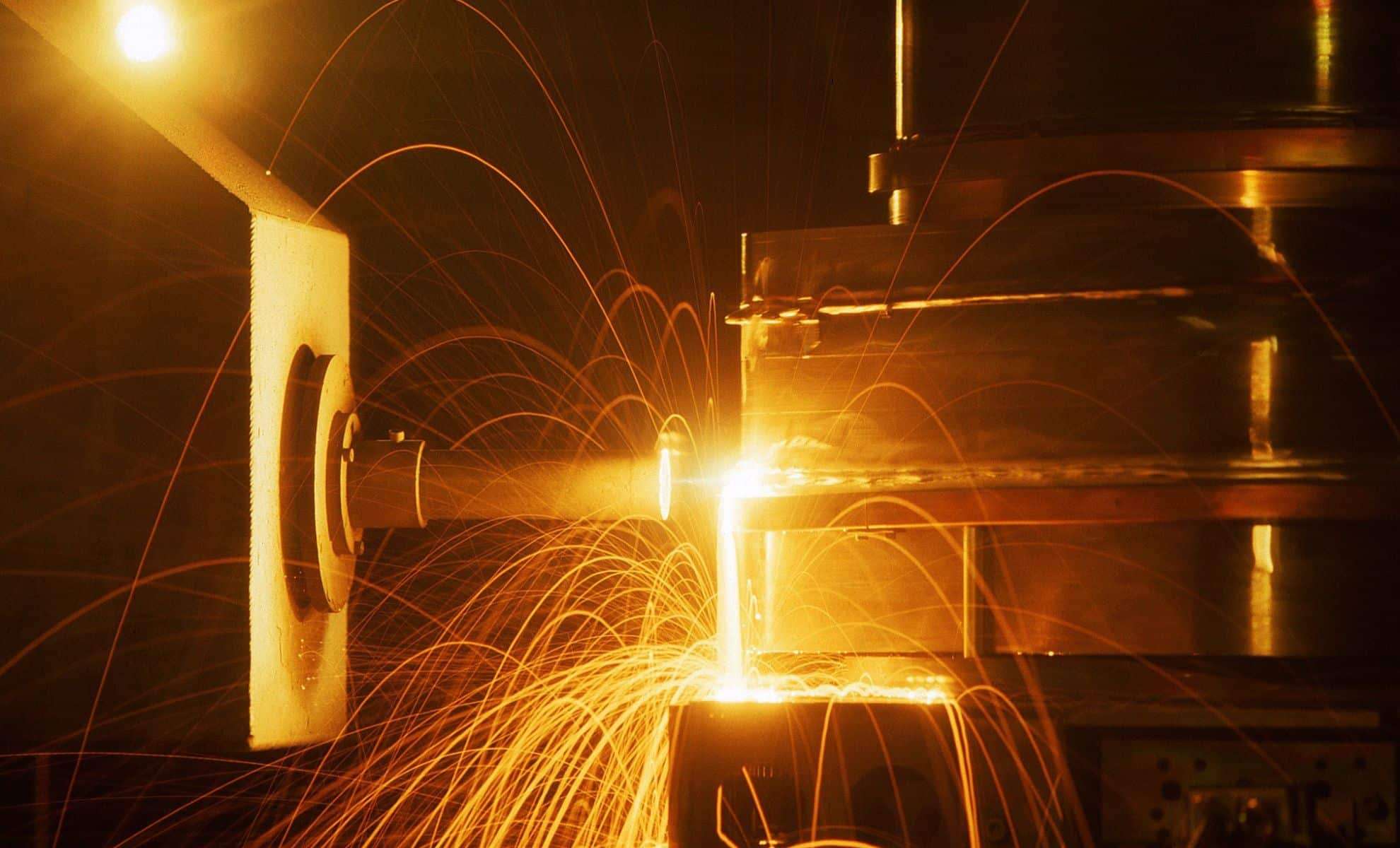
Scientists at the SLAC National Accelerator Laboratory in Menlo Park, California, have reached a remarkable milestone in particle physics. They developed an electron beam exhibiting a peak current five times stronger than any previously generated on Earth. This advancement, detailed in a recent Physical Review Letters publication, represents a substantial progression in accelerator physics and impacts diverse fields including quantum chemistry and astrophysics.
Overcoming Challenges in Electron Beam Generation
Producing powerful electron beams while preserving their integrity has long posed a significant challenge in particle physics. Conventional techniques utilize microwave fields to focus and compress the electrons, but these methods often lead to energy losses that reduce beam quality.
The SLAC team tackled this issue through a novel laser-driven shaping approach, compressing billions of electrons into a beam just one micrometer in length while maintaining high power and beam fidelity.


Precision Control Enabled by Laser Technology
The breakthrough was driven by the implementation of a laser heater undulator, which allowed for exceptionally fine manipulation of the electron beam. “Lasers provide much more exact energy modulation compared to microwave fields,” explained Claudio Emma, a SLAC staff scientist. This precision made it possible to generate a beam with both a high peak current and exceptional control.
Achieving this result involved extensive experimentation over several months. The research team meticulously optimized the interplay between laser and electron beam throughout the laboratory’s one-kilometer-length accelerator to guarantee ideal compression and stability.
New Horizons for Astrophysical and Scientific Research
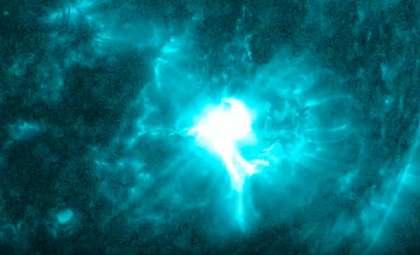
This advanced electron beam opens up new experimental opportunities across numerous scientific domains. In astrophysics, it enables researchers to mimic the plasma filaments that occur naturally in stars—structures that had not been studied in laboratory environments before. By directing this highly concentrated beam at solid or gaseous targets, scientists can analyze these phenomena with unprecedented clarity.
Beyond astrophysics, the beam shows promise for enhancing plasma wakefield acceleration methods, potentially accelerating development of compact next-generation particle accelerators. Research at SLAC is set to expand, exploring the many practical applications this technology offers.
The innovation is part of SLAC’s commitment to advancing ultrafast science. “Having a beam function like a fast camera along with a very brief light pulse creates two complementary tools,” Emma said. This combination, particularly with attosecond light pulses, promises new insights into ultrafast physical phenomena at resolutions never before achievable.
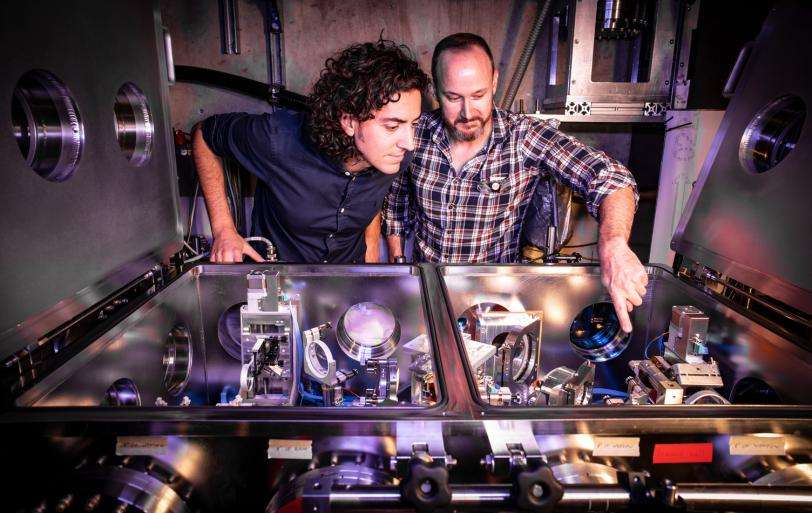
This versatile platform also invites collaboration from investigators needing exceptionally powerful beams. “If you require an intense beam, we’re ready to collaborate,” emphasized Emma, highlighting the cooperative ethos fueling SLAC’s advancements.
Endorsed by the U.S. Department of Energy’s Office of Science, this cutting-edge electron beam has attracted global scientific interest, promising a vast range of discoveries across physics, chemistry, and other disciplines. The path ahead is full of exciting potential.
- Categories:
- Science








0 comments
Sign in to Comment