
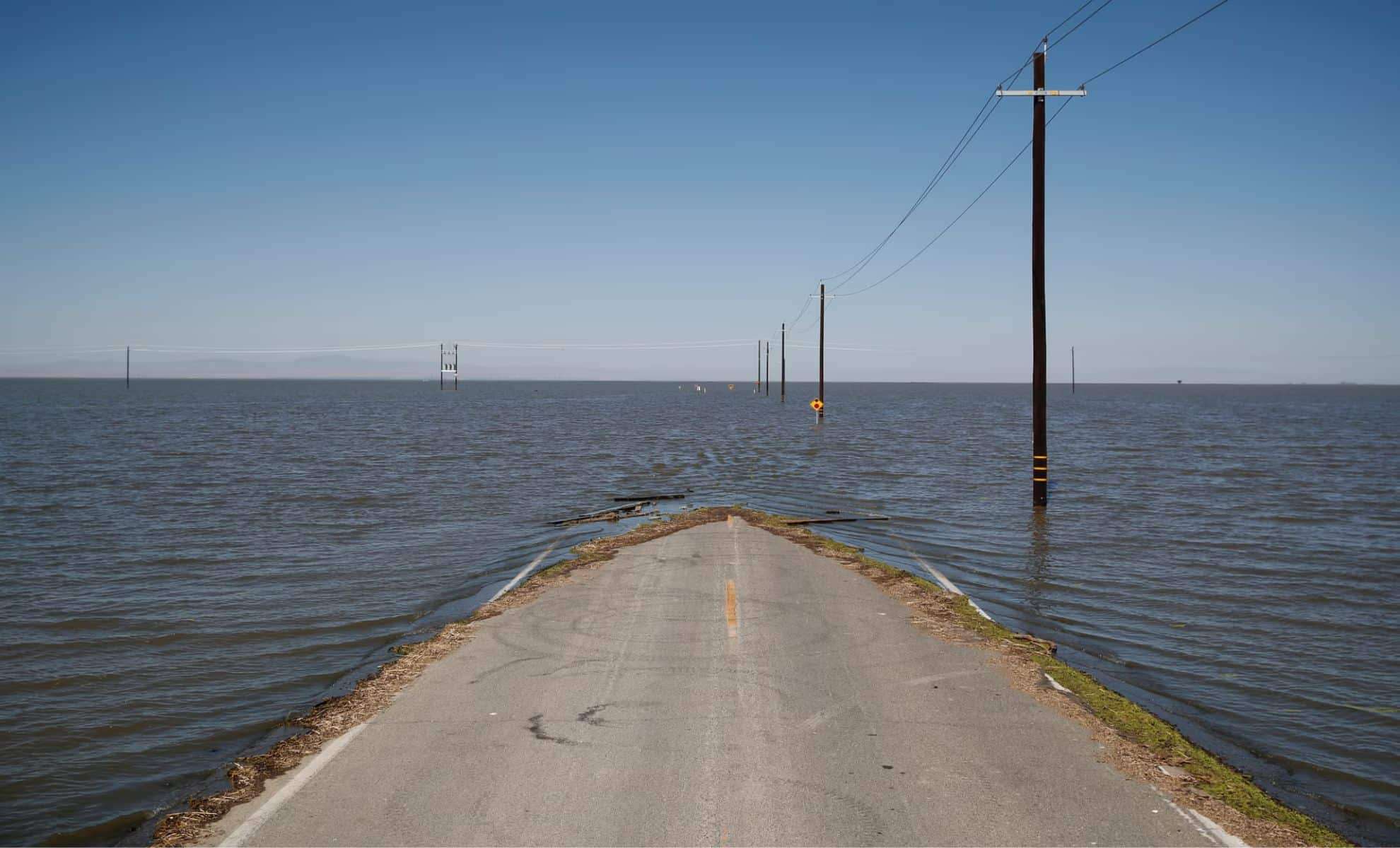
Once the largest freshwater lake west of the Mississippi River, Tulare Lake in California’s San Joaquin Valley vanished more than 130 years ago. Its disappearance was the result of extensive human efforts to redirect water for agricultural irrigation, transforming the lake’s former basin into farmland. Remarkably, in 2023, Tulare Lake reappeared, surprising both scientists and local residents.
From Majestic Lake to Vanished Basin
Historically expansive, Tulare Lake stretched up to 100 miles in length and 30 miles wide, powered by snowmelt from the Sierra Nevada mountains. Its size once allowed steamships to navigate and transport goods as far as Bakersfield to San Francisco. However, in the late 19th century, driven by settler ambitions and colonial land reclamation, the lake was deliberately drained. Over time, the water receded, replaced by agricultural fields, and the lake disappeared entirely by the 1890s.
This transformation was heavily influenced by settler colonialism, with wetlands drained and waterways diverted to facilitate farming. For decades, the land remained dry and cultivated, and Tulare Lake existed solely in historical records—until recent natural events defied expectations.

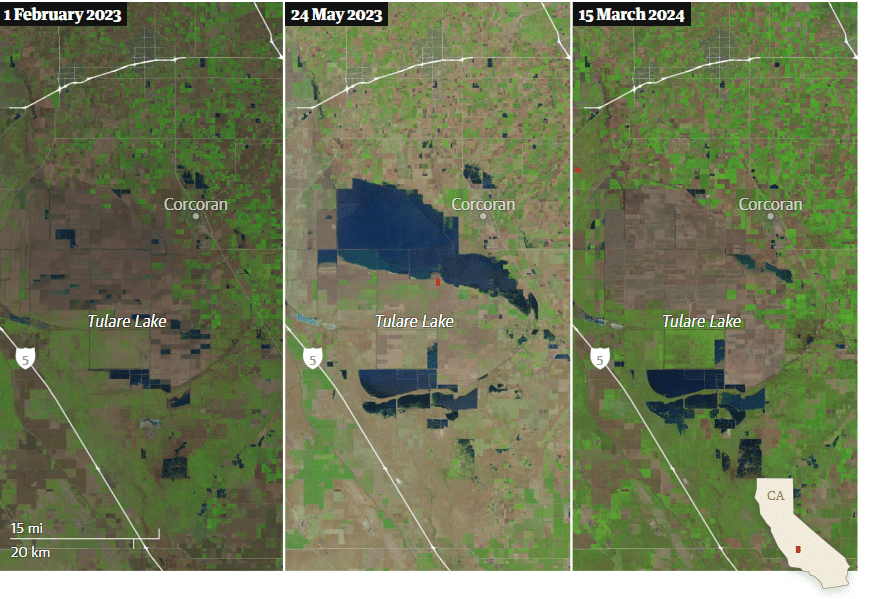
In a dramatic turn, heavy snowfall and increased rainfall in recent years replenished the lakebed, resulting in Tulare Lake’s revival in 2023 and catching many off guard.
Climate Patterns and the Lake’s Reappearance
The return of Tulare Lake in 2023 was triggered by an exceptionally wet season coupled with intense snowmelt feeding the basin. Scientists studying the area suggest this event might signal a trend linked to ongoing climate change effects.
Vivian Underhill from Northeastern University highlighted the unprecedented levels of precipitation that filled the basin swiftly. This resurgence not only restored water but also attracted diverse wildlife back to the wetlands. Bird species such as pelicans, hawks, and various waterfowl returned to the revitalized habitat. The Tachi Yokut tribe also acknowledged the lake’s comeback, participating in traditional ceremonies and resuming cultural practices tied to the lake for the first time in over a century.
Impact on Communities and Agriculture
While ecological restoration has been evident, the human consequences of the lake's return have been profound. Flooding across the region has damaged farmland, displacing farmworkers and imposing losses on landowners whose livelihoods depend on the land.
Authorities in California are working to manage the lake’s waters again, but controlling its extent is challenging. Officials predict the lake will persist for approximately two more years, though events known as atmospheric rivers could prolong its presence. Underhill cautions that intensified climate variability may increase the frequency of such flooding episodes, complicating future water management strategies.
Prospects for Tulare Lake’s Future
Despite efforts at drainage, Tulare Lake’s resurgence aligns with historical cycles where the lake reappeared multiple times during the 20th century, including in the 1930s, 1960s, and 1980s. However, today's shifting climate conditions might solidify the lake’s presence in the landscape.
Ecologically, the lake’s revival marks a return to a more natural state for the region, which has alternated between wetlands and water bodies for millennia. The century-long dominance of irrigated agriculture represents a brief exception in this pattern. Underhill remarked, “This was not actually a flood. This is a lake returning.”
By March 2024, the lake’s area had reduced to slightly more than 2,600 acres, with expectations that it could disappear again unless further snowmelt triggers renewed flooding. Nonetheless, Tulare Lake’s brief revival raises important questions about environmental shifts and the future of water management in California.
- Categories:
- News










0 comments
Sign in to Comment