
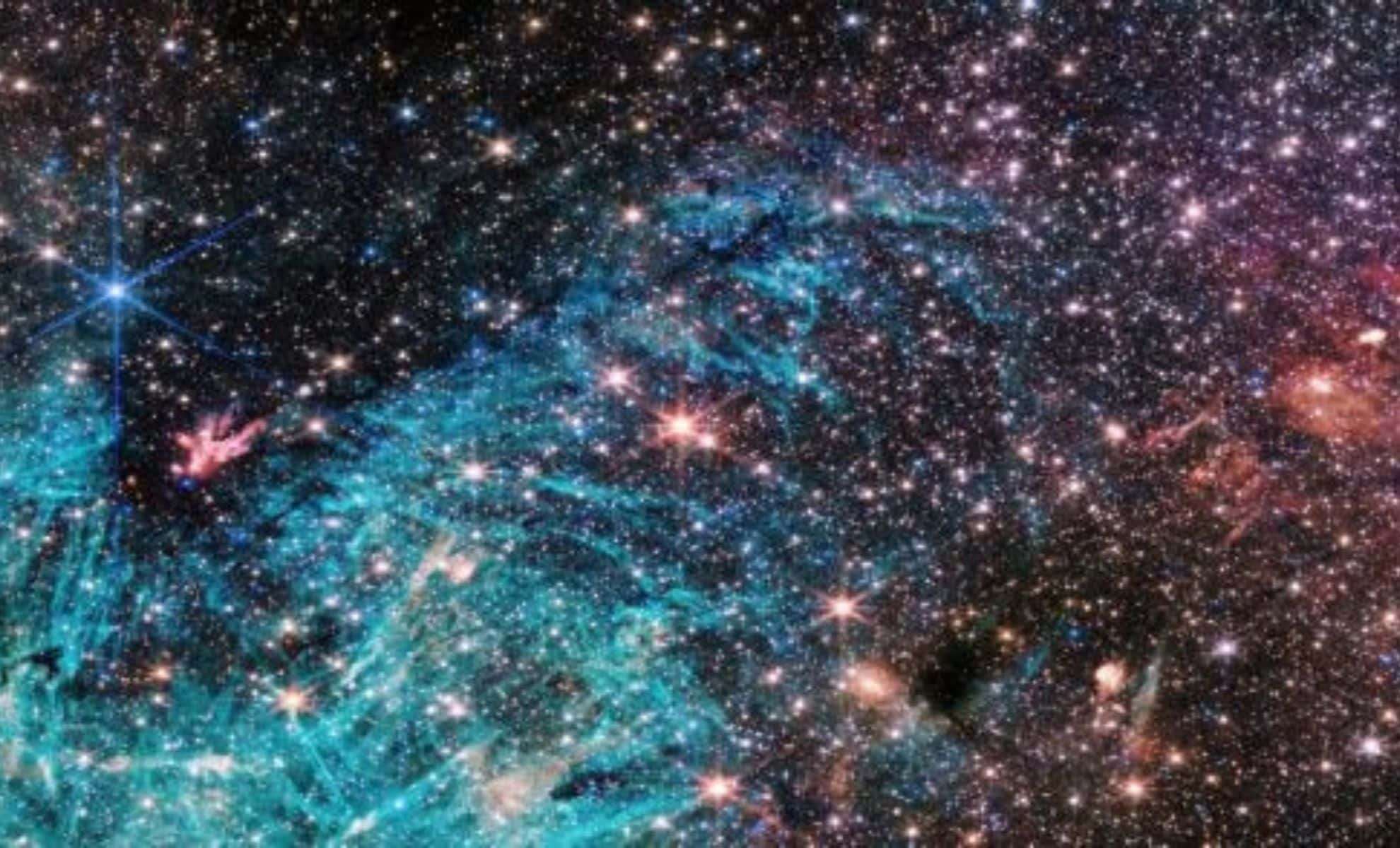
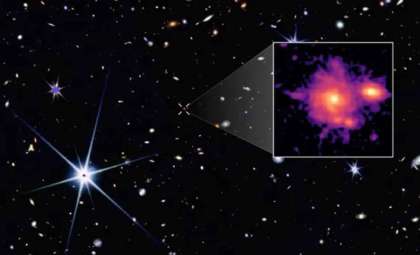
An innovative investigation utilizing NASA’s James Webb Space Telescope has unveiled extraordinary insights into Sagittarius C, a star-forming region situated near our galaxy’s core. Featured in The Astrophysical Journal, this research exposes remarkable detail in one of the galaxy’s most active stellar nurseries. Scientists discovered vast glowing filaments, budding protostars energized by intense activity, and strong magnetic fields influencing stellar birth and death.
A Glimpse into Sagittarius C: A Center of Stellar Birth
Sagittarius C stands out as one of the Milky Way's most densely populated and dynamic sectors, rich with gas, dust, and high-energy events. According to experts, it contains an immense concentration of stars alongside thick clouds of hydrogen, helium, and complex organic molecules. John Bally, an astrophysical and planetary science authority at CU Boulder, notes, "This region closely mirrors the intense conditions seen in the early universe, making it a unique laboratory for stellar studies."
Though packed with material needed for star creation, the area surprisingly forms fewer stars than expected. Images captured by the Webb Telescope are shedding light on the reasons behind this curious lack of stellar birth.

Magnetic Fields Influence Star Formation in Unexpected Ways
One standout feature identified in Sagittarius C is the presence of dominant magnetic fields weaving through the turbulent gas clouds. These forces generate radiant filaments of heated gas and appear to be a key factor in decelerating the stellar birth rate. Co-researcher Samuel Crowe explains, "These magnetic structures give Sagittarius C a unique formation and visual signature, unlike star-forming areas located farther from the galactic nucleus."
The embedded magnetic fields may be acting as an obstacle, hindering the gas's collapse into protostars and thus clarifying the region's unexpectedly slow star production.
Discovery of Extensive Plasma Filaments Surprises Scientists
The discovery of elongated plasma filaments threading through Sagittarius C has caught researchers off guard. These prominent, luminous strands extend for several light-years, formed by hot ionized gas glowing under strong magnetic influence. "Their presence was a completely unanticipated surprise," remarks Rubén Fedriani, a postdoctoral fellow at the Instituto de Astrofísica de Andalucía and study contributor.
The identification of these plasma features challenges existing theories of star formation dynamics, providing vital clues about star evolution in harsh cosmic environments.
Star Evolution Under Intense Galactic Conditions
Star formation within molecular clouds is a dramatic and turbulent phenomenon. Gravitational collapse ignites the birth of stars, which then emit powerful radiation that disperses the remaining gas and dust. John Bally highlights, "Even our Sun likely formed within a large stellar cluster that has since dispersed over billions of years."
Within Sagittarius C, a comparable cycle is underway, but the fierce radiation from young stars is already eroding the material that could foster new stars, potentially ending star formation in this region sooner than expected.
- Categories:
- News







0 comments
Sign in to Comment