

Currently, Bitcoin is valued around $109,290. Imagine multiplying that figure by 7,500, yielding approximately $819,675,750. For James Howells, this immense sum represents the estimated worth of a single misplaced item: a hard drive he accidentally discarded in 2013. Over the past twelve years, this IT professional from Newport, Wales, has relentlessly pursued plans to recover the device from a local landfill, turning his ordeal into a cautionary tale about the ephemeral nature of digital wealth.
Recently, this chapter has come to an end. Howells declared he is ceasing his recovery attempts. Despite extensive efforts and a fully financed recovery initiative valued at $10 million, supported by venture capitalists, the Newport City Council consistently rejected his proposals. With the lost fortune now valued at more than three-quarters of a billion dollars, his decision reflects a painful conclusion. As Howells stated, “The agony is over,” conveying a sense of resignation rather than relief.
Regulatory Barriers Remain Firm
Howells’s project was far from straightforward. The landfill stretches over a sizable area comparable to several football fields, making retrieval a complicated endeavor. His envisioned operation included the use of heavy machinery, conveyor systems, and an artificial intelligence-powered scanner to locate the exact hard drive amid layers of compacted rubbish. He assembled a team of specialists and secured financial backing from investors prepared to cover the anticipated $10 million cost in exchange for a share of the recovered bitcoin.

Nonetheless, the Newport City Council remained steadfast in their refusal. Their rationale has not changed since 2013: authorizing such an excavation brings considerable environmental and public health hazards. Risks include the release of toxic gases and contaminated leachate—a hazardous liquid emanating from landfills.

The excavation would cause significant disruption, including noise pollution and airborne contaminants for the surrounding community over an extended period. Moreover, the council has repeatedly emphasized that recovery of the hard drive is uncertain and that they bear legal responsibility for any adverse consequences arising from the excavation rather than any gains.
“Our position has been consistent for more than ten years,” a council representative told the BBC. This response highlights a fundamental conflict between an individual’s ownership claim and a governing body’s obligation to safeguard residents and the ecosystem. Ultimately, caution and public welfare outweighed the pursuit of virtual treasure.
A Documentary Capturing the Final Act
The conclusion of Howells’s mission has been recorded in a film. The documentary “The Hard Drive,” produced collaboratively by Lightbox and the BBC, has chronicled his final efforts to organize the recovery. Filmed over several years, it was intended to document either a remarkable success or a definitive failure. It has now become a poignant farewell to an elusive dream.
The film offers a meta perspective on Howells’s journey. Beyond confronting local authorities, he was conscious that his struggle was evolving into a narrative itself. It promises an intimate insight into the emotional and financial pressures of chasing the lost bitcoins, presenting a psychological depth that standard news coverage cannot fully capture.
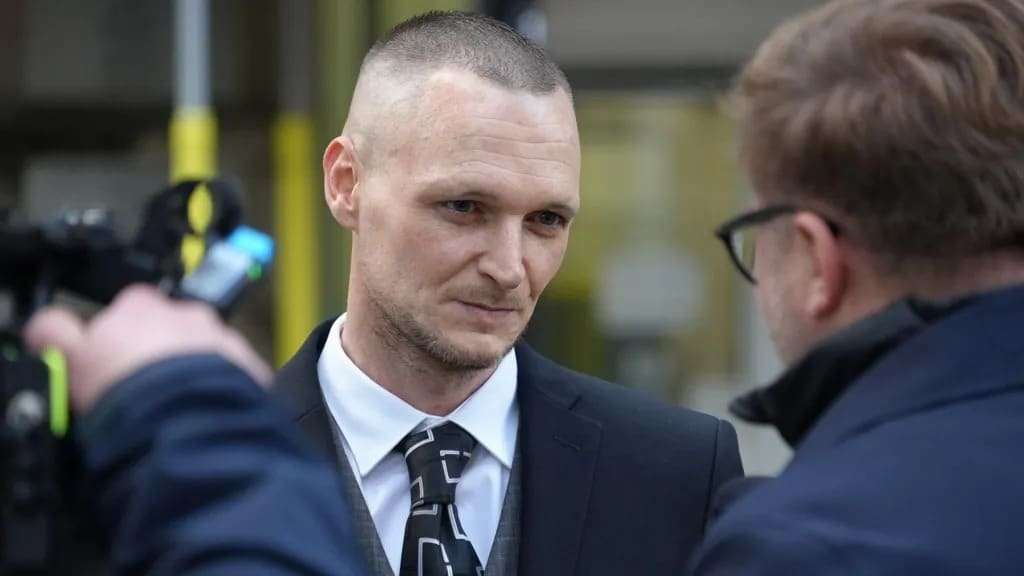
In many ways, this documentary stands as the sole legacy of his twelve-year endeavor—an enduring testament to the heavy cost of pursuing a vanished fortune.
The Lingering Impact of Regret
Beyond legal battles and environmental concerns lies the human dimension. Psychologists describe the profound influence of “near misses” and “counterfactual thinking”—repeatedly imagining how one small choice might have dramatically changed outcomes. For Howells, that decisive moment was in 2013, when he inadvertently tossed the hard drive while tidying his office.
Living with this mistake has been a form of confinement. Media coverage, fluctuating along with Bitcoin’s price, served as a constant reminder of his loss. Each new record high in cryptocurrency valuations underscored his missed opportunity. “It’s been an emotional rollercoaster,” he shared during a prior interview with The Guardian, describing the emotional turmoil of witnessing a number that symbolizes a fortune he cannot claim.
His choice to walk away from the search, expected to be detailed in the upcoming documentary, signifies a form of release. Abandoning the quest ends a chapter dominated by an obsessive goal. Though hope of recovery was a driving force, surrendering it means embracing a new reality in which the fortune is irrevocably lost.
- Categories:
- News










0 comments
Sign in to Comment