
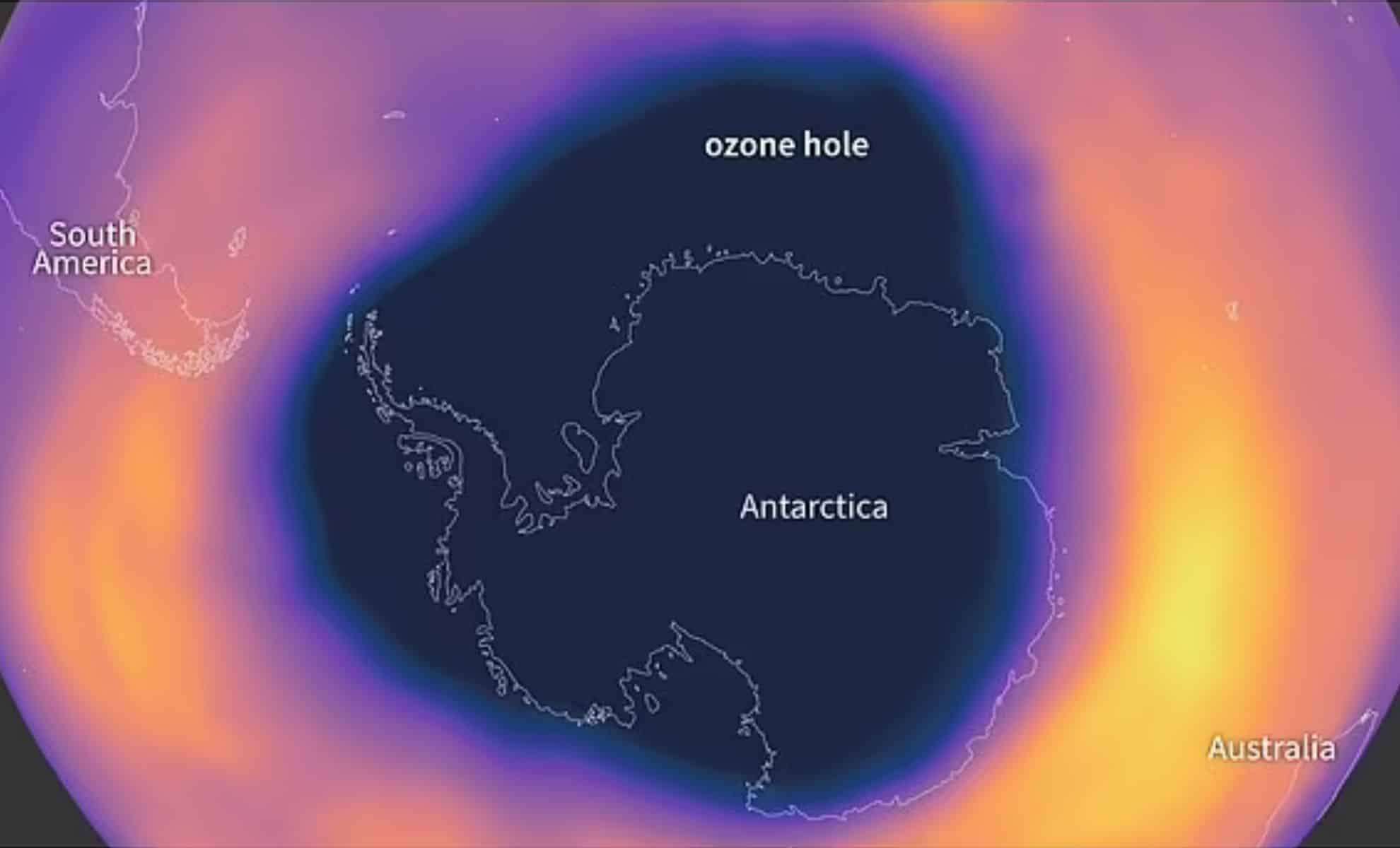
In 2024, the Antarctic ozone hole ranked as the seventh smallest recorded since the early 1990s when global restoration initiatives started, highlighting ongoing progress in reversing ozone loss.
New measurements from NASA and NOAA indicate that the ozone-deficient area peaked at 8.5 million square miles (22.4 million square kilometers) on September 28, a size far less expansive than those seen in previous decades. This improvement underscores the effectiveness of the Montreal Protocol, the pivotal 1987 global agreement that phased out harmful ozone-depleting substances like chlorofluorocarbons (CFCs).
Tracking Advances in Healing the Ozone Layer
The ozone layer, situated roughly 20 miles above Earth’s surface in the stratosphere, serves as a crucial barrier shielding life from intense ultraviolet (UV) rays. Its deterioration, largely caused by synthetic chemicals such as CFCs found in refrigerants and aerosols, emerged as a significant environmental problem in the 1970s. Since then, worldwide efforts have driven a consistent decrease in these damaging agents. “The steady improvements observed over the last 20 years demonstrate that the international measures curbing ozone-damaging chemicals are producing results,” explained Dr. Paul Newman, chief Earth sciences researcher at NASA’s Goddard Space Flight Center.

Nonetheless, the ozone layer is still far from complete restoration. In early October, ozone concentrations over Antarctica dropped to 109 Dobson Units, significantly beneath the pre-1979 average of 225 Dobson Units. NOAA chemist Bryan Johnson stressed the ongoing challenge: “There’s still a long journey ahead before atmospheric ozone returns to pre-CFC pollution levels.” Maintaining strict monitoring and continuing to reduce CFC emissions are critical steps toward full recovery, which projections estimate will happen by 2066 if current trends hold.
Key Influences Behind the Smaller Ozone Hole This Year
The reduced size of this year’s ozone hole results from both declining CFC levels and unusual atmospheric events. Usually, intense polar winds called the Polar Vortex confine ozone-destroying compounds over Antarctica during the winter. With the arrival of spring sunlight, these chemicals trigger reactions that break down ozone, creating the characteristic ozone hole. In 2024, however, two rare “sudden stratospheric warming” episodes in June raised stratospheric temperatures by as much as 17°C (30.6°F), weakening the Polar Vortex and allowing more ozone to flow into the polar region from neighboring latitudes.
Although smaller, the ozone hole still spanned nearly 8 million square miles (20 million square kilometers), roughly three times the area of the contiguous United States. “The 2024 ozone hole was less severe on average than many in the past 30 years,” noted Stephen Montzka, senior scientist at NOAA’s Global Monitoring Laboratory. Scientists caution, however, that patience and persistence remain essential as complete ozone recovery is still decades away.
Lingering Effects of Ozone Loss and the Path Ahead
Even with signs of ozone restoration, past damage continues to impact Earth. Depleted ozone zones permit increased UV radiation to reach the surface, raising risks such as skin cancer, cataracts, and other health issues. Ecosystems, particularly in sensitive Antarctica habitats home to species like seals and penguins, are vulnerable to UV damage. Excess ultraviolet exposure also disrupts marine life by hindering phytoplankton growth, a foundation species in oceanic food webs.
Ozone monitoring combines satellite observations with ground-based data, including weather balloons launched from the South Pole, to offer a detailed perspective on ozone hole size and intensity annually. This comprehensive monitoring is key to evaluating the success of global regulations and informing future protection strategies.
As environmental challenges like climate change gain urgency, the steady rebound of the ozone layer exemplifies the impact global cooperation can achieve. The Montreal Protocol's success illustrates how international policy can drive meaningful ecological recovery, even if full benefits take decades to become apparent. Scientists hold optimism that continued vigilance will restore the ozone layer’s protective function, securing the well-being of future generations.
- Categories:
- News ,
- Nasa ,
- Climate change









0 comments
Sign in to Comment