
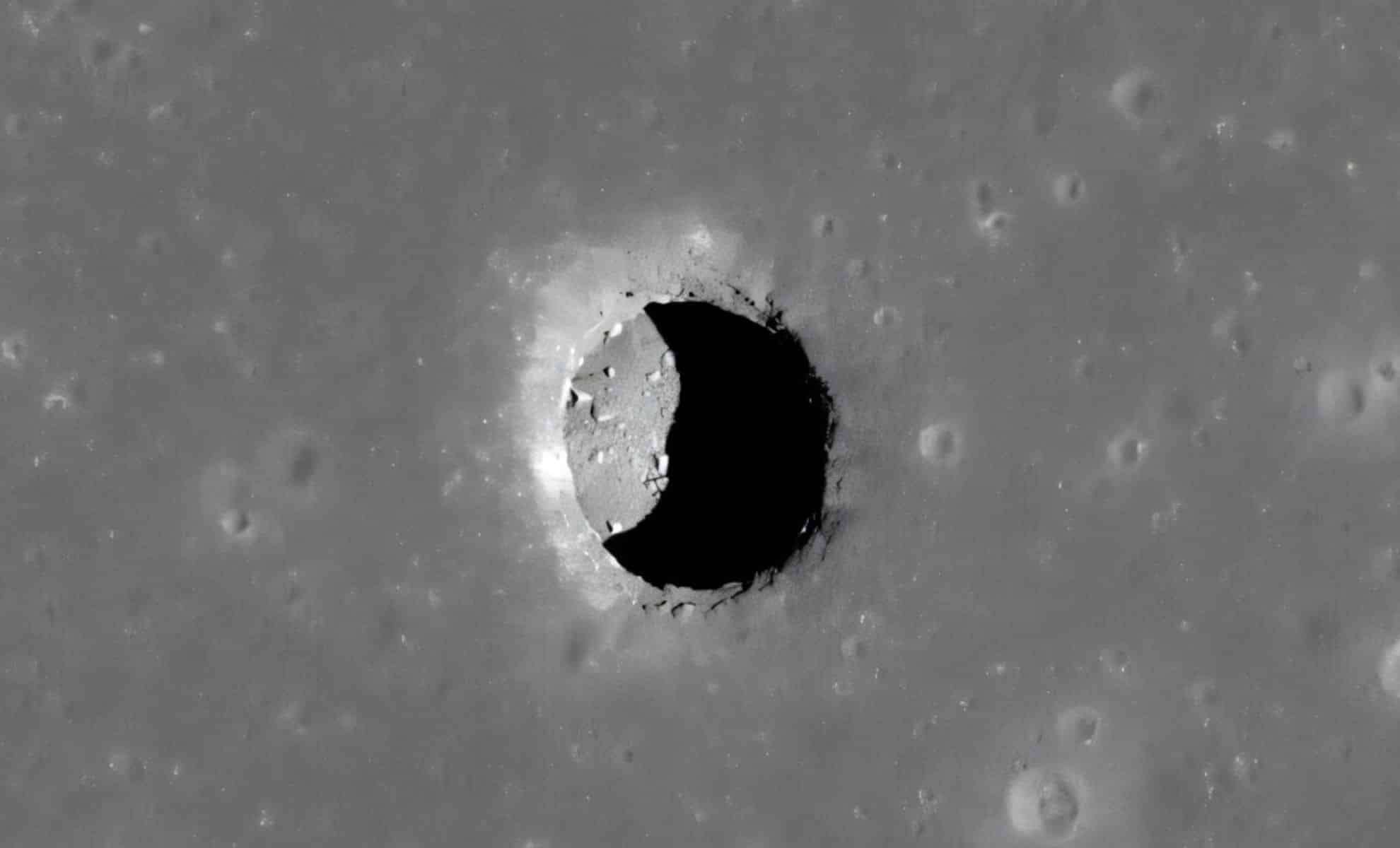
A recent publication in Icarus details how an international group of scientists has utilized artificial intelligence (AI) to detect previously unknown lunar pits and skylights. These surface openings may provide access to concealed lava tunnels beneath the moon’s exterior, offering crucial opportunities for future robotic and crewed space journeys. The research emphasizes how AI-driven techniques are uncovering subtle lunar formations that can shed light on the moon’s volcanic development, while also offering potential protective shelters for astronauts against the moon's extreme conditions.
Researchers applied AI systems like ESSA (Entrances to Sub-Surface Areas) to analyze orbital satellite images, pinpointing new pits and skylights on the moon’s basaltic plains, known as the lunar maria. This AI approach marks a significant shift from laborious manual examination by enabling rapid, detailed analysis via deep learning. With the growing volume of lunar imagery available, these AI methods are uncovering fresh scientific targets, illuminating both the moon’s geological evolution and safe locations for future human presence.
Exploring Lunar Pits and Skylights
Lunar pits and skylights are surface indentations and openings primarily located in volcanic regions on the moon. These features constitute potential entrances to ancient lava tubes, vast hollow conduits formed by past volcanic activity beneath the surface. Scientists view these subterranean caves as valuable shelters for astronauts, providing defense against the moon’s lack of atmosphere, magnetic shield, and protection from cosmic and solar radiation.

Exposure to high radiation levels and temperature fluctuations poses a significant hazard for lunar explorers. Lava tubes could act as natural shelters, shielding inhabitants from these dangers. Additionally, these underground voids offer scientists important clues about the moon's volcanic past, aiding in reconstructing its geological timeline.
Traditional techniques for locating these formations depend heavily on visual inspections of orbiting spacecraft images, which are time-intensive and limited in scope. Artificial intelligence offers a compelling alternative, accelerating the process by efficiently sifting through extensive datasets and spotting features that might evade human observers.
AI’s Impact on Lunar Surface Investigations
Artificial intelligence has increasingly become a powerful asset for planetary discovery, and this new study highlights its ability to reveal hidden subsurface lunar structures. Using various deep learning frameworks, scientists examined imagery from both lunar and Martian landscapes to detect pits and skylights. Notably, the ESSA algorithm demonstrated remarkable prowess by discovering two previously unknown skylight openings.
The researchers underline the vast potential of AI tools, observing that “Since ESSA has surveyed just ≈0.23% of the moon’s surface so far, there are still vast amounts of data to which it can be applied.” This suggests the AI-driven exploration is only at its inception, with capability to uncover many more features as additional data is integrated. The advantages of AI include rapid processing speeds, reducing months or years of manual scrutiny into a much shorter timeframe.
ESSA's Breakthrough Discoveries
The ESSA AI model has displayed exceptional skill in identifying lunar surface anomalies like pits and skylights. By conducting analyses on the lunar maria, the model located two new skylights despite examining only a small section of the moon’s surface. The study clarifies that “Up to now, ESSA has largely been applied to smaller mare deposits, which have well-defined boundaries, such as those within impact craters.” Yet, the opportunity for broader application remains promising.
With ongoing advancements and computing time, ESSA could extend its scrutiny to wider lunar regions, including large expanses like Mare Frigoris, by systematically processing data in latitude and longitude segments. As this occurs, ESSA’s ability to detect concealed lunar features will grow, vastly expanding the catalog of scientifically and operationally crucial sites.
Prospects for Astronaut Safety and Exploration
Discovering these hidden lunar entrances holds significant promise for future space missions. NASA’s Artemis initiative, aiming to send humans back to the moon soon, stands to benefit from such AI-enabled findings. While the Artemis landing targets the moon’s south pole—relatively distant from known lava tubes—AI could identify additional shelter locations nearer to future landing zones, improving astronaut safety and mission flexibility.
Beyond geological insights, this research showcases AI’s potential to locate critical resources on the lunar surface for in situ resource utilization (ISRU). For instance, ice deposits trapped in deep craters could supply water and oxygen vital for sustainable lunar habitation. As AI technology continues to evolve, its integration into planetary science is expected to speed up the discovery of new lunar terrains and resources, fostering safer and more efficient space exploration efforts worldwide.
- Categories:
- News



0 comments
Sign in to Comment